



AJFF Issues Apology Over Juror Controversy
Film festival officials will amend their vetting process and best practices going forward when selecting jurors after receiving an overwhelming response from Jewish Atlanta and the community at-large regarding film juror, Anwar Karim, whose social footprint features antisemitic & anti-Israel content.

The Atlanta Jewish Film Festival (AJFF) issued a public apology after controversy arose over its selection of a student juror who had posted anti-Israel and antisemitic content on social media.

In a statement that began with “We are sorry,” AJFF officials acknowledged that it “fell short in [its] internal processes regarding the recent jury matter.” The statement continued, “This situation has surfaced clear deficiencies, gaps, and adherence issues in our existing organizational processes and policies, including those related to antisemitism, BDS (Boycott, Divestment, Sanctions), and cultural boycotts. These shortcomings did not provide the clarity our community expects or that our organization needed to navigate this matter appropriately at a moment when clarity and trust matter deeply. We fully acknowledge and accept responsibility for that.”
The juror in question is Anwar Karim, a senior cinema, TV, and emerging media studies major at Morehouse College who was chosen to be a student juror in the film festival’s Human Rights category. Karim is also part of the third class of Spike Lee fellows at the Gersh agency in Beverly Hills, as well as the acting president of Morehouse’s Muslim Student Association and a member of the community service committee of the Morehouse Filmmakers Association.
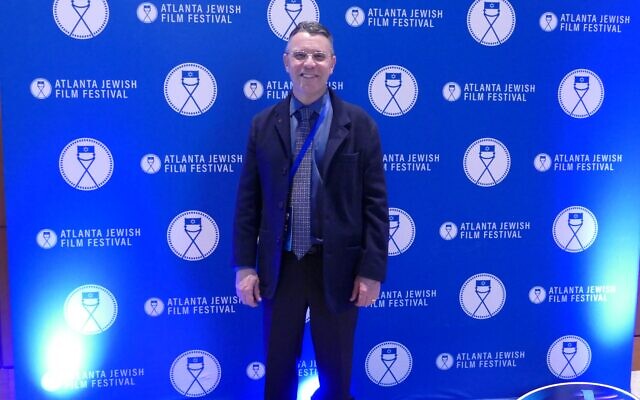
When asked about the vetting process for student jurors, an AJFF spokesperson replied, “They are nominated by faculty at participating colleges and universities, complete with a written application, and are interviewed by festival staff. They are ultimately selected based on academic focus and demonstrated interest in the festival’s mission.”
On Karim’s Instagram account, he raps, reciting his original poetry criticizing what he describes as Israel’s “occupation” of Gaza. In several of the videos, he speaks about Israel, the “1947 occupation,” and calls Israelis “monsters” with a desire for money. In one, he holds up an Israeli flag and speaks disparagingly of the country. Throughout several of his Instagram videos, Israel is depicted as an apartheid, villainous state. In addition, according to a statement issued by the Israeli Consulate to the Southeast here in Atlanta, there is substantial evidence of Karim’s participation in at least one anti-Israel university encampment, putting Jewish students at risk and promoting dangerous misinformation about the war in Gaza started by Hamas on Oct. 7, 2023.
The controversy came to light when the Israeli Consulate issued a statement announcing their decision to pull their support from this year’s film festival. “We saw this juror in a green keffiyeh in the movie guide distributed by AJFF. A staff member researched him and found all the anti-Israel and antisemitic videos he had posted on his Instagram account. I am sure this was a mistake on the part of someone at the festival. Mistakes happen, but he should have been kicked off the jury selection committee once the error was found and pointed out,” said Eitan Weiss, the Consulate General to the Southeastern United States, based in Atlanta.

AJFF reversed its initial statement defending Karim’s selection as a juror after speaking with and receiving feedback from many in the Atlanta Jewish community. The second statement stated, “We regret and share in the depth of concern expressed by members of our community and the distress it has caused. This situation has surfaced clear deficiencies, gaps, and adherence issues in our existing organizational processes and policies, including those related to antisemitism, BDS (Boycott, Divestment, Sanctions), and cultural boycotts.”
In the statement, AJFF outlined three steps they will undertake to avoid situations like this one happening in the future. First, the organization will clarify and formalize policies related to cultural boycotts, antisemitism, anti-Zionist activity and organizational participation. Next, AJFF will review processes for individuals who seek festival roles. Finally, AJFF will establish clear safeguards and protocols to guide decision-making in these matters.
Weiss indicated he welcomes the film festival’s recognition of problems in their internal processes and hopes they will make the necessary changes so a situation like this one can never happen again. “I can promise you I will be happy to sit with them to ensure all necessary changes are made before they use the emblem of the Israeli Consulate and the state of Israel on their materials,” he said.
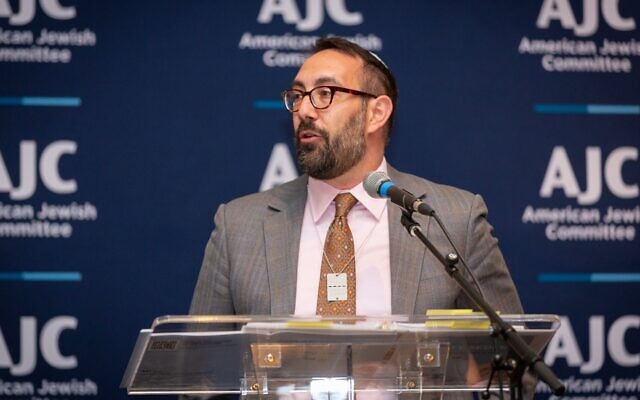
Dov Wilker, regional director of the American Jewish Committee (AJC) in Atlanta, acknowledged his organization’s role in founding and serving as a partner of the film festival for more than 25 years. He recognized the meaningful impact the festival has had for many years in bringing people together, fostering dialogue and contributing to Jewish cultural life in the community. While he acknowledged AJC’s disappointment in the festival’s handling of the jury situation, he also indicated he appreciated AJFF’s public acknowledgement that it fell short in its internal processes, acceptance of responsibility, and clear commitment to rectify this situation in moving forward.
“With these positive changes, AJC remains committed to working collaboratively with AJFF leadership and community partners to support the festival as both a vibrant cultural institution and a values-driven Jewish institution. We believe that continued dialogue, reflection, and partnership are critical to strengthening our community and moving forward together,” said Wilker in a statement released by AJC Atlanta.
The Jewish Federation of Greater Atlanta also weighed in on the situation. In a statement issued by Renee Kutner, president and CEO, and Debbie Kuniansky, board chair, they indicated, “Current and future funding beyond already committed security support will be contingent upon demonstrated follow-through, including clarified policies, strengthened vetting processes and consistent operationalization of those standards.”
With these positive changes, AJC remains committed to working collaboratively with AJFF leadership and community partners to support the festival as both a vibrant cultural institution and a values-driven Jewish institution. We believe that continued dialogue, reflection, and partnership are critical to strengthening our community and moving forward together.
Continuing, the statement read, “We have every faith that AJFF will fulfill its commitments, and we look forward to seeing the festival thrive with strengthened policies that reinforce trust and confidence across our community.”
While this issue has divided the Jewish Atlanta community, the AJFF stated, “We take seriously our foremost responsibility to the Jewish community while also maintaining artistic integrity, independence and a commitment to programming that reflects a diversity of viewpoints and welcomes audiences of all backgrounds and faiths.”
They have promised to conduct an internal review to clarify policies and processes in the future.
comments