



Local Students Spent Semester in Israel During War
Several Jewish Atlanta students were stranded after all flights were canceled due to the war.

After thousands of Hamas-led Gazans attacked Israel on Oct. 7, 2023, killing roughly 1,200 and taking hostage another 250 back into Gaza, many American Jews – young and old – were stranded in Israel when flights were canceled for days.

Among those stuck in Israel were about 100 students attending the Union for Reform Judaism Heller High based on the Alexander Muss High School in Israel campus near Tel Aviv. With rockets falling on Israel, both children and their parents abroad, were frantic until flights could be arranged for the youths’ escape after a few harried days.
The situation was decidedly different for Atlanta students attending the Tichon Ramah Yerushalayim program in Israel when the war against Iran by Israel and the United States was launched on Feb. 28, resulting in weeks of ballistic missile and drone attacks on Israel, causing widespread damage and disruption of everyday lives.
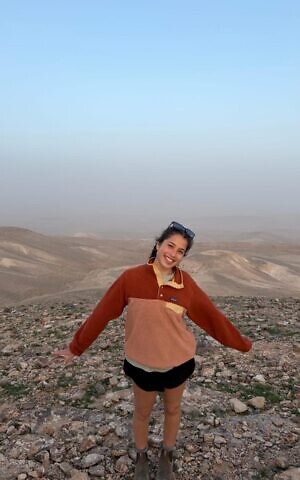
Maayan Cohen recalled “very vividly” how the students were “hyped up to be part of a war” that they had anticipated for weeks. Cohen and fellow Atlantans Amalia and Ellie Kaiman were among approximately 30 students on an outing on Kibbutz Ketura in southern Israel when they were awakened by alerts, followed by sirens, forcing them to wake up before their alarms, quickly dress and run into a shelter.
“Honestly, those three weeks were the best time for me,” said Cohen, 16, son of Bart and Niffy Cohen. “They were highlights of the trip for me,” recalling seeing a defensive Iron Dome streaking up to the sky above him to intercept an incoming Iranian missile.
The girls, also 16, however, both describe Ketura, an agricultural kibbutz, as probably one of the safest places to be in Israel during the war because Iranian missiles were unlikely to travel that far. Daughters of Rabbi Ari and Emily Kaiman, neither Amalia nor Ellie expressed any real fear during the war.

“I was very shook up at the beginning because I honestly didn’t expect it,” Ellie said. “It was very stressful, but after a few days, I hate to say it, but it became routine” to hear sirens and go to the bomb shelters.
Amalia described herself as a planner and said she was more disconcerted by the fact that no one knew what was going to happen. “Everyone knew there might be something,” she said, but no one knew exactly what. Since the outing to Ketura was supposed to last only a few days, the students didn’t have all their clothes or school supplies with them – only their computers.

Ellie said there were few sirens in Ketura where the students remained in the south for about three weeks, instead of the planned three days. “I got a little sick of it,” she admitted. The students had to resort to Zoom learning while in Ketura which was a “challenge because the Wi-Fi wasn’t always good.”
Cohen said the students called the online school “fake school,” but he asserted that the students had more “free time to roam around. Many had girlfriends” to spend time with.
He described the first Shabbat of the war as “surreal.” Five sirens forced the students to retreat to a shelter just as the Torah was removed from the ark. “We had to put it back in,” he said.
Tichon Ramah Yerushalayim is a fully accredited, international secondary school program, offering sophomores, juniors, and seniors the opportunity to live and learn in Israel. Each of the Atlanta students, who participated with other North American teens, spoke highly of the program. “No one from the program went home” because of the war, noted Amalia.
According to the students, the school program kept their parents constantly up to date about the children’s welfare, and the youths spoke often with their parents. In fact, after a while, Ellie said she wouldn’t even text her parents each time there was a siren. “They knew I was in a safe place, so it reassured me that I didn’t need to call them.” Other relatives, such as aunts, uncles and grandparents, needed more reassurance, she said.
The war demonstrably changed her family’s Passover plans, however. Several family members of three generations had planned to hold their seders in Israel. With flights canceled, those not already in Israel couldn’t travel there. “Honestly, that was very difficult,” said Ellie. “I was missing them and my family was going to bring me stuff.”
Instead, Ellie and Amalia – who were together during the Israel educational program – stayed with another set of twins in Rehovot for the holiday. There they experienced a very different seder than what they were accustomed to. It was more Orthodox, Ellie said, and lasted until 2 a.m. But it was “very nice,” and there wasn’t a siren until the end of the first seder.
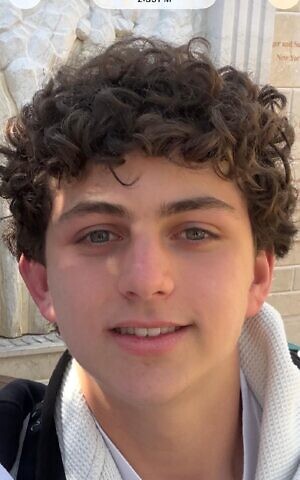
Cohen’s mother, born and raised in Israel, was in the country when the war started, and was “stuck” for a while herself. “Personally, I always felt so safe,” said the Weber student. “Sirens were the only reminder of the war. You’d hear sirens and then go back to your normal life. Israelis are so resilient. I felt so integrated” into the country.
After the extended stay in Ketura, the students were transferred to a hotel at the Dead Sea for a few days. Cohen said it was like a vacation. “We had the freedom to eat and do whatever we wanted. We swam in the pool and used the hot tub.”
Toward the end of the program, the students spent time in Jerusalem, while studying for their finals. It was still uncertain whether the students would be allowed to go up north before the end of their program because of the ongoing war with Hezbollah in Lebanon.
But they were already lamenting their return to Atlanta. Although Amalia and Ellie were looking forward to the Ramah Camp in the Rockies for the summer, Amalia spoke of her appreciation of the diverse backgrounds and political views of the students on the semester program. “Some students were black-hat religious while some were not religious at all. There was good dialogue because it was super important for us all to get along.”
Ellie agreed that it was a tight-knit group, but she and her sister hung out with their own friends. “I made awesome connections and learned so much about myself. I don’t want to leave.”
Both Ellie and Amalia attend Midtown High School (formerly Grady) where Ellie said she often had to explain to non-Jewish friends about the Jewish holidays. She was aware that she would miss the sense of community she experienced in Israel.
Longer term, Ellie wants to study pediatric medicine, while her sister wants to become a Jewish educator. Cohen, who was born and lived his first years in Israel – remembering going to a bomb shelter even as a child, plans to join the Israel Defense Forces after high school but doesn’t plan a career in the military.
“I play the violin and guitar, so maybe a career in the music industry,” he said. In mid-May, all he could say for certain is that he wasn’t looking forward to returning to school in Atlanta. “I could stay here forever!”
Reiterating that she’s a planner, Amalia said that she had planned to attend the Ramah program in Israel since she was in the sixth grade. “I had created multiple spreadsheets” in preparation. “I’m the happiest I’ve ever been. It’s been a once in a lifetime experience and opportunity,” Amalia said during her last few days in Israel. War or no war.
comments