


Chai Style Garden: Trifecta of South African Gardens
A celebration of three gardeners and the horticultural heritage they carry with them.
After 37 years with the Atlanta Journal-Constitution and now with the AJT, , Jaffe’s focus is lifestyle, art, dining, fashion, and community events with emphasis on Jewish movers and shakers.
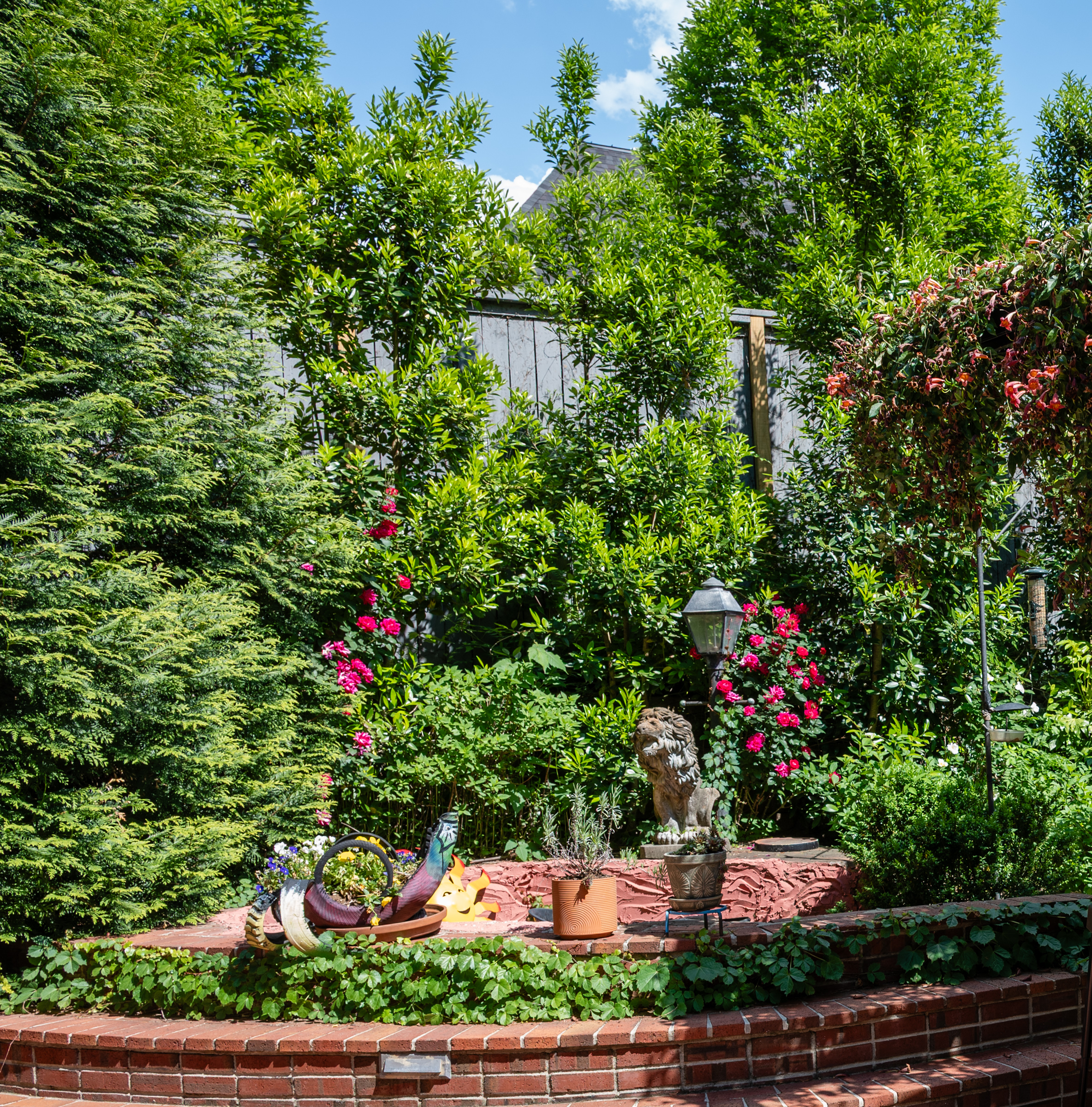
What do Eugene Cohn, David Horwitz, and Barry Mervis have in common? Other than being native South Africans, they cultivate their passion for imaginative gardening. Harking back to their roots, South Africa has one of the richest horticultural traditions, shaped by geography, climate, and culture. And maybe it’s a bit of a South African “Jewish thing,” too.

In the Cape Floristic Region, South Africa had flowering plants grow wild on people’s doorsteps, making it natural to bring them into cultivated gardens. During the British colonial period, the European tradition of ornamental gardening was transplanted to South Africa. The Cape Colony attracted settlers who were avid gardeners, and the mild Mediterranean-like climate of the Western Cape made for year-round gardening. Rainfall and access to reliable water helped. Some of the indigenous favorites that have made their way around the world are Agapanthus, Bird of Paradise, Proteas, Aloes, Plumbago, Gazanias, Freesias, Roses, Bougainvillea, Jacaranda, Hydrangeas, and Pelargoniums, geraniums of European gardens.
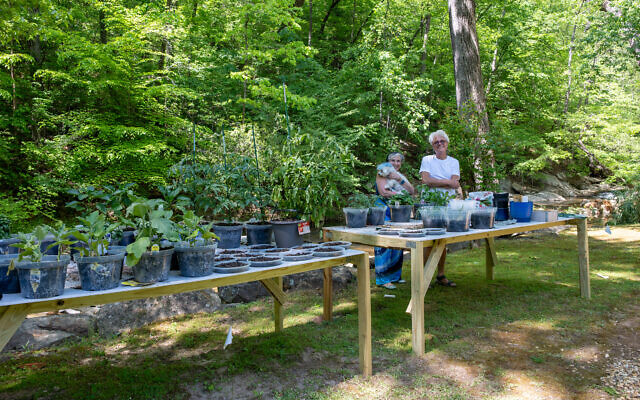
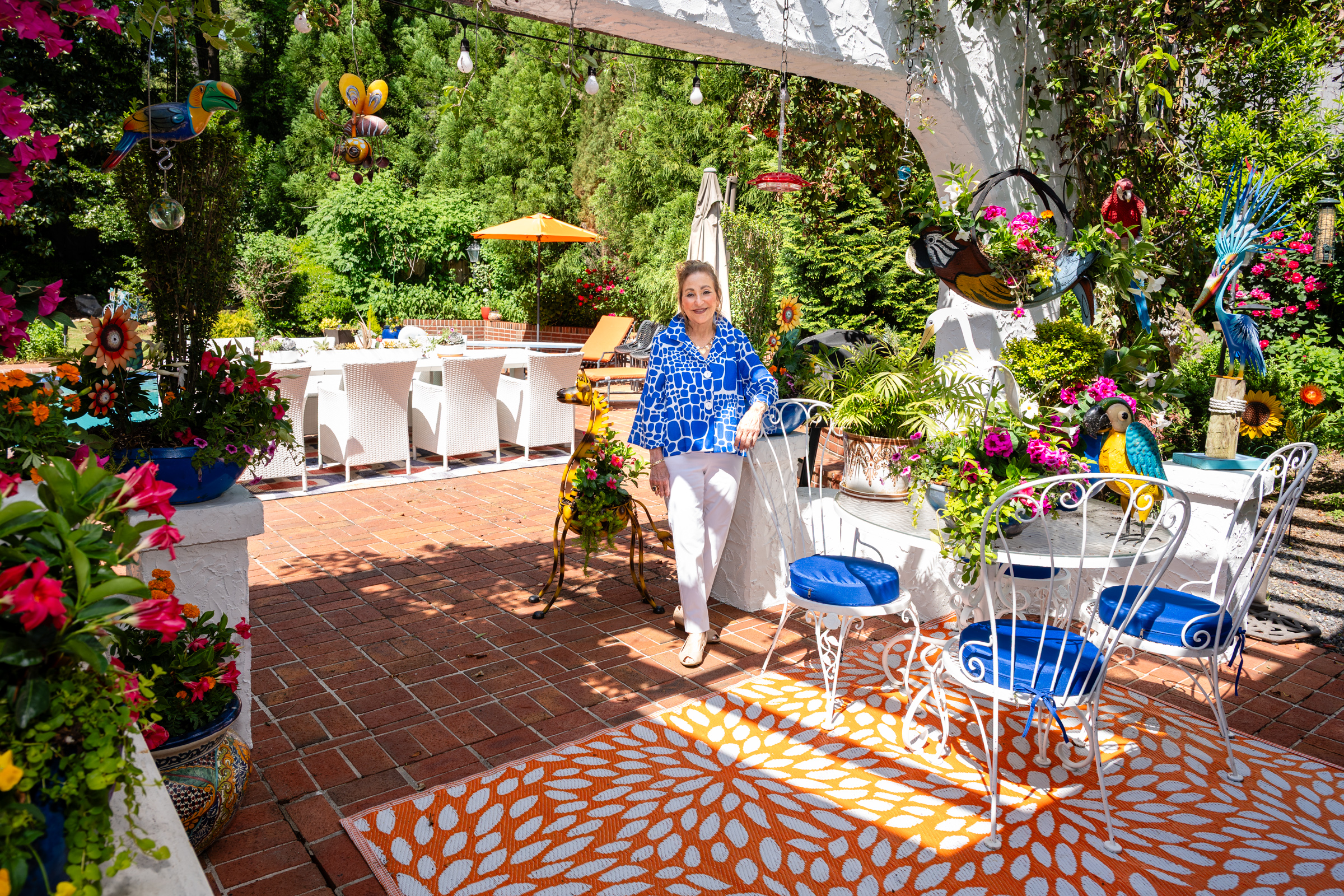
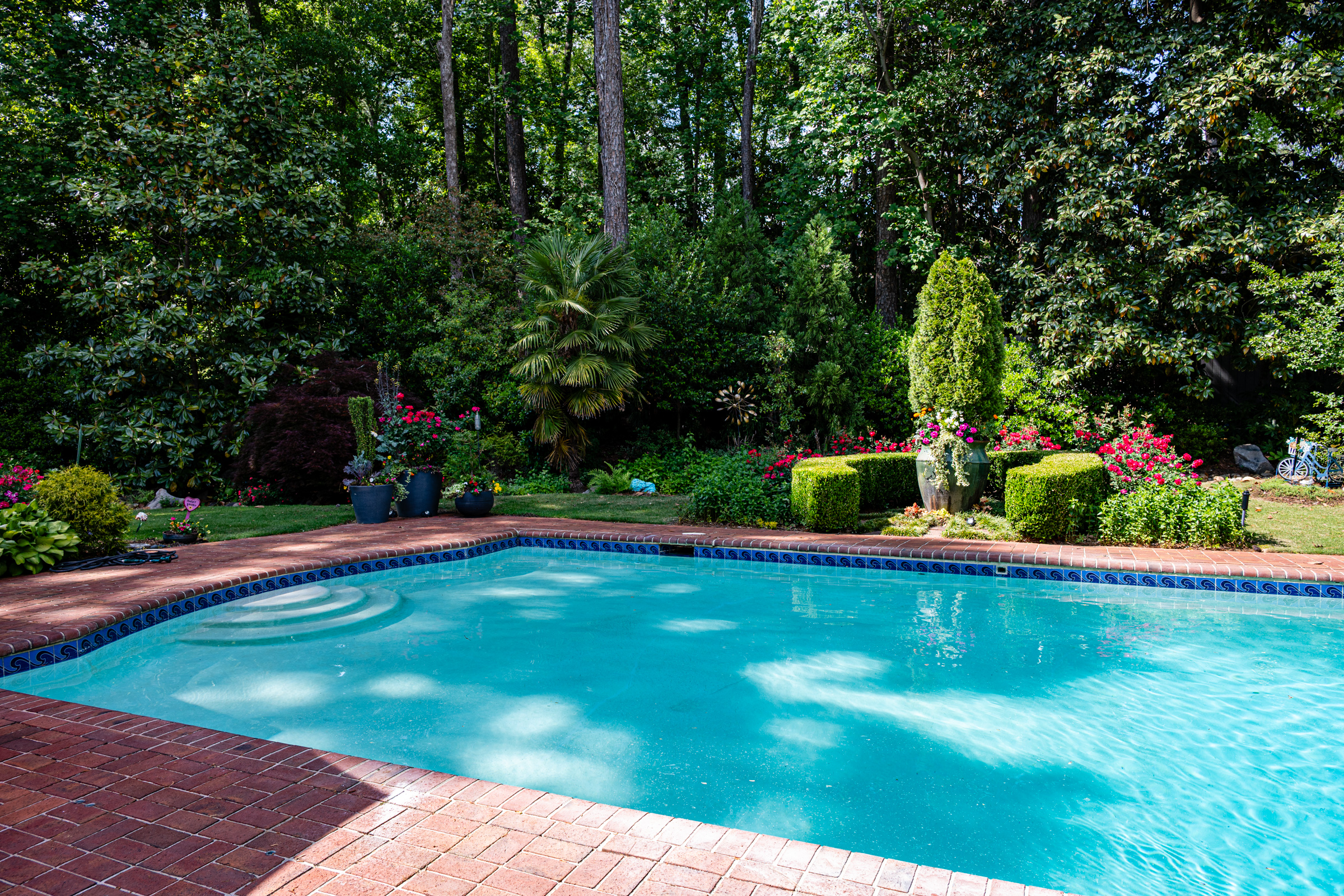
Eugene Cohn grew up in the coastal city of Durban, a city in perpetual bloom. She now operates a flower planting company that brings this coastal vibrancy to clients’ outdoors. Cohn recalled, “We had a modern home and a colorful yard. Hibiscus and orchids grew everywhere, and I loved it all, but took it for granted. My view now mimics tropics like Mexico, with stucco and painted walls, and Mykonos-stark white with blue accents, and brilliant tropical flowers … almost like paint-by-number sets. The remainder is green and neat, filled with flowering perennial shrubs like limelight hydrangeas and knockout roses. Then lilies, clematis, daisies, mums for the fall, and flowering vines over archways and pergolas with crossbones and trumpet vines.
She develops these vignettes for clients — repainting the furniture, adding rugs, umbrellas, and colorful flowerpots, creating happy beautiful scenes. Cohn’s approach is indeed theatrical.
In DeckScapes, she shows clients the magic of enhancing homes (also high-rise residents) with lavish flowerpots seen from the inside out. In winter, she adds spring bulbs for extra surprises — tulips and daffodils. In older homes, she updates front yard designs to enhance curb appeal.
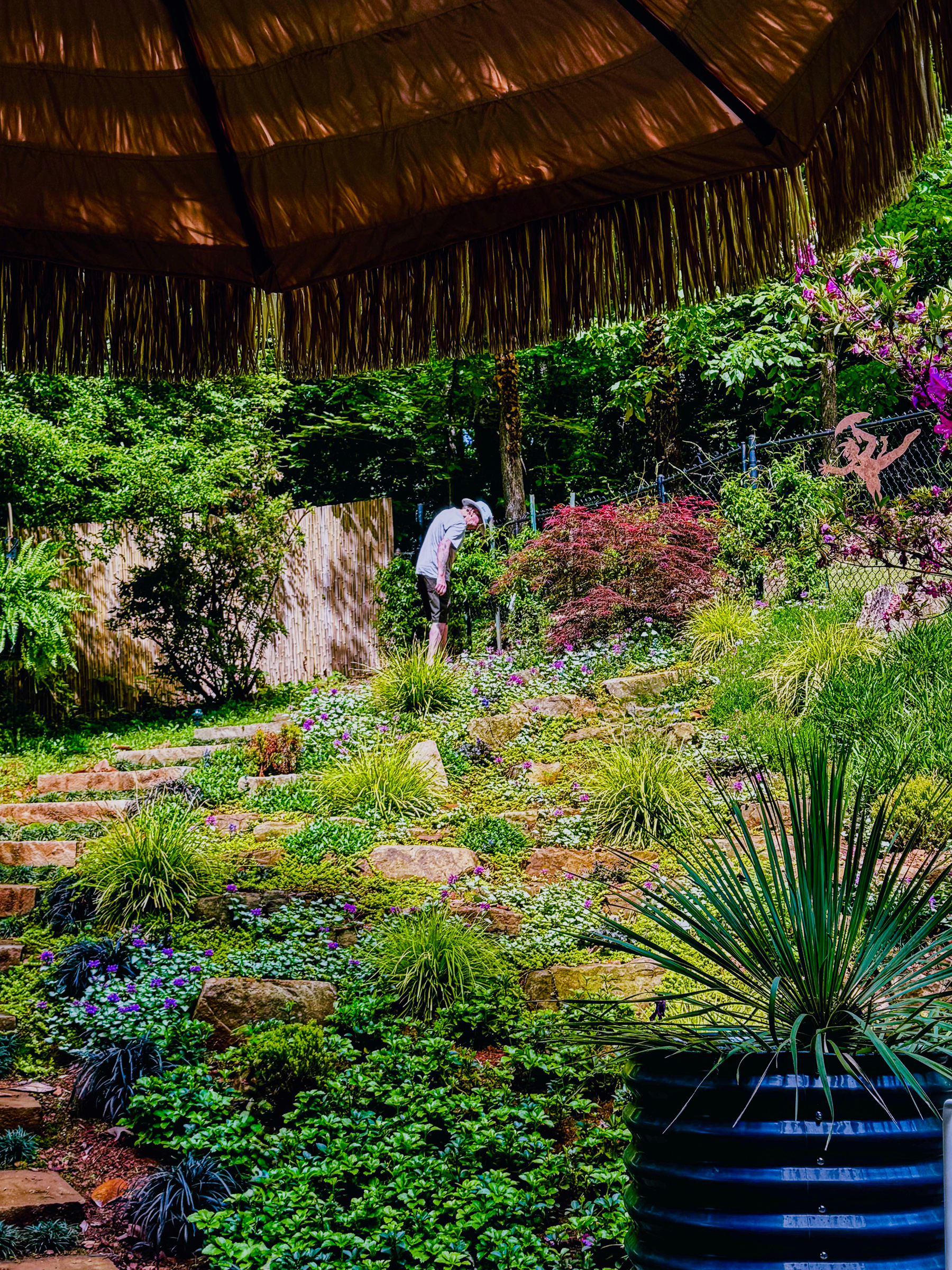
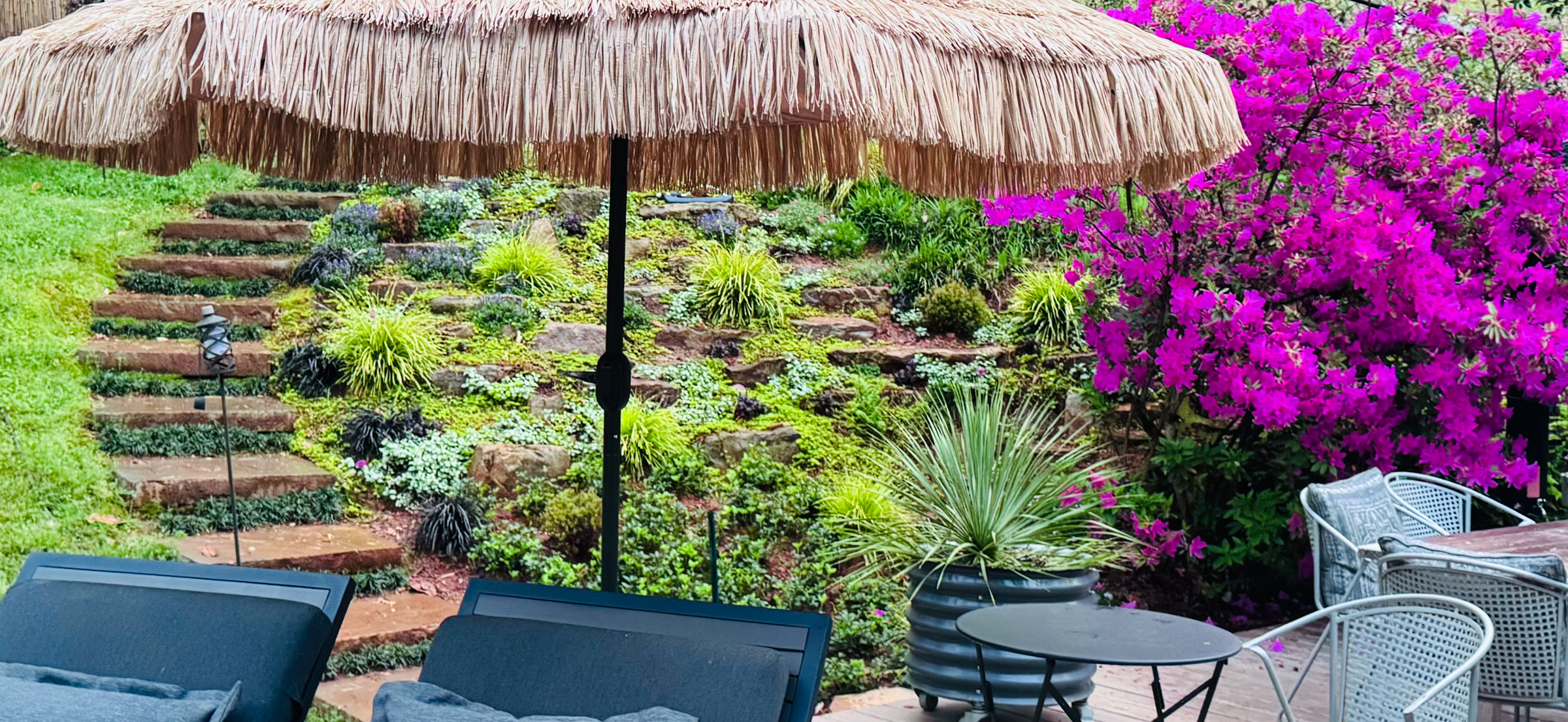
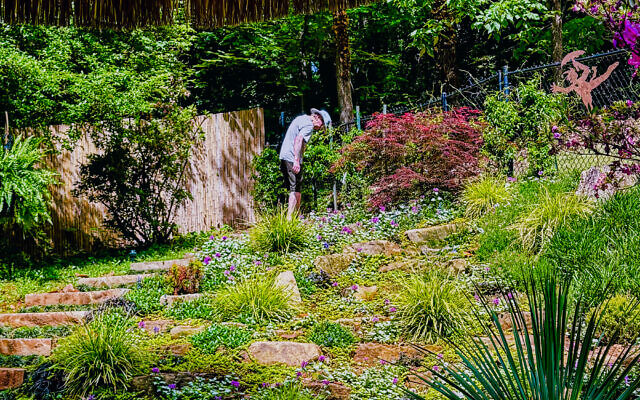
Barry Mervis faced the challenge of hungry deer. Rather than surrender his garden, he channeled his South African aesthetic into a rock garden, layered with tough, deer-resistant groundcovers that work within a dry, sculptural landscape.

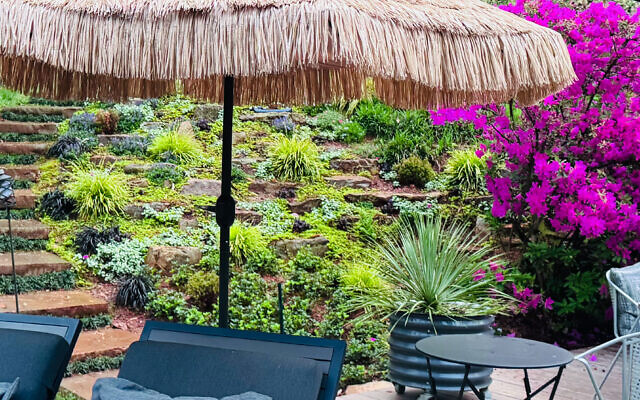
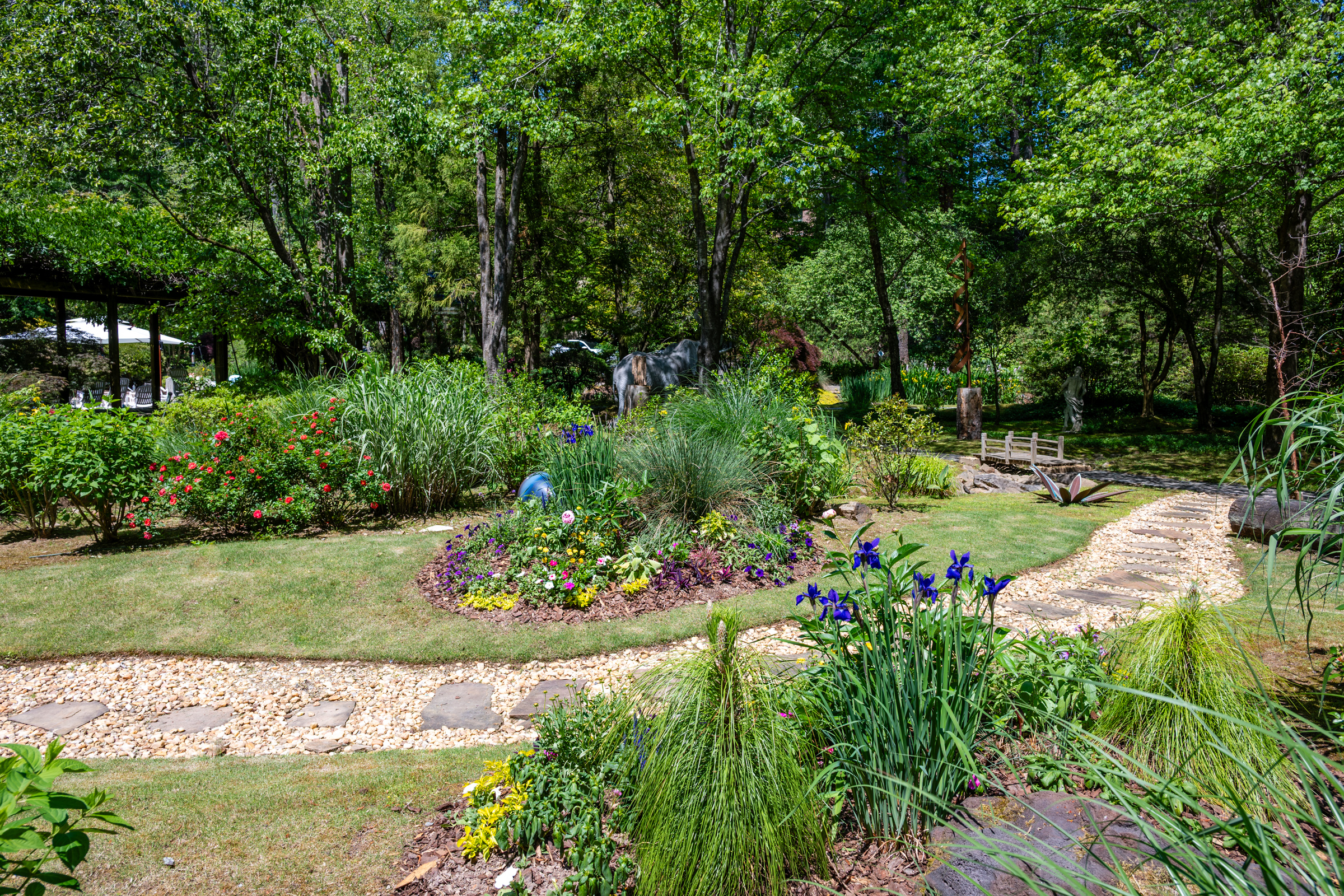
He shared, “Between sun-warmed stones and pockets of gravel, liriope forms deep green tufts with ornamental grasses found in dry climates, while staying nearly indestructible in Georgia heat and humidity. Along shaded edges where soil stays cooler, pachysandra spreads in a slow, dense carpet, smoothing transitions between rocks like a living moss substitute. In brighter seepage areas where water collects after rain, Creeping Jenny grows gently over stone in chartreuse, brightening the otherwise mute palette of gravel and rock. Threaded through pathways and tighter crevices, mondo grass adds fine, dark texture, almost like brushstrokes between boulders, giving the whole design a sense of rhythm and restraint.”

The result, as Mervis described, is a garden that feels both “considered and inevitable.” Together, his plants create a layered ground plane that feels intentional, but not fussy. Deer ignore it, Atlanta weather doesn’t overwhelm it, and the rock structure still serves as the backbone of a dry, sculptural landscape with a subtle South African feel adapted to the Southeast.
He concluded, “It is a garden that quietly insists on its origins — in its bones, its restraint, and its quiet drama — while adapting gracefully to a Georgia hillside far from the Highveld,” referring to the large plateau region around Pretoria with open grasslands and few trees.
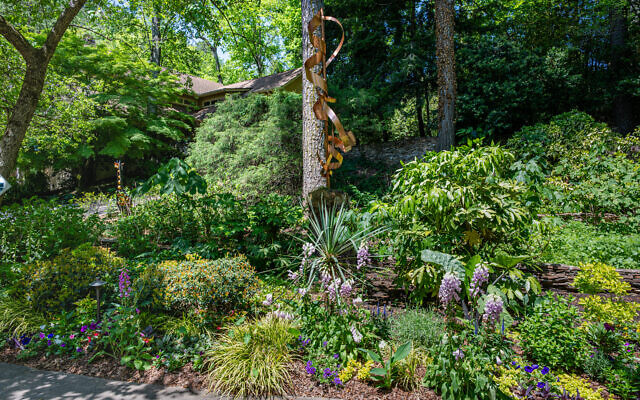
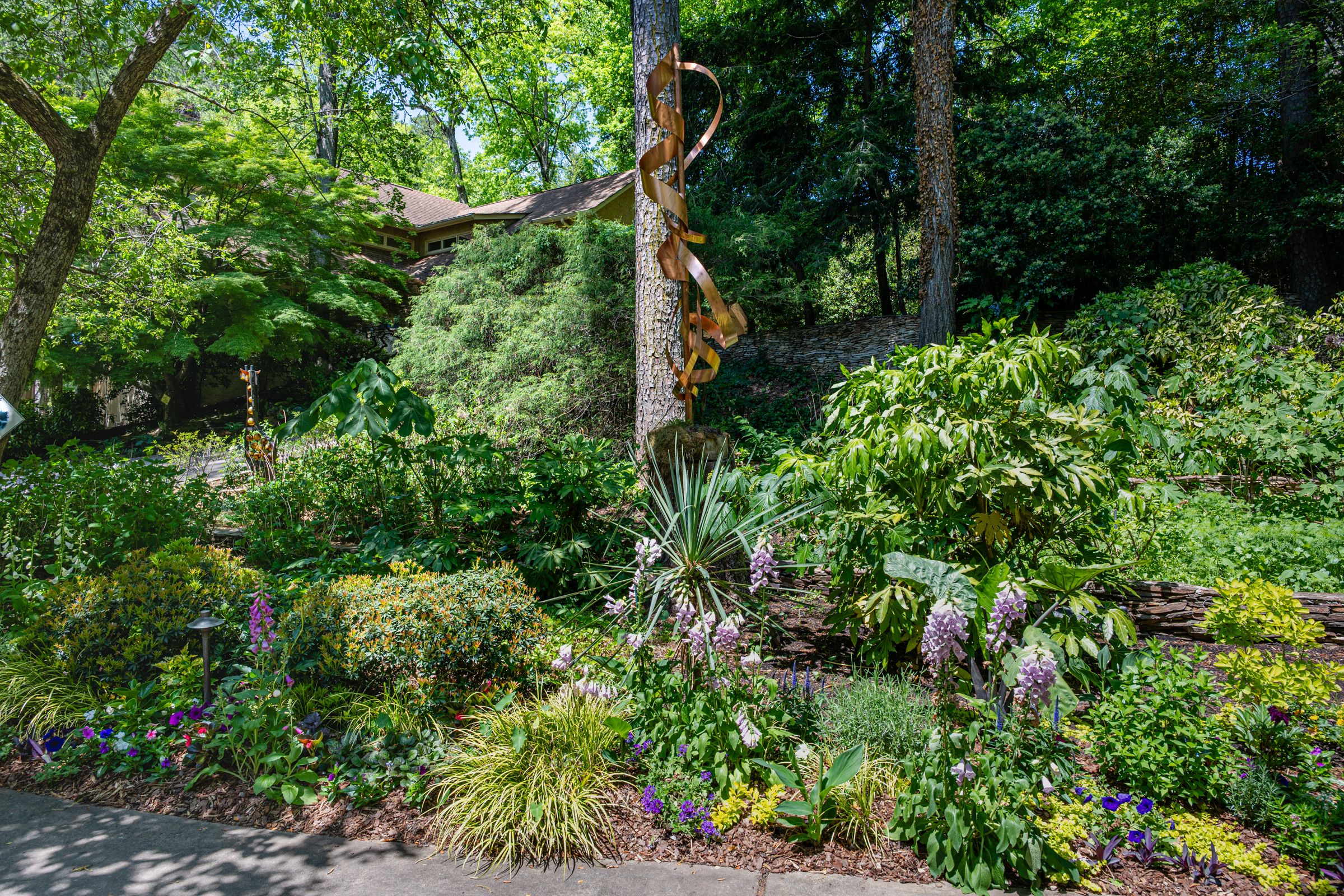
Merle and David Horwitz’ grounds come upon a wonderland when least expected. Merle’s imprint is evident from the entrance, where she designed the custom aluminum gates and fence work that frame the property. David, who grew up in Cape Town, carries a reverence for its extraordinary natural beauty and botanical gardens.
He relayed, “Cape Town is one of the best and most beautiful cities in the world.”
It was there that he developed his love of landscape on the hiking trails surrounding the city and within the celebrated grounds of Kirstenbosch, the national botanical garden nestled at the foot of Table Mountain. Though work commitments limited his gardening time in South Africa, the landscape never left him.

He said, “Once I got to Atlanta … I noticed that as pretty and green and manicured as the suburbs are, most yards were very bland. That’s when I developed my own style … we all like to see pretty pots or flower beds greeting us. The cherry on the top is to sit at one’s breakfast table or patio and see a pleasing view. It’s all about the view from inside.”
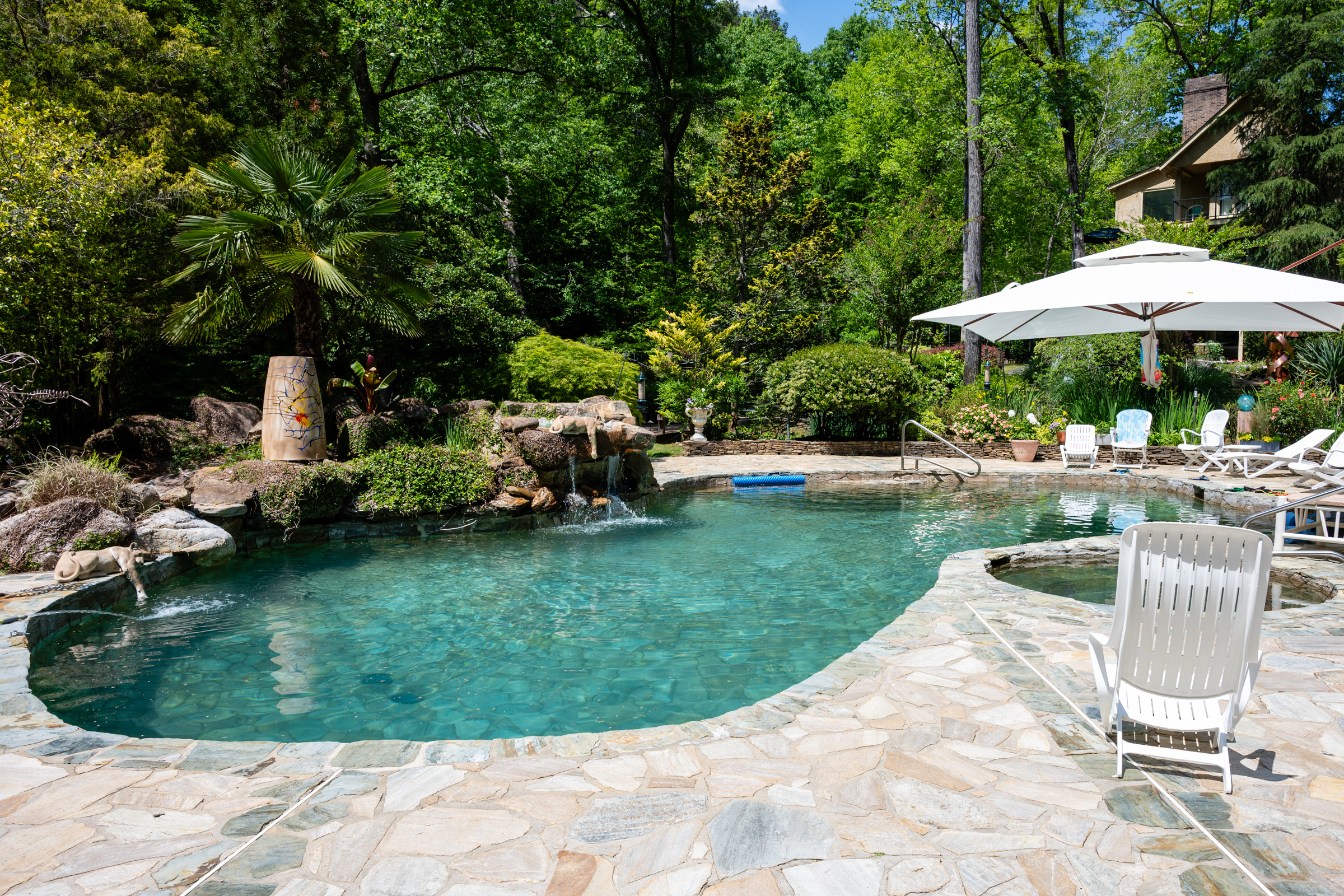
He elaborated, “Unfortunately, it was a bit of a swamp, so I re-landscaped the property and created what, in my opinion, is close to Kirstenbosch.”
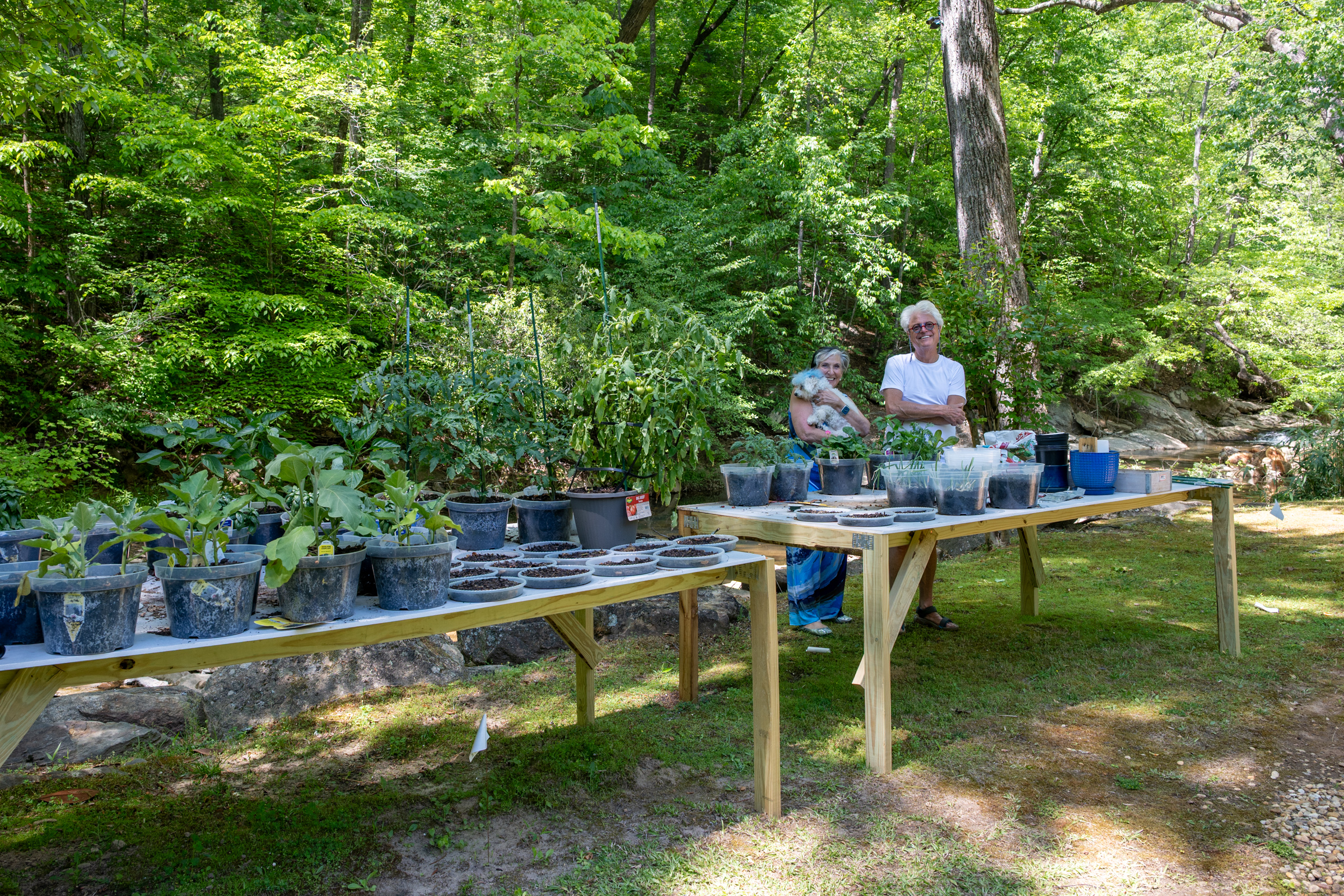
Peaking behind the pathways or lounging by the pool, jaguar and elephant sculptures lurk. A variety of vegetables are in their early pots waiting larger planting.
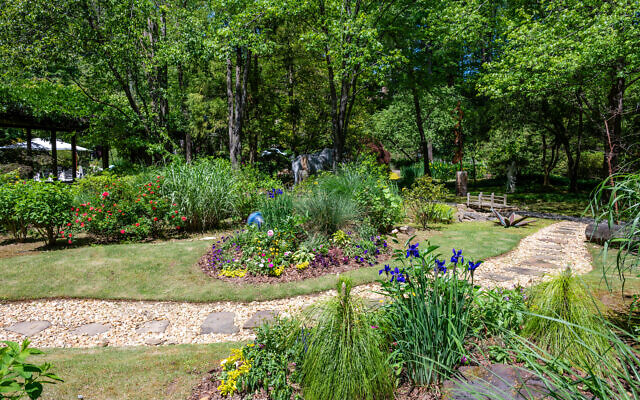
The Horwitz’s first settled in Savannah, on the island community of The Landings at Skidaway — a natural paradise that suited David’s love of sailing, with his yacht just minutes from the house. Then 18 years ago, they found their current property: 2.8 acres locally with two rivers running through it. Now there are the huge copper garden sculptures that David created in his home studio. Merle enjoys the property (especially fond of Foxglove) romping with several poodles, since she is active in a Florida dog rescue organization. She remarked, “I do not like a manicured garden,” to which David joked, “She throws a frothy if they trim back the bushes!”
comments