


Born to Spin: The Story of a ‘Wool Junkie’
Debbie Held is an internationally renowned fiber artist.
Chana Shapiro is an educator, writer, editor and illustrator whose work has appeared in journals, newspapers and magazines. She is a regular contributor to the AJT.
If your image of a spinner is based on the fairy tale of sad, golden-haired Rapunzel, cloistered in a tower with a big spinning wheel, here’s how to correct that perception.

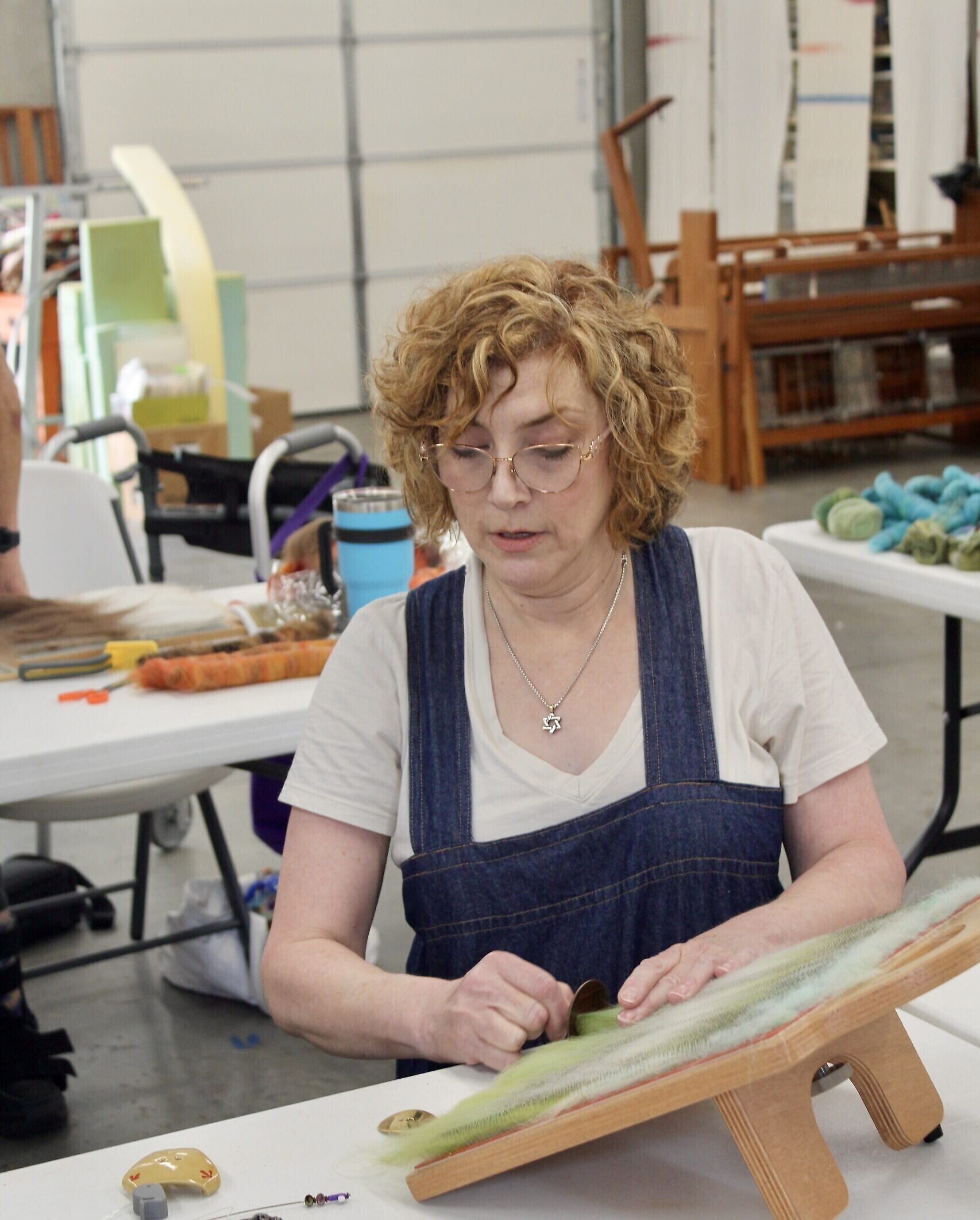
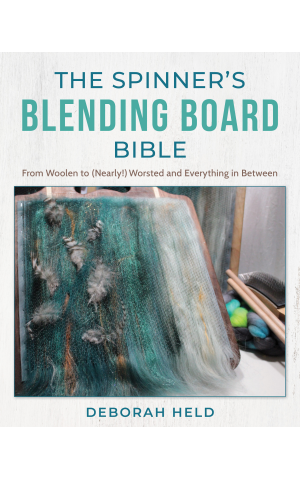
Debbie Held, an ebullient redhead, is a skilled Atlanta-based spinner, whose calendar is filled with lecturing, teaching, YouTube appearances, and writing about spinning. She is an internationally respected fiber artist, who pens spinning-related content for numerous publications. Her book, “The Spinner’s Blending Board Bible,” is a resource and guide for spinners everywhere, both hobbyists and professionals.
Held studied linguistics in college and planned to attend law school. She initially worked as a successful business journalist, then, while dealing with physical challenges, a new opportunity for self-expression arose around 2012, when a close friend, who is a weaver, suggested that she try spinning as an antidote to her malaise. Encouraged, as well, by her parents to pursue her longtime interest in the world of fiber arts, Held soon became — in her words — a “wool junkie.”
She now writes about spinning and textiles for many publications, including PLY, SweetGeorgia Yarns, Little Looms, and Farm and Fiber Knits. Her popular book, “The Spinner’s Blending Board Bible: From Wollen to (Nearly!) Worsted,” was released by Stackpole Books in April of 2025 and had a second printing the very next month. A blending board, the subject of her book, is a flat, portable board with fine wire teeth, that enables users to creatively mix fibers for spinning or to produce felt.
Contentedly proficient in weaving, knitting and other fiber arts, Held had no interest in jumping head-on into a new craft until she and a friend went to a fiber and yarn expo, where she was beguiled by examples of beautiful wool ready for spinning. Another friend loaned her a spindle, and she was hooked from “the moment I experienced the tactile sensation of that fiber running through my fingertips.” At one point, Held bartered writing content for an acquaintance’s web page in exchange for a blending board. (She emphasizes that the world of makers — often by necessity — is an actively bartering community.
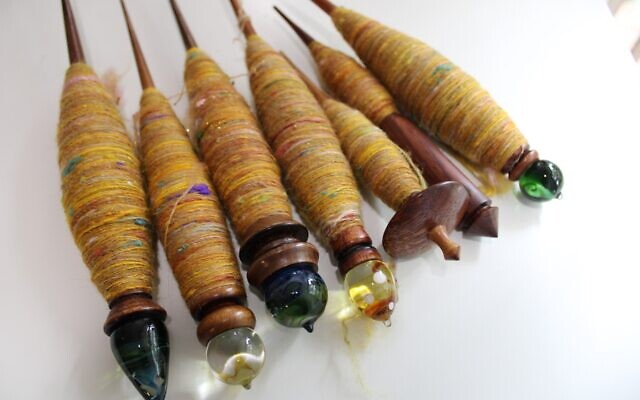
Held, who had been successfully spinning with spindles, didn’t get her first wheel until the end of 2024, which expanded her oeuvre and widened the scope of her articles about spinning. (Her professional writing is widely appreciated for clarifying technical fiber-related subjects.) These days, she frequently appears live on various media platforms, including podcasts, where she answers spinning questions and discusses and demonstrates aspects of spinning.
Held travels frequently (she recently completed a very busy gig in Wisconsin, where she led classes and gave demonstrations). She is an online spinning instructor for The School of SweetGeorgia and she leads live classes globally, works online with a school in Canada, and teaches throughout the United States at retreats, educational conferences, and agricultural festivals (agriculture? it’s about the wool). She gives demonstrations for numerous fiber and crafts organizations and occasionally at yarn shops.
Beyond her media appearances, Held interacts with fans at her book signings and works behind the scenes as a judge at the annual Georgia National Fair. She decided to decrease her activities in school art-related departments in order to focus on teaching spinning techniques to adults by helping them learn to spin a wide range of yarn structures, hoping “to build their confidence as makers.”
Although she is proficient in many handcrafts like knitting and weaving, she affirms, “There’s nothing I‘d rather do than spin!” Her studio contains 12 wheels, ranging from a 19th century “walking wheel,” (the iconic wheel that dates back to the 14th to 19th centuries, also known as a “great wheel”), two treadle wheels, a Canadian production wheel, and a slew of portable electric-spinners. She makes use of all of them (many gifted from fiber-artist friends); the spinning implement she chooses depends on the intended project’s requirements. She still finds time for weaving on her own looms.
Held and her Persian cat, Marty, live on an urban farm in the city of Decatur, where their landlord raises Shetland sheep, (a convenient source of natural wool) that roam beneath their second-story windows. When not traveling or demonstrating, Held is home spinning, writing, and preparing for appearances.
She explains, “Handcrafting of any form is a slow process, and every teaching gig and article I write requires creating samples and even photography.” She’s currently working on a woven table runner made of repurposed neckties, to be featured in a future article.
Professional spinning allows for innovation and experimentation based on broad experience with diverse fibers. Debbie’s home studio includes endless possibilities: there are all manner of requisite tools at hand, and throughout the rooms of her atelier there are large containers of unspun yarn-to-be and myriad already-spun yarn varieties. Much of her assorted cache comes from other makers and admirers, including wool from the sheep grazing outside. She purchases raw materials from trusted vendors, farmers, festivals, and online shops and sometimes makes her own dyes. She has the equipment for that process, too.
Held remains active in the Atlanta Knitting Guild and the Handweavers Guild of America, where she’s been featured, and where she’ll be teaching for the second time at their summer Convergence Educational Gathering. Other affiliations are the Peachtree Handspinners Guild and the Southeast Fiber Arts Alliance, where she taught her initial spinning class. They proudly hosted her first book signing/book launch.
At the end of each year, peripatetic Held determines her goals for the next year. Much of 2026 will be spent preparing for an intense travel schedule to New Zealand, Australia, Vancouver, British Columbia, and also to the John C. Campbell Folk School in Brasstown, N.C. She will spend a week in New Orleans; she plans to edit and post more YouTube videos; and she hopes to open a Patreon subscription membership for folks who want to learn more about fiber preparation, spinning, and using a blending board. She no longer has time for commissions and has to limit supplying other craftspeople with spun yarn. She prefers to work with fibers she’s blended herself, aiming for novel results. Lately, she’s been creating tweeds and lightly textured yarns spun from blended, recycled textiles and wool.
Spinning is a craft growing in popularity. Held knows that learning to spin and use a blending board to create original yarn types can be very exciting and rewarding. The Spinner’s Blending Board Bible is available on Amazon and at most bookstores. Held’s work may be seen on her website, debbieheld.com, and through her Instagram and Facebook accounts. Enjoy meeting her on YouTube, too.
Held’s affable, clever, and candid personality shines through her live appearances and writing. She muses, “I might be the most fortunate person in the world. I create and play with yarn, and I teach others. I turned to knitting and later to spinning as a way to ease the grief and physical pain associated with a chronic illness, and today, I wouldn’t change a thing because this is the career and lifestyle I was born for!”
- Arts and Culture
- Community
- Chana Shapiro
- Debbie Held
- The Spinner’s Blending Board Bible
- PLY
- SweetGeorgia Yarns
- Little Looms
- fiber arts
- School of SweetGeorgia
- Georgia National Fair
- Atlanta Knitting Guild and the Handweavers Guild of America
- Peachtree Handspinners Guild and the Southeast Fiber Arts Alliance
comments