



JCRC Spreads News of Atlanta’s War Response
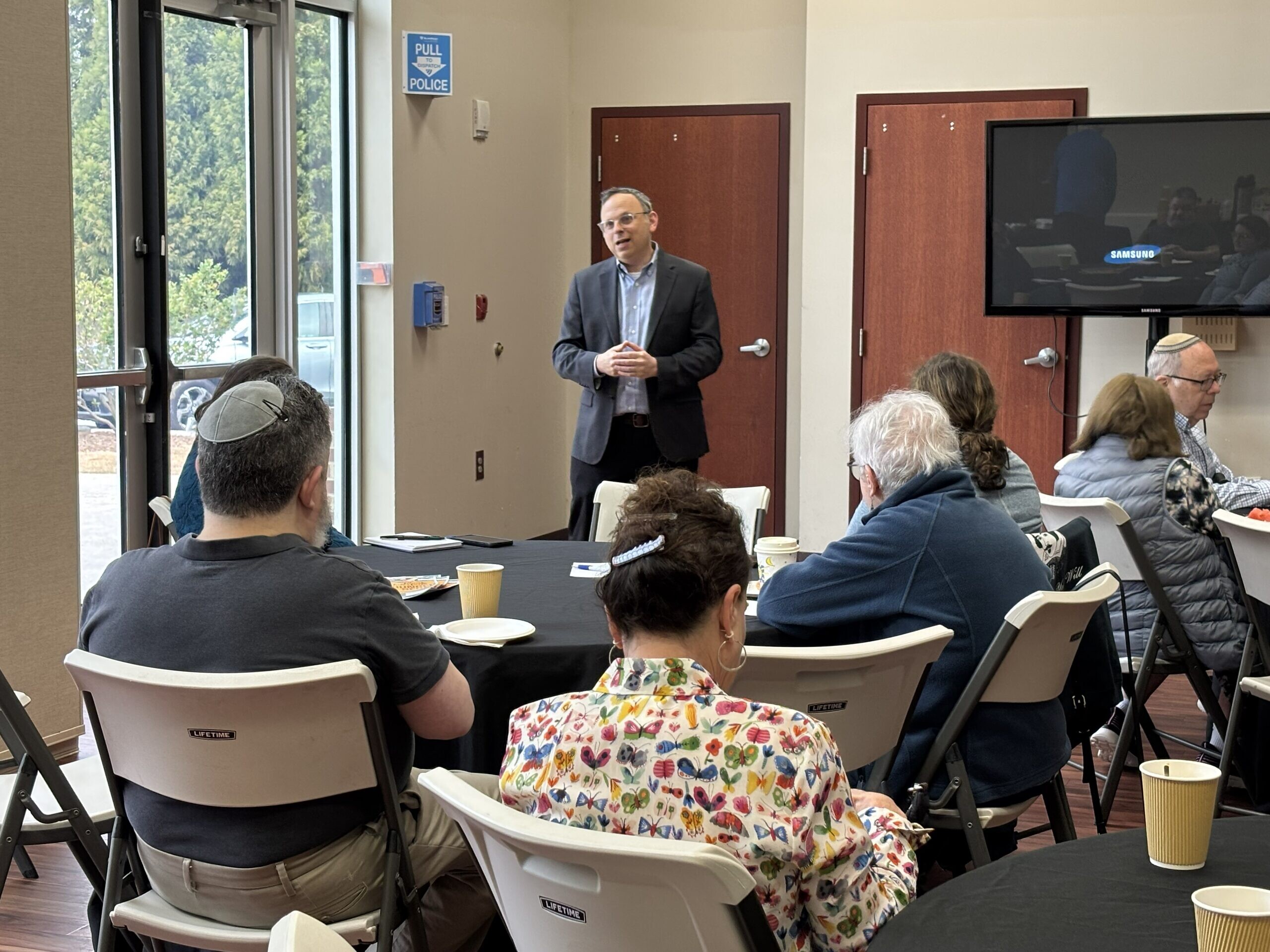
About two dozen people attended the briefing at Congregation Ohr HaTorah in Toco Hills.
The Jewish Federation of Greater Atlanta made an initial emergency grant of $250,000 for Israeli needs during the war with Iran, Federation CEO and President Renee Kutner said during a special briefing held by the Jewish Community Relations Council of Atlanta on March 5.

Kutner emphasized that the Jewish Federations of North America has not launched an emergency campaign as it did after the Oct. 7, 2023, attack by Hamas.
In part, she said, it’s too soon: The needs for postwar reconstruction won’t be known until the missiles stop flying. In part, Israel is in much better shape to provide emergency services after the lessons learned and systems developed the past 2½ years with the help of more than $1 billion in U.S. donations. And, in part, Israel isn’t in a situation where a brief influx of money will solve a problem; rather, Israel requires elevated levels of giving for years.
Kutner said Federation’s partnership regions in Israel — Yokneam-Megiddo, Kibbutz Nahal Oz in the south and Shlomi in the north — are in good shape to withstand missile attacks. After Oct. 7, Federation shored up the public shelters, including mobile shelters, for the biggest and longest-term of those partners, Yokneam-Megiddo.
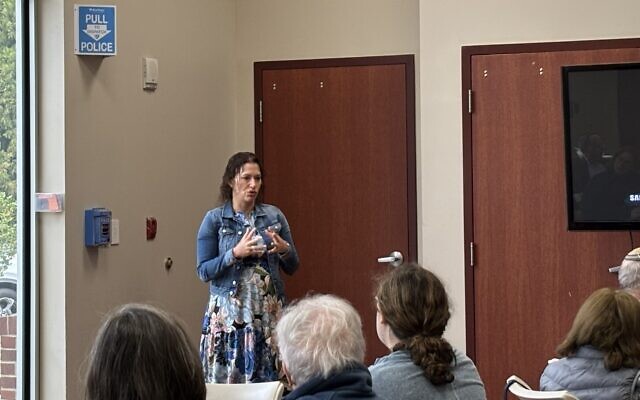
About two dozen people attended the briefing at Congregation Ohr HaTorah in Toco Hills. The war briefing was a last-minute replacement for JCRC’s planned quarterly Community Council, focusing on the intersection of nutrition programs and health in Georgia and Israel. That session is part of JCRC’s yearlong focus on anti-hunger efforts, including the annual Interfaith Hunger Seder at Ahavath Achim Synagogue on March 29. Registration is available at atlantajcrc.org.
The postponed council meeting will be held April 30. It will include information from Israel’s national food bank, Leket Israel, which says the war has disrupted its food collection and distribution efforts by halting harvests, closing businesses and cutting off access to surplus food from IDF bases. To make up the difference, Leket says it needs an additional $508,000 per week.

Kutner did not speak about Leket, one of Federation’s many partners in Israel. However, she did emphasize the best way to help Israel right now is to give money. She said Federation’s biggest partners in Israel, the Jewish Agency for Israel and the American Jewish Joint Distribution Committee, requested $16 million and $6.8 million, respectively, in the first week of the war.
Donations to Federation, whether online or by mail, can be designated to support Israel.
Federation has also helped Atlantans make their way home from Israel, Kutner said. Groups, such as the Jewish Women’s Connection of Atlanta, took priority, but Federation is ready to assist individuals.
Speaking two days after Purim, Rabbi Adam Starr of the host synagogue noted parallels to the holiday story, which is set in Persia (ancient Iran). As in the Megillah, he said, now there is an unmasking of the Jewish people’s friends and enemies.
That unmasking applies to Israel’s international relations as well as Jewish lives in the Diaspora. But, unlike the days after Oct. 7, the Anti-Defamation League has not seen a spike in antisemitic incidents or a surge in anti-Jewish or anti-Israel activity on college campuses, said Ryan Pelfrey, the ADL senior associate regional director in the Southeast.
Pelfrey told the crowd that ADL is closely monitoring the situation online and off, and the regional office in Atlanta is keeping in contact with local universities.
He and Kutner praised the support of local police.
“We have unbelievable relationships with our law enforcement in every single county, at the FBI, and so we really are in a good place with that,” Kutner said. “Our only concern is unfortunately the amount of dollars we have to spend on security we don’t get to spend on other stuff.”
- News
- Israel
- jewish federation of greater atlanta
- Renee Kutner
- Jewish Community Relations Council of Atlanta
- Yokneam Megiddo
- Kibbutz Nahal Oz
- Congregation Ohr HaTorah
- Interfaith Hunger Seder
- Ahavath Achim Synagogue
- American Jewish Joint Distribution Committee
- Jewish Agency for Israel
- Jewish Women’s Connection of Atlanta
- rabbi adam starr
- Anti-Defamation League
- Ryan Pelfrey
comments