


Kramer’s NFA Stages Burger Benefit
Burger expert and author George Motz was the star attraction at the Dunwoody event.
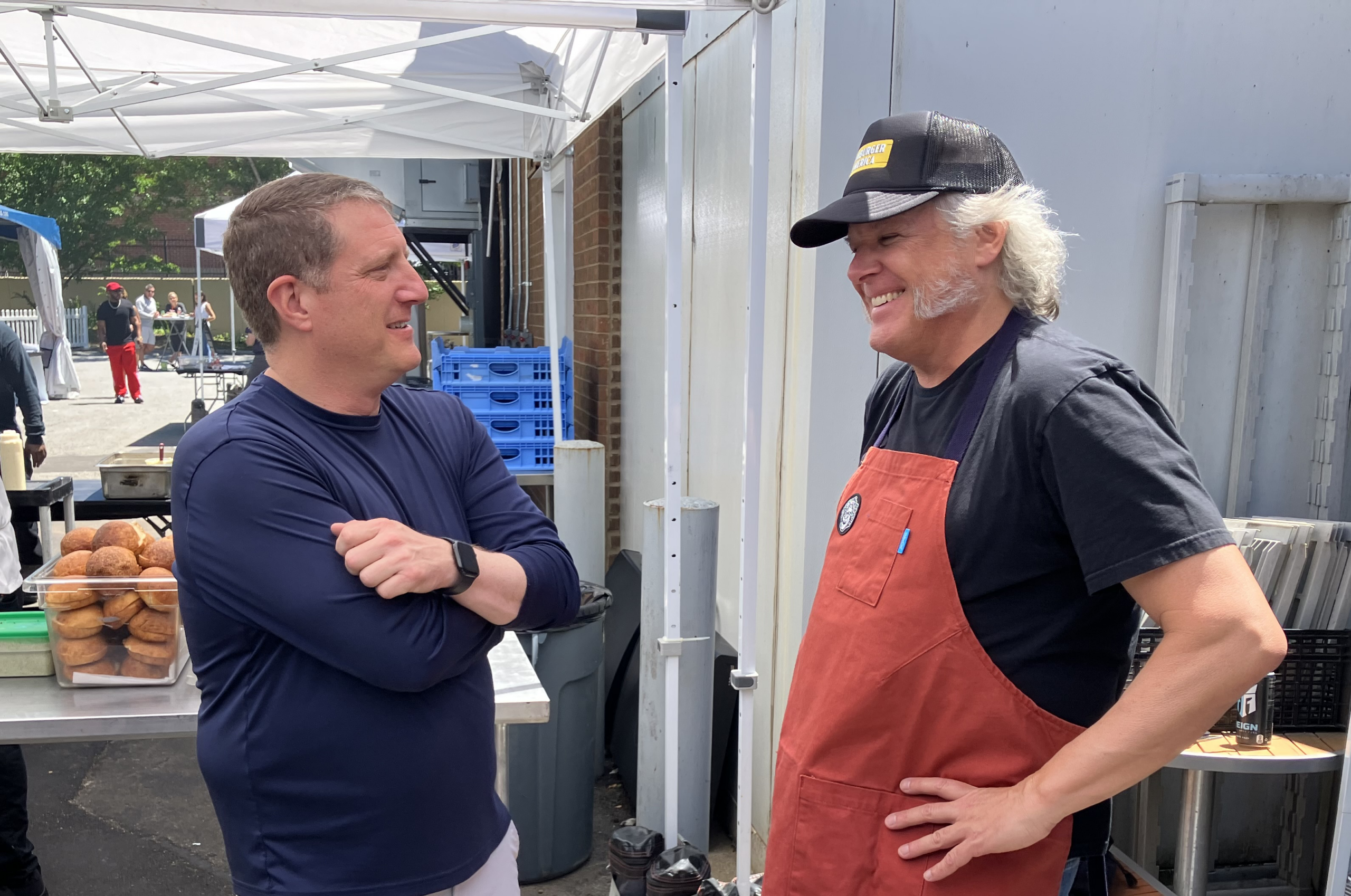
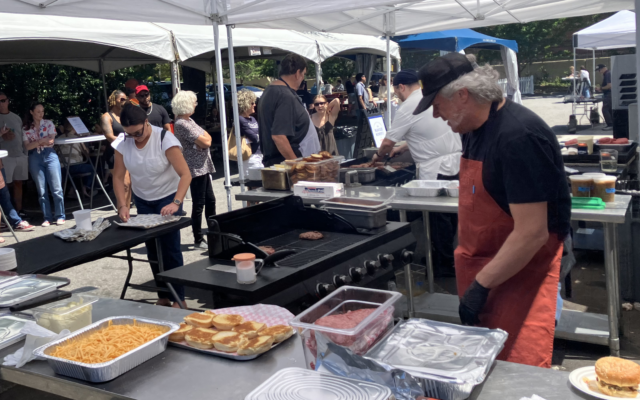
On a recent bright, sunshine-filled Sunday behind the Chevron station on Roberts Drive in Dunwoody, George Motz is flipping burgers. He gives an expert twist of the wrist and each of about a half-dozen ground beef patties flare up with a wisp of smoke on the outdoor grill behind Billy Kramer’s acclaimed NFA Burger stand on one side of the station.

The Dunwoody restaurant has racked up a long list of best burger reviews since Kramer opened the operation in the small gas station building seven years ago. Today, all eyes are on the Motz, a tall, intense burger chef from New York whose handsome face is framed by long bushy sideburns. The patties are carefully formed – eight-ounce rounds of ground chuck, with a ratio of 75/25 beef to fat content. Motz’s recipe for a successful sandwich is pretty simple.
“What makes perfect burger,” he says, “you have to the right bun, the right amount of beef to the bun and all the flavors need to work together. You should have flavor in every bite. The first bite and the last bite should taste exactly the same.”
He is, arguably, among the most well-known authorities on these humble patties that is getting his singular attention this afternoon. His book, “Hamburger America,” is a 450-page national catalog of the most historical and important burger restaurants in America.
His own restaurant, which opened to rapturous reviews last year in the Soho neighborhood of lower Manhattan, doesn’t get a mention in the book, but 220 others, many of them old and legendary short order establishments, do.
The only one in Georgia that makes the cut is Moe’s and Joe’s Tavern in Atlanta’s Virginia Highlands neighborhood. It was started almost 80 years ago by Moe and Joe Krinsky and still features pitchers of Pabst Blue Ribbon beer and its best seller, the “Double MoJo” burger.

Motz has come south for a cause, Kramer’s annual benefit for Giving Kitchen, a national nonprofit that supports restaurant workers during illness and family crises. The line of hungry diners who waited patiently for their carefully wrapped burger have paid $65 each for the Motz creation plus an autographed copy of his just published book. The sandwich is a re-creation of the Theta Cheeseburger made famous by Johnnie’s Charcoal Broiler in Oklahoma City. Motz describes it as one of the most significant hamburger restaurants in America.
There are only six ingredients to the sandwich whose origins go back to the mid-1930s. A toasted, sesame seed bun is topped by the burger, a handful of thickly shredded American cheese, dill pickle chips, mayonnaise and a secret sauce with a tangy, smoky tomato base. It’s a hefty handful that comes together nicely, hot off the grill.
This was the final burger benefit for Kramer, who is instead adding a Giving Kitchen Burger to his menu, and a portion of each sale goes to the charity. The same goes for each purchase of bottled water at his recently opened restaurant in the Avalon Shopping Center in North Fulton. It’s all part of his continuing commitment to helping others.
“I think if you’ve had any success in the restaurant industry, you owe it, as a restaurant owner, to give back to the community, the restaurant community specifically, and this is the easiest way to put money back in the hands of people in our industry who are in crisis.”
The Giving Kitchen organization was started almost 13 years ago after the owners of the Muss and Turner’s restaurant in Smyrna threw what they thought would be a modest benefit for a seriously ill local chef. Much to their surprise, a thousand people showed up, they raised $300,000 and Giving Kitchen was born. Today, that one-day signature event attracts over 1,800 people and raises more than $1.5 million annually.
Since 2014, it has helped approximately 39,000 food service workers across the country and has won a Humanitarian of the Year Award from the prestigious James Beard Foundation.
The executive director of the organization, Allison Padilla-Goodman, worked for the Anti-Defamation League here for eight-and-a-half years; and for the last five of those years as director of the ADL’s Southern Division.
“The majority of our clients do not have $500 of savings in the bank, so when a health or family crisis happens, the try to work through it in order to pay rent, and put food on the table. And so that’s where Giving Kitchen really comes in to kind of help them through the crisis and get them to stability on the other side.”
comments