



Leo Frank, Tom Watson Brown and Myself
Rabbi Steven Lebow details his experiences with the Leo Frank case.
Rabbi Steven Lebow is the spiritual leader of Temple Kol Emeth in Marietta.
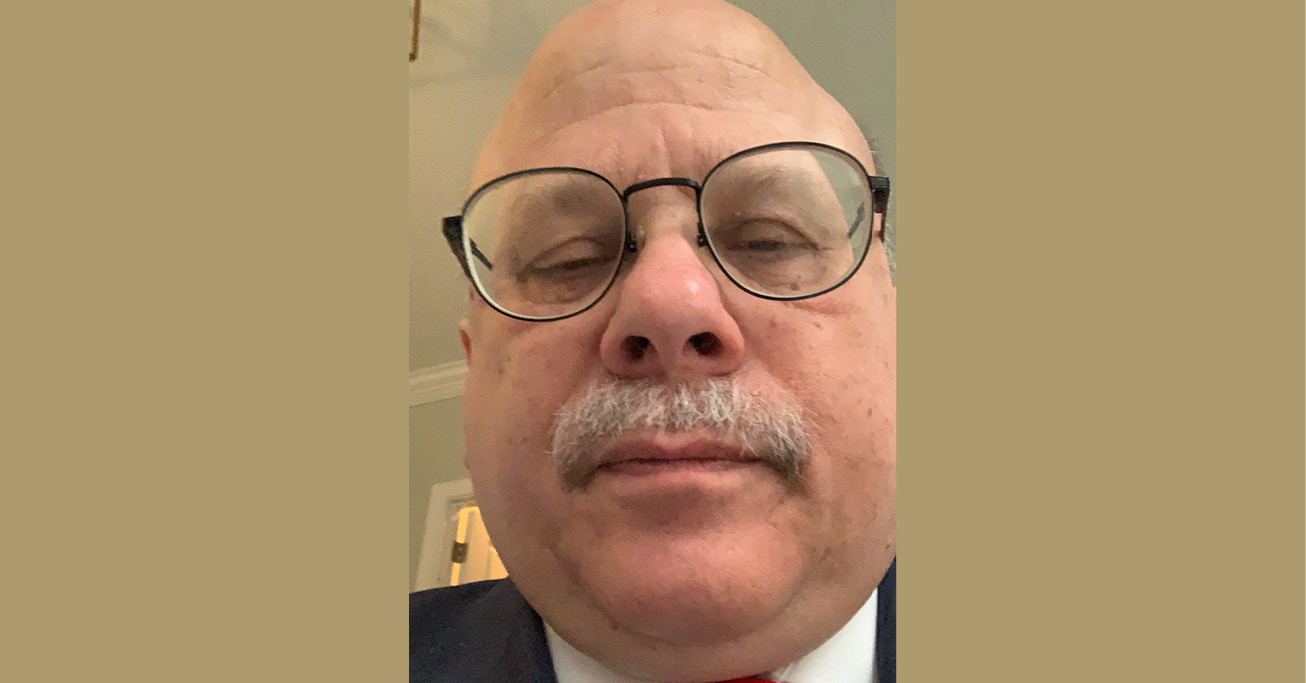
On June 2, 1995, Tom Watson Brown wrote a letter to the editor of a local paper complaining that the paper had reported that a “mob” had lynched Leo Frank and that the word, “mob,” did not adequately describe the “strictly disciplined representing Marietta’s leading families …” Two weeks later, Tom Watson Brown penned another letter which continued to justify the actions of the lynch mob, since it was obvious to him that Frank was guilty.

Not realizing who Tom Watson Brown was, the great-grandson of Tom Watson, the writer who fanned the flames of Jew-hatred that led to Frank’s murder, I dashed off a quick letter of protest.
“It’s difficult to know what planet Tom Watson Brown lives on,” I wrote, “but it is clearly not the earth.” My letter went on to try to educate the newer arrivals to Cobb County on the intricacies of the case and why it was clear that Frank had been falsely accused and then wrongly convicted.
A Marietta native mentioned to me that it was open knowledge where the Frank lynching had occurred and he invited me to join him at the spot in question.
“This is where ‘my people’ did something terrible to ‘your people,’” he said. He drove away and with that cryptic comment I realized that I was now standing on the ground where the tree had once been.
Although the actual lynching tree had been cut down, the site of the lynching was a squat office building, next to the I-75 overpass. As everyone in Marietta knew (except for me, at that time) Frank had been lynched on the site where Cobb’s Sherriff regularly nursed a drink or two. Hence, the name of the Marietta Street, Frey’s Gin Mill.

As a relatively newcomer and as someone who was obviously Jewish and who sounded like a Yankee, I shyly approached the owner of the office building, Roy Varner.
Mr. Varner, an early developer in Cobb County, could not have been nicer or kinder to me. He acknowledged that his building was built on the site of the Frank lynching. He had bought the building in the 1950s and had been aware of the historical association on his property.
“Can we place a memorial plaque (Yahrzeit) on your building and have a memorial service on your property, on the 80th anniversary of the Frank lynching?” I asked Roy.
He could have turned me away or simply shown me the door. Instead, he was as gracious and as kind as I have discovered that Mariettans truly are.
“Of course, you can have your service here,” he said to me. “Put your memorial plaque on my building, so that people will remember it was a bad time and that a thing like that will never happen again.”
With Roy Varner’s permission and blessing, I had the first Frank memorial plaque made by a local signage company. On Sunday Aug. 14, 1995, I organized the first ever memorial service for Leo Frank on the site of the lynching. I was joined by Dale Schwartz and Charles Wittenstein, the attorneys who had argued in 1984 for Frank’s pardon.
This is where ‘my people’ did something terrible to ‘your people.’
We were joined by a crowd of Mariettans that day, Jews and Christian alike. Staying up late one night in July 1995, I had penned the words, “Leo Frank was Wrongly accused, Falsely Convicted, Wantonly Murdered.” I was told to leave my name off the plaque, lest it cause personal attacks on me. I signed that first plaque “(Leo Frank) remembered by the Jewish Community of Cobb County.”
Even so, my caution wasn’t rewarded. People saw my name in the local newspapers, and I occasionally received the odd hate letter or death threat.
Several other events happened in the years following the placing of that first plaque. The Tony Award-winning play, “Parade,” premiered on Broadway. Another play about the case, “The Lynching of Leo Frank” premiered at Marietta’s Theater in the Square.
A reporter asked Tom Watson Brown if the City of Marietta should issue an apology for the lynching of Leo Frank. I should not have been surprised by Brown’s comment, but I was.
Leo Frank was killed not “because of his religious persuasion, but because the Jews bribed the governor [John Slaton] to commute Frank’s sentence,” said Brown.
When the reporter dug even further, Brown said, “Maybe the Frank family should apologize for paying off the governor!”
Reading Brown’s quotes made me wonder if I had entered some parallel universe where the facts of Frank’s innocence were ignored and Tom Watson Brown had decided to revive that old stereotype that the Jews manipulate the world because we have all the money!
By 2000, I had discovered who Tom Watson Brown was. He was the great-grandson of Tom Watson, a renowned antisemitic writer in 1913. It is said that the antisemitic screeds penned by Watson helped fan the flames of Jew hatred throughout Georgia.
His great-grandson, Tom Watson Brown, was a Harvard educated lawyer, one of the wealthiest men in Atlanta, and a part-owner of the Atlanta Falcons!
I fired off a letter of complaint to NFL Commissioner Roger Tagliabue about Brown’s comments. A few days later, Brown wrote me a personal letter in which he acknowledged that the Frank lynching was a tragedy … “but only for the Mary Phagan,” implying that Leo Frank got exactly what he deserved!
Ten years later (2005), I returned to the very same site and placed a second plaque there which read simply, “Am I my brother’s Keeper? On the 90th anniversary of the lynching and in memory of all victims of lynching.”
This time, I wasn’t afraid of signing the second plaque.
Put your memorial plaque on my building, so that people will remember it was a bad time and that a thing like that will never happen again.
Thirty years later, after I had gathered that first group to memorialize Leo Frank, Tom Watson Brown is gone. His great-grandfather represented a part of the era of the Old South-antisemitism and naked racism. The local writers and editors, Otis Brumby, Jr. and Bill Kinney, were always gracious and encouraged me in my efforts to write and to speak about the Frank case. Otis and Bill represented to me the best of the New South, a Marietta free of hatred and prejudice.
At this date, as we approach the 110th anniversary of the Frank lynching, I choose to honor the memories of those Mariettans who encourage me to speak out, rather than to simply disparage the legacy of Tom Watson Brown.
As of this date, the Frank case is now under review of the Correction Integrity Unit of the Fulton County DA. It is now in their hands to vacate the charges against Frank.
The arc of Southern history is long, but it moves ever upwards. Eventually, Frank will receive the complete exoneration that he deserves. Until that time, I’ll stand at Frey’s Gin Mill and Roswell Road every August and offer a simple Mourner’s Kaddish for him, a prayer in memory of the dead.
It’s the least I can do, as we await the eventual exoneration of a man charged with a crime he did not commit.
Rabbi Steven Lebow is the Senior Rabbi Emeritus of Temple Kol Emeth.
- Opinion
- guest contributor
- Rabbi Steven Lebow
- Tom Watson Brown
- Leo Frank
- marietta
- Cobb County
- Frey’s Gin Mill
- Roy Varner
- Dale Schwartz
- Charles Wittenstein
- Parade
- "The Lynching of Leo Frank"
- John Slaton
- Tom Watson
- Atlanta falcons
- Roger Tagliabue
- Correction Integrity Unit
- Fulton County
- Antisemitism
- Temple Kol Emeth
comments