


Schinazi Stresses Peace Through Health
World famous Dr. Raymond Schinazi received the 2026 Rambam Award at Chabad of Toco Hills.
After 37 years with the Atlanta Journal-Constitution and now with the AJT, , Jaffe’s focus is lifestyle, art, dining, fashion, and community events with emphasis on Jewish movers and shakers.
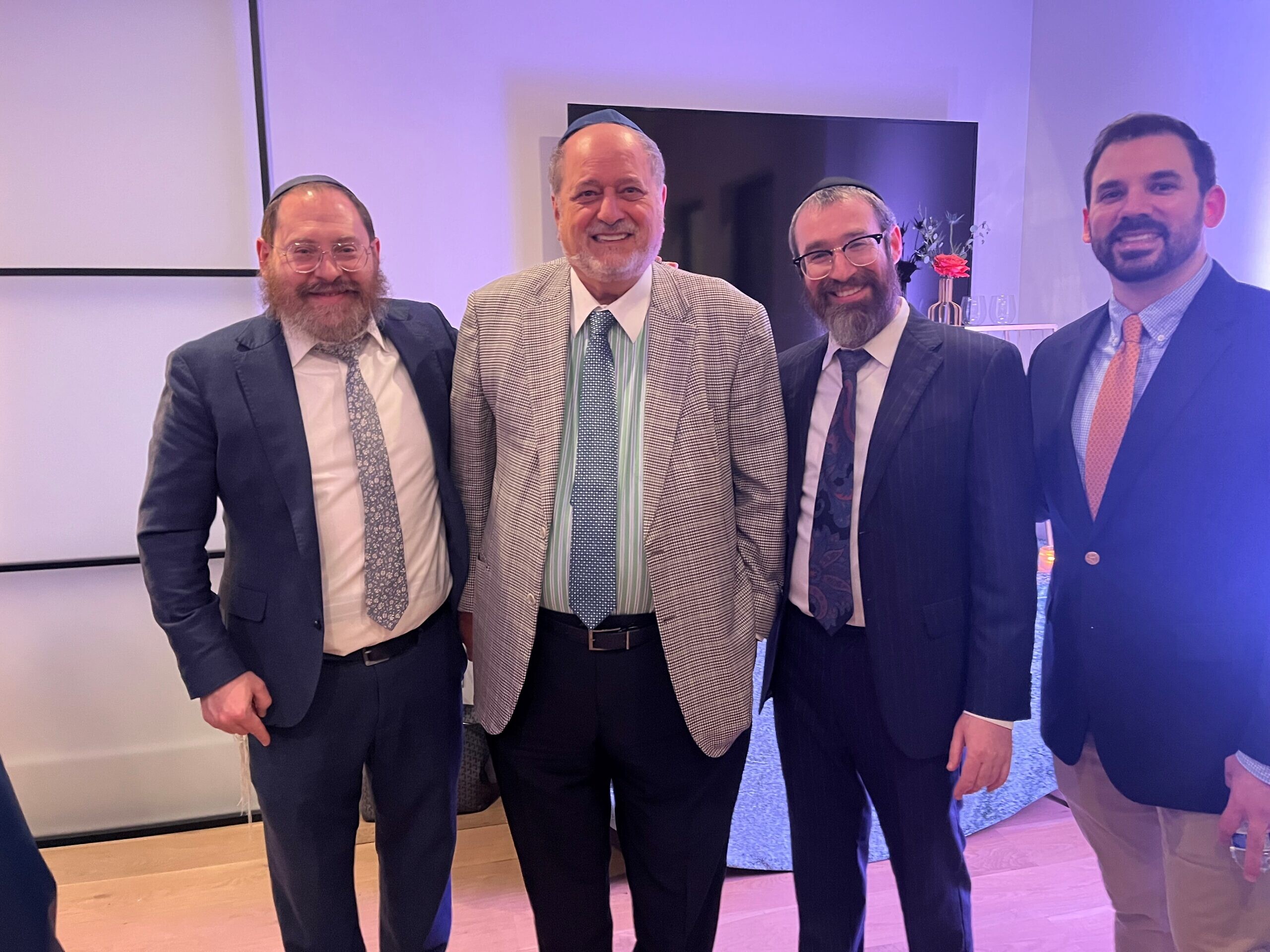
World famous chemist Dr. Raymond Schinazi, pioneer of antiviral research, dazzled a crowd of intellectual fans in an event sponsored by the Jewish Medical Society of Georgia on Monday, Feb. 23.

Rabbi Yale New, of Chabad of Toco Hills, spoke of prophet Isaiah’s hope for no suffering and the importance of scientific knowledge. Schinazi was saluted for his work which transformed HIV medication and led to cures for Hepatitis C.
He stated, “I am looking forward to exploring medicine’s next frontier: eradication.”
Drawing on decades of work, his innovations have made a global impact. That night, Schinazi was awarded the prestigious 2026 Rambam Award for Jewish Excellence by Rabbi Ari Sollish. Schinazi was lauded for his career of being “dedicated to the betterment of humanity.” Rambam was a 12th century scholar and physician. The evening’s topic was “The Future of Medicine and the End of Disease.”
Opening comments by Dr. Yael Halaas, president of the Jewish Medical Society of Georgia, were somber, explaining how antisemitism is linked to the medical profession. She began, “I don’t want to scare you, but beginning on Oct. 8, when campuses were in crisis, the healthcare industry was also contaminated. We are seeing it in various medical postings as existential threats like, ‘All lives matter, except for Zionists,’ Australian nurses endangered Jewish patients by delaying treatment.”
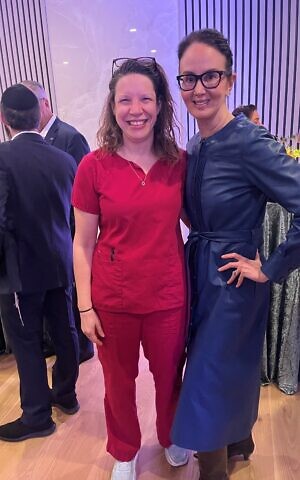
She recalled that doctors and nurses were early supporters of the Nazi party by stigmatizing and dehumanizing medical professionals. Prestigious publications like the New England and British Journals of Medicine contain propaganda: and the Palestinian Medical Association is very successful in raising millions. She noted the scarcity of Jewish students in medical schools. When she went to Cornell University, Jewish student enrollment was 20 percent; now, it’s closer to two percent.

In interview style with Keenan Davis, Schinazi revealed he grew up in Egypt, but hails from Italian descent. Historically, Schinazi shared that under King Farooq (1948), “Things in Egypt were going well. My city, Alexandria, had 15 shuls. [However], in 1962, it got unbearable for Jews.”
The family, which had nearly everything confiscated by the Egyptian government, headed to Naples, then off to Spain. There, he was influenced by great science teachers. When asked about his motivation, he recalled his mother’s “common” yeast infection (near her deathbed) was cured by “one tiny pill that a pilot smuggled over.” He declared, “I wanted to be that guy who developed the pill.”
Off to Yale University for his PhD, he understood as a chemist, the importance of pharmacology. Schinazi revealed that he had a notebook full of rejection letters because his ideas were “ahead of their time.”
One of Schinazi’s crowning achievements was being asked by Egypt to return after 50 years to solve their hepatitis outbreak. Because of dirty needles, Egypt had a tremendous problem as one out of six residents had contracted Hepatitis C. Getting the call from the Egyptian ambassador, Schinazi queried, “Will we get back our possessions?” He said, “They were also dying of liver cancer, an offshoot of hepatitis; and I wanted to help. I believe in peace through health. Now, the drug is over-the-counter” … a powerful circle in that Schinazi found the cure and found it cheaply.
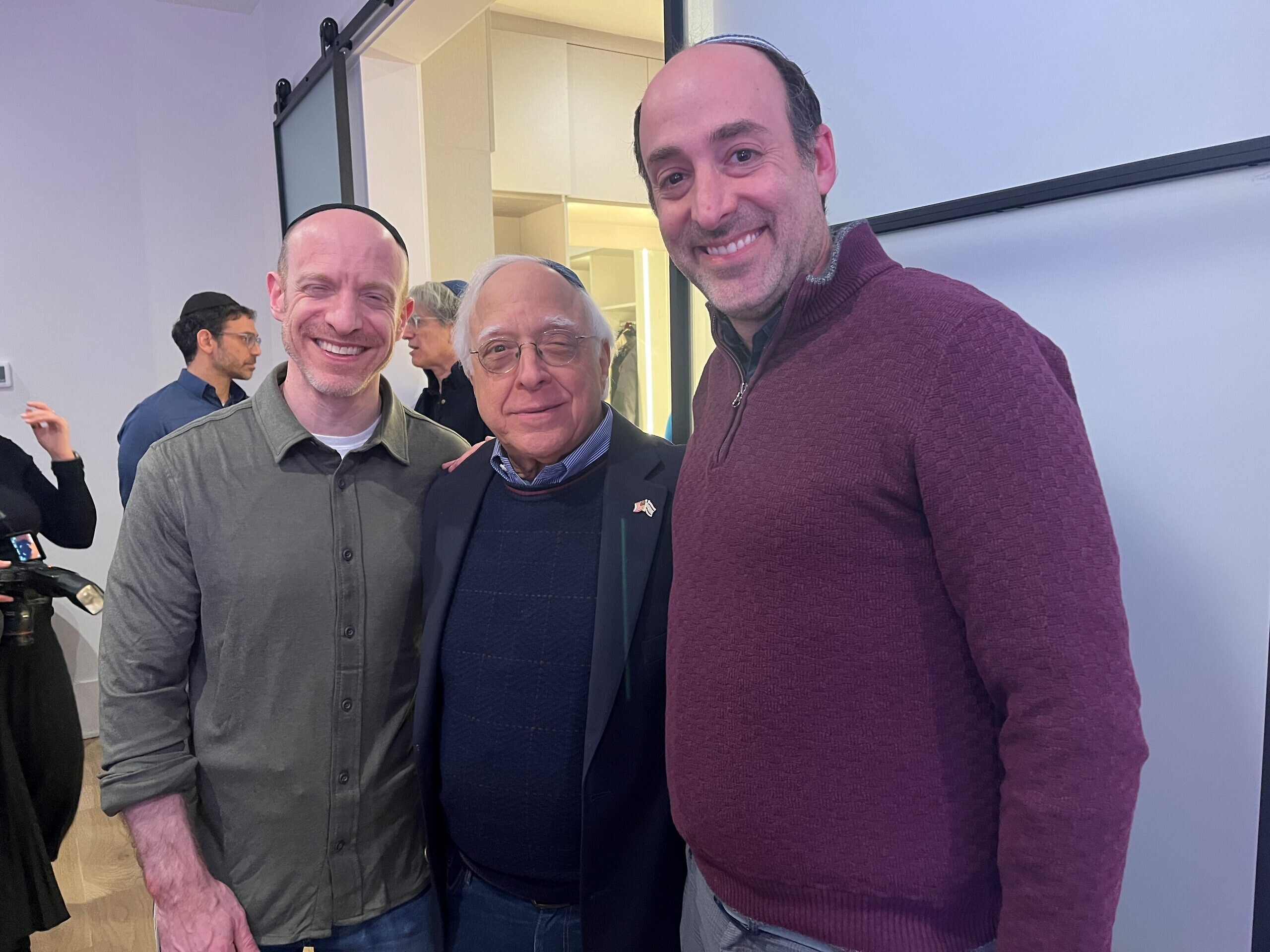
Schinazi is looking towards research on inflammation which he thinks is important in not only HIV, but also fungus, bacteria, and viruses.
He said, “I believe a cure for HIV is possible; and gene therapy is progressing. There is something new every day that looks like science fiction. I’m optimistic that theoretically every disease could be cured. Science trumps politics.”
Showing his fun side, Schinazi mentioned that if he’s invited to attend scientific meetings/conventions, “they better have it in either Hawaii or Mexico.”
He also noted, “I like Christians and Muslims, but I’m most comfortable around Jewish people; and that’s why as a youth, I identified with Hillel; and although I’m not a big walker, I’ll walk miles to get to a kosher restaurant.”
- Marcia Caller Jaffe
- Health and Wellness
- Dr. Raymond Schinazi
- Rabbi Yale New
- Chabad of Toco Hills
- HIV
- Hepatitis C
- Rambam Award for Jewish Excellence
- Rabbi Ari Sollish
- Dr. Miriam Ginton
- Dr. Yael Halaas
- New England and British Journals of Medicine
- Palestinian Medical Association
- Cornell University
- Keenan Davis
- King Farooq
- Alexandria
- Naples
- Yale University
- Jewish Medical Society of Georgia
comments