



Business Leaders Shape Atlanta’s Downtown
Some of the city’s most influential business and civic leaders met with an invigorating cadre of youthful and seasoned movers and shakers to understand the progress and what’s in store for downtown Atlanta.
After 37 years with the Atlanta Journal-Constitution and now with the AJT, , Jaffe’s focus is lifestyle, art, dining, fashion, and community events with emphasis on Jewish movers and shakers.
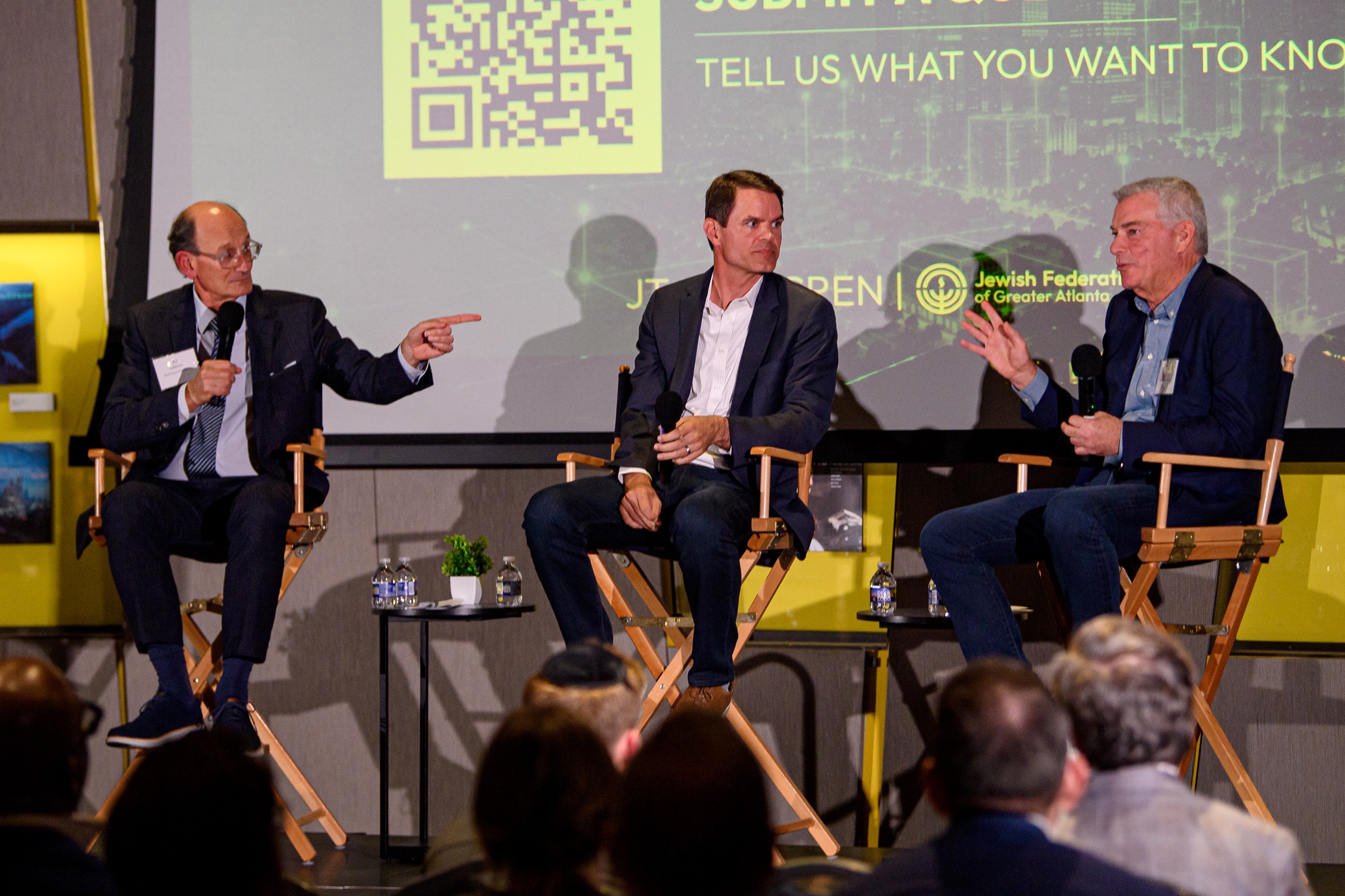
“Beyond the World Cup: The Future of Downtown Atlanta” was held Nov. 10 at the National Center for Civil and Human Rights. It brought together Tony Ressler, principal owner of the Atlanta Hawks and co-founder of Ares Management; technology entrepreneur and real estate investor David Cummings; and AJ Robinson, outgoing president of Downtown Atlanta, Inc., who moderated the discussion.

Hosted by JTech and the Jewish Commercial Real Estate Network (JCREN), initiatives of the Jewish Federation of Greater Atlanta, the evening underscored the significant role business leaders are playing in Atlanta’s economic and civic development. The panelists made clear that the future depends on billions of dollars in investment and a willingness to rethink traditional urban development.
The discussion centered on two major initiatives that are reshaping downtown: Centennial Yards and South Downtown. Ressler described how he recognized an extraordinary opportunity in The Gulch, the largely underutilized property beneath the downtown railroad corridors. After studying Atlanta’s economic landscape before acquiring the Hawks, Ressler saw a disconnect between the city’s stature as the Southeast’s economic capital and the condition of its urban center. That opportunity became Centennial Yards, a $5 billion, six-million-square-foot development encompassing residential, hospitality, entertainment, retail, and infrastructure projects. It is expected to include 2,000 residential units and 1,800 hotel rooms.
Cummings is pursuing a different approach in South Downtown. Following the foreclosure of a previous development, he personally invested approximately $53 million to acquire 90 historic properties across 10 contiguous city blocks. His vision emphasizes historic preservation, residential conversions, small businesses, and entrepreneurial activity. Some restoration costs have reached $1,500 per square foot. The development also incorporates green space and tree-canopy preservation, including Founders Green.
Cummings believes downtown’s future will depend less on traditional corporate headquarters and more on converting underutilized commercial buildings into residences for entrepreneurs, young professionals, and people seeking an urban lifestyle. Despite the magnitude of the investments, Cummings cautioned that the transformation is still in its “first or second inning.” The major projects currently underway encompass approximately 35 of downtown’s 220 blocks.
The panel also addressed public safety and the challenge of overcoming longstanding perceptions of downtown. Ressler pointed to improved lighting, technology, parking, and private security as essential elements of creating an inviting environment. The developers emphasized that younger residents and newcomers are increasingly attracted to walkability, restaurants, sports and entertainment.

Homelessness emerged as another difficult regional issue. Cummings noted that downtown carries more than half of the metropolitan area’s homeless shelter beds while occupying less than one-tenth of one percent of the region’s land area. He proposed that suburban municipalities consider providing one shelter bed for every 1,000 residents and called on Sandy Springs to add 100 beds.
Beyond real estate, the evening highlighted the importance of professional relationships and community networks. Bryan Dinner, a co-chair of JTech and founder of Undaunted Robotic Security, and Greg Eisenman, a co-chair of JCREN and regional managing director of Franklin Street’s Atlanta office, shared how Jewish professional organizations create opportunities for entrepreneurs and commercial real estate professionals through mentorship, capital, business connections, and deal flow. That network-building is central to the mission of JTech and JCREN, bringing together people whose professional relationships can translate into meaningful business opportunities and broader civic engagement.
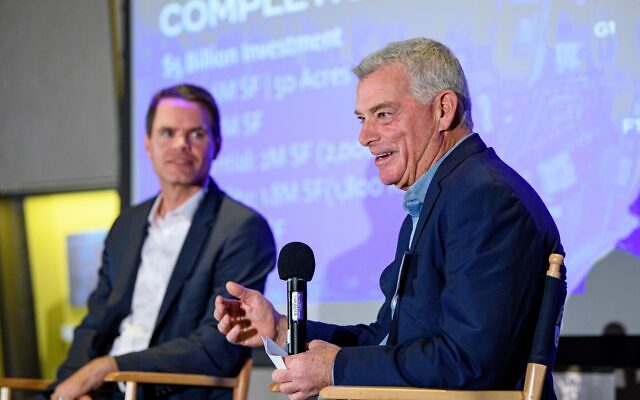
Ressler and Cummings also shared lessons from their entrepreneurial journeys. They stressed timing, calculated risk, resilience, and the importance of remaining committed through difficult economic cycles.
Downtown’s progress also depends on partnerships across the city. Jonathan Rodbell, chairman of the Buckhead Coalition, told the AJT, “Things that are good for Buckhead are good for the downtown community. We are working closely together on a lot of these initiatives; there’s a lot of overlap. We’re working on opportunities that affect the whole city, and together we’re more likely to be able to succeed.”
The Nov. 10 event showed that the relationships, resources, and civic leadership cultivated in the Jewish community have shaped, and will continue to shape, the future of the city.
Cathy Selig, co-owner and principal of Selig Enterprises, told the AJT, “My grandfather, Ben Massell, always said, ‘A city is only as strong as its downtown.’”
- Marcia Caller Jaffe
- Local
- “Beyond the World Cup: The Future of Downtown Atlanta”
- National Center for Civil and Human Rights
- Tony Ressler
- Atlanta Hawks
- Ares Management
- David Cummings
- AJ Robinson
- Downtown Atlanta
- Inc.
- JTech
- Jewish Commercial Real Estate Network (JCREN)
- jewish federation of greater atlanta
- Centennial Yards
- South Downtown
- The Gulch
- Founders Green
- Bryan Dinner
- Undaunted Robotic Security
- Greg Eisenman
- Franklin Street’s Atlanta
- Jonathan Rodbell
- Buckhead Coalition
- Cathy Selig
- Selig Enterprises
comments