


Rabbi Nachi Friedman’s Message for Chanukah 2026
Rabbi Nachi Friedman shares his thoughts and inspiration for Chanukah this year.
Can AI Be My Rabbi?
In a recent discussion with middle-schoolers in our community, one of the most common answers to the question of what we are thankful for this year was Artificial Intelligence (AI). They explained that it is the smartest “person” they know. A few even joked that AI knows more than their rebbi!
In November 2026, a project called HalachaBench published an analysis to see how various AI models could perform on the Israeli Rabbanut’s Semicha (rabbinical ordination) exam.
The results were surprising! Thirty AI models were tested on 60 questions covering various areas of Jewish law. Claude Fable 5.2 scored the highest at 85.8, with Google’s Gemini 4 Carbon and ChatGPT’s GPT-6 Astra scoring 82.3 and 73.3, respectively.
One note: The benchmark’s creators were careful to explain that no rabbi had yet reviewed the graded answers and the results are merely preliminary. AI does not actually have Semicha and cannot be relied upon to pasken.
Nevertheless, the findings raise an important question: What does it actually mean to know Torah?
AI can access enormous amounts of information, recognize patterns, compare sources, and formulate remarkably sophisticated answers. But a Halachic decision is about more than retrieving information. A rabbi needs to understand what a person is really asking, appreciate the circumstances surrounding the question, understand the person asking it, and communicate an answer in a way that is both correct and meaningful. It requires wisdom, judgment, responsibility, and a relationship with the people seeking guidance.
Knowing the answer is not the same as living the answer.
Perhaps this is one of the most beautiful messages of Chanukah. AI is increasingly focused on answers, efficiency, and results. Chanukah, on the other hand, reminds us of the importance of the experience itself. In fact, there is something almost counterintuitive about the Chanukah menorah. As we recite immediately after lighting, “We are not permitted to make use of these lights, but only to look at them.” We don’t light the menorah to accomplish something practical with its light; we light to experience it.
Our victory over the Greeks was certainly miraculous, and we commemorate it in our prayers. Yet, the enduring ritual of Chanukah is not to reenact the war or simply celebrate the outcome, but to light the menorah, night after night, and experience the light.
The menorah is more than a symbol of Chanukah; it is one of the enduring symbols of the Jewish people. Its light represents the Torah, values, and traditions that we bring into our homes and into our lives. It is not something we can simply subscribe to, download, or delegate. It requires our participation.
We live in a world where almost everything can be made more efficient, more accessible, and more automatic. There is tremendous value in these advancements, and we should be grateful for them. But we must be careful not to confuse having access to something with actually experiencing it. We can have access to Torah without truly learning it, reminders to perform mitzvos without developing a personal connection to them, and endless opportunities to communicate without necessarily building meaningful relationships. We cannot simply automate the lighting ceremony of our candles each night, but actively ensure that candles are lit each night.
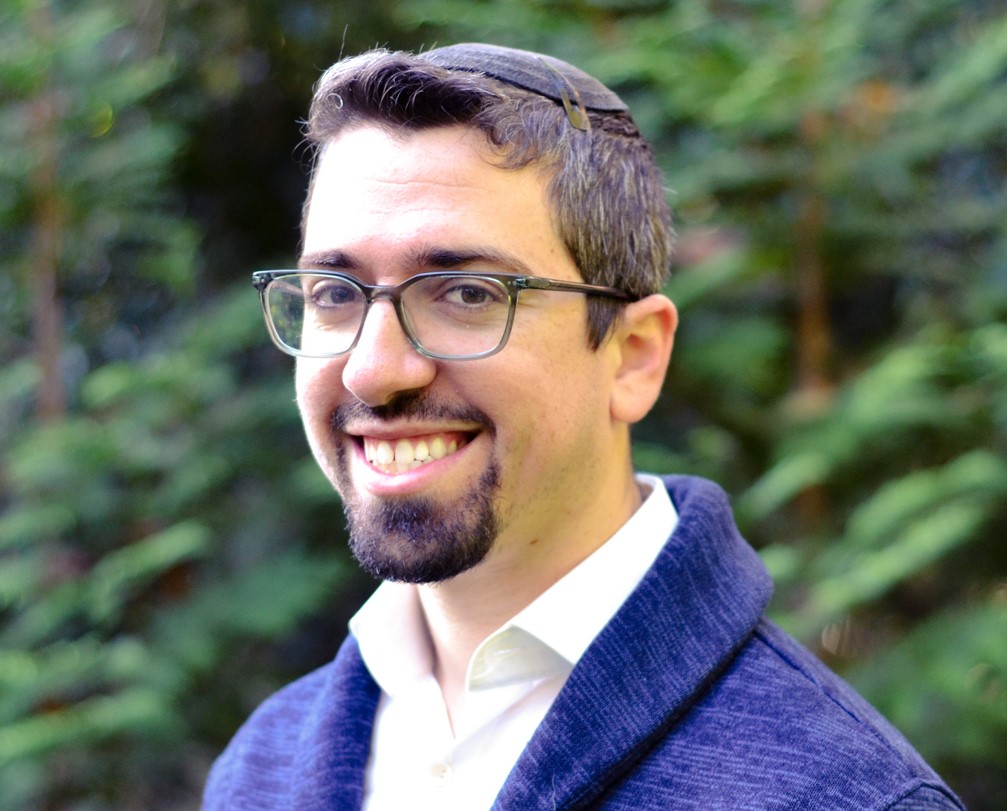
Rabbi Nachi Friedman is the Rabbi at Anshi Sfard Synagogue in Morningside/Virginia-Highlands and the Director of Student Success at Torah Day School of Atlanta.
comments