



Adamah Teaches Science and Torah of Bees
Amy Price spent a day with the youngest students at The Epstein School. In an afternoon session, three second grade classes filled an activity room to participate in the interactive program focusing on the science of bees.
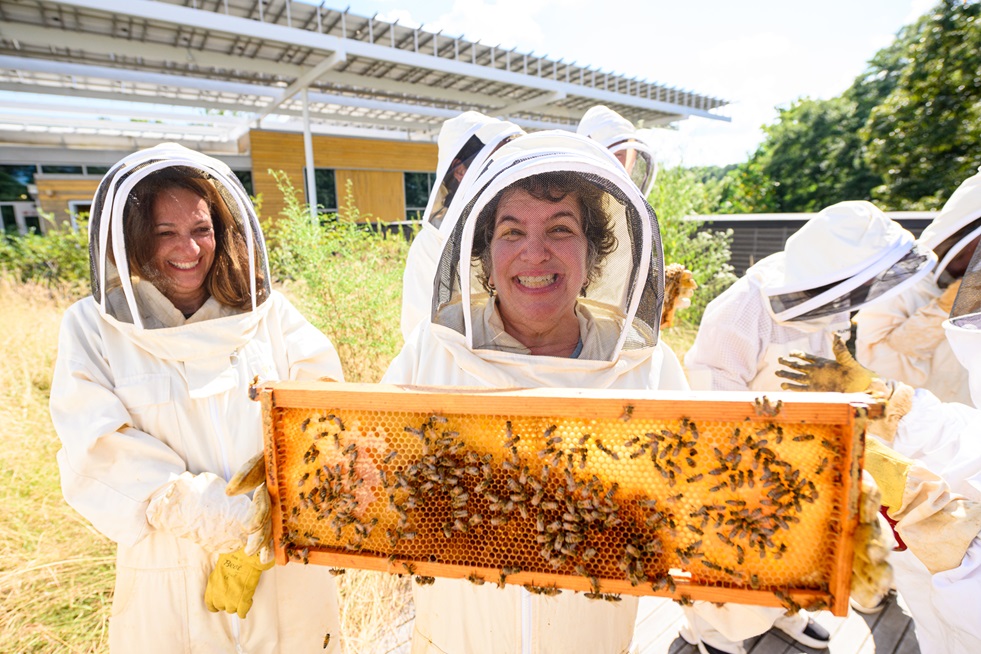
In Judaism, the enjoyment of apples and honey are symbolic of the hope for a sweet new year. In advance of this year’s High Holy days, the Jewish environmental organization Adamah put an educational spotlight on the source that makes the honey in this sweet tradition possible: bees.

In programs that touched hundreds of children and adults around Atlanta, Adamah ATL lead educator and certified beekeeper, Amy Price, shared both some of her actual bees and knowledge of these amazing creatures.
Shortly before Rosh Hashanah, Price spent a day with the youngest students at The Epstein School. In an afternoon session, three second grade classes filled an activity room to participate in the interactive program focusing on the science of bees.
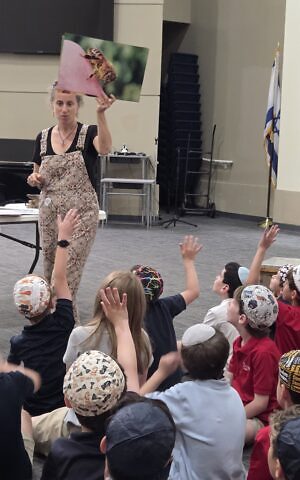
Price engaged the curious and attentive students right away. How many eyes do bees have? Price asked the second graders to hold up the number of fingers each student thought was the answer. Hands showing two, three, and even four fingers went up. When Price revealed the answer – bees have five eyes, two big eyes and three smaller eyes – the kids erupted in amazement.
Price shared some history, explaining that the first honeybees came to America in 1630. The early settlers realized that honeybees make more honey, which is the bees’ food, than they can eat for themselves so they began to take the excess.
Today, an extractor machine is used to spin frames of honeycomb to release honey.

And while there are more than 20,000 types of bees in the world, all of which make honey, only honeybees have evolved to make more than they can consume. The first plants that the bees get nectar from are the red maples usually at the end of February. Between February and the end of May, honeybees enjoy a variety of nectars including tulip poplar trees and berry plants.
“You won’t find honeybees on your annual garden plants. Those are enjoyed by other bees. At that time – from the end of February to the end of May – there’s so much food for bees, and the bees start to multiply,” Price told the students. By summer, collecting nectar is done because there are no more flowers that honeybees can collect nectar from, and so they must save honey for their food to get them through the winter.
Amazingly, Price shared, a honeybee has about three million hairs on its body, roughly the same amount as a squirrel. Bees collect a lot of pollen, which is an essential protein source for honeybees that often gets stuck on their hairs. But the bees have a solution for that problem, Price explained to the students, because when the bees groom themselves, they put pollen in special pockets on their bodies, which then allows them to fly!
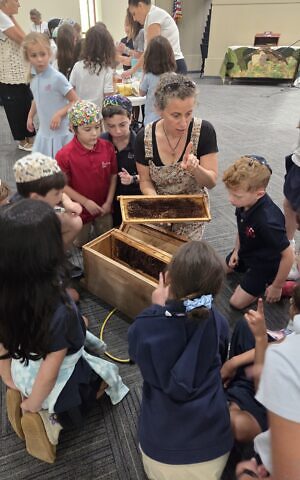
The students had already learned that bees have specialized jobs. Price elaborated that the worker bees who retrieve the nectar and build the honeycomb, for example, are all females. Some bees’ only jobs are to clean the hive and take care of baby bees. Drone bees are males whose job it is to mate with a queen bee.
“Because drones eat too much honey, the female worker bees eventually kick them out of hive,” explained Price, adding that in the hive, bees have their own ways of communicating through unique smells and sounds made by vibrations and bee waggle dances. The queen bee, for instance, makes its own special sound.
Price asked the students to remember the number 18.6. Nectar is 80 percent water, but honey can contain no more than 18.6 percent water, so the bees flap their wings to remove enough water to turn the nectar into honey. Each bee makes just eight drops of honey in its short life, with the average lifespan of most bees just four to six weeks, although some may live as long as six months.
The students were able to get a more hands-on understanding of the science of bees through interactive stations where they could look up-close at live bees through magnifying glasses, search a poster to find the queen bee, examine a honeycomb, and use a refractometer, a scientific measuring device that tells the water content of honey. The students enjoyed tasting some honey.
Epstein School Elementary Science Specialist Jill Kossman remarked: “Amy opened our students’ eyes to the fascinating world of beekeeping through engaging hands-on activities that taught them about pollination, the unique roles bees have in the hive, and how honey is harvested. Her enthusiasm sparked the students’ curiosity and even inspired one young scientist to consider joining a local Junior Beekeeper program!”
In addition to taking her bee education program to young children at Jewish schools and preschools, and family programs at synagogues, Price took about 40 adults from the
’s JGather program to the Kendeda Building at Georgia Tech, where Price is the resident beekeeper. The participants went into the hives, tasted honey, and made their own infused honeys to take home.
“It’s really a beautiful program that teaches about the wondrous creatures that bees are, how honey is made and all of the many Jewish references to bees and honey in the Torah,” said Adamah Atlanta Director Joanna Kobylivker.
comments