



Ethiopian Jews Flock to Jerusalem for Sigd Holiday
Tens of thousands attend celebration at the Haas Promenade overlooking the Old City.
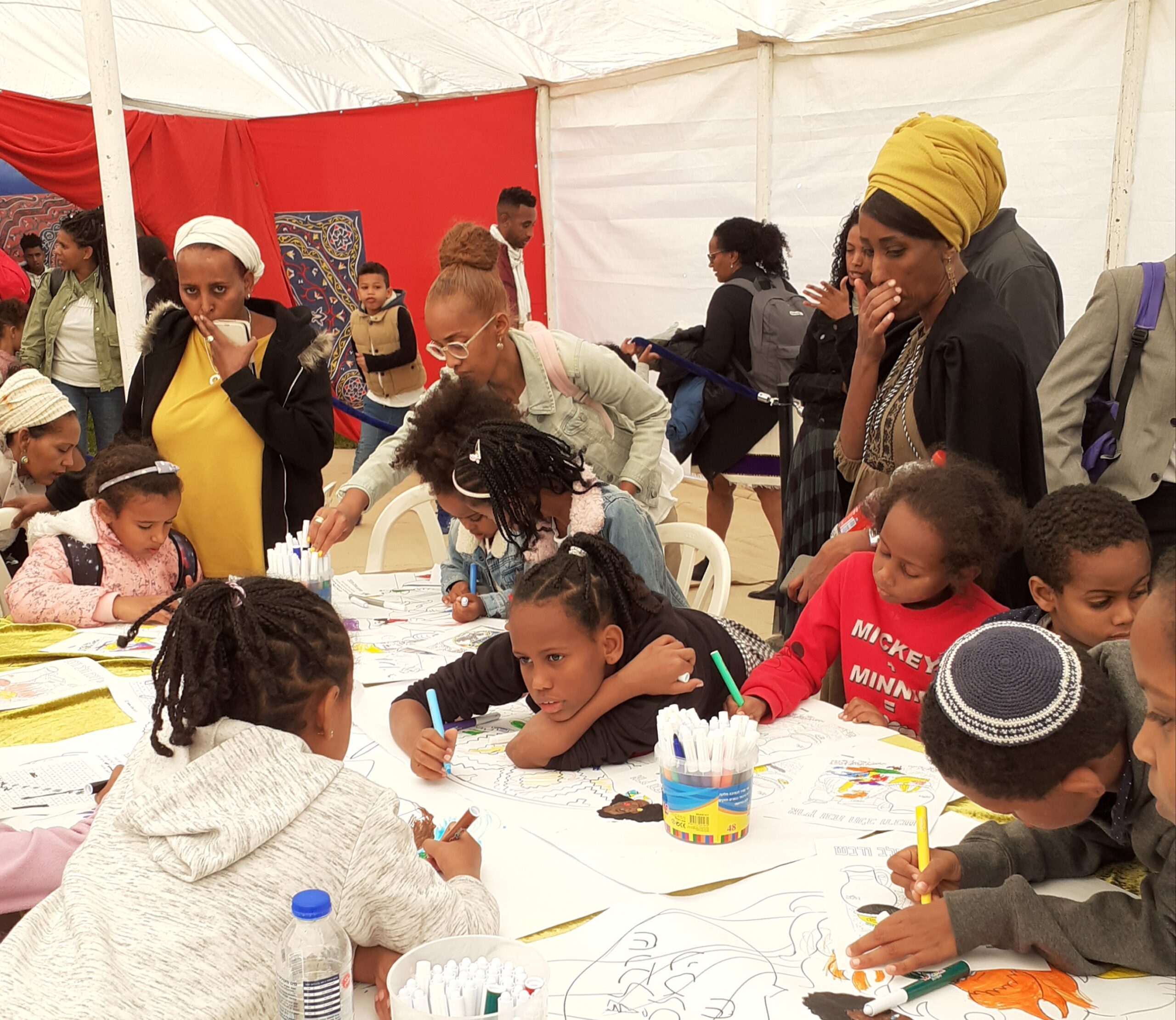
Every year since Operation Moses — the covert rescue operation from November 1984 to January 1985 that airlifted some 8,000 Ethiopian Jews from Sudan via Belgium to Israel — the Ethiopian community here has observed Sigd, its unique holiday celebrated 50 days after Yom Kippur.

In the Horn of Africa, the Beta Israel — once pejoratively known as Falashas — would leave their villages in Gondar province to ascend to nearby hills where they would symbolically face Jerusalem and pray for communal repentance and the return to Zion. Today, those prayers have been answered.
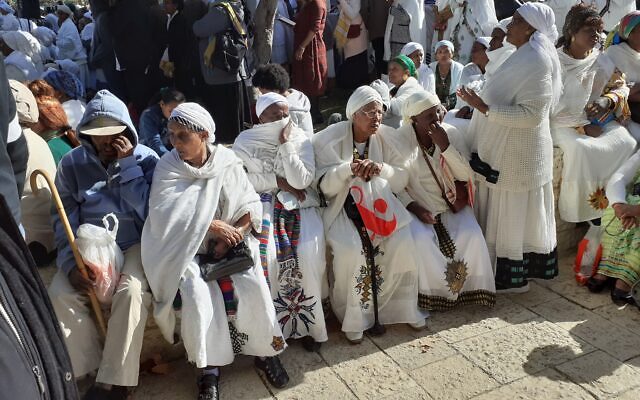
During Sigd on the 29th and last day of the Hebrew month of Cheshvan, tens of thousands of Israel’s 170,000-strong Ethiopian community gather at the Haas Promenade in the Southern Jerusalem suburb of Armon ha-Natziv. The celebration, spread out with its breathtaking view of the Old City, was declared a national holiday in Israel in 2008. It incorporates the community’s love of the Torah and the age-old longing for Jerusalem. Sigd is also a vast party and barbeque, and an opportunity for matchmaking.
Celebrants, many dressed in traditional clothing or IDF uniforms, catch up on the gossip of recent marriages and babies born, and revel in their good fortune to be living in the Jewish State. Vendors set up stands in the parking lot, selling books about Ethiopian heritage, traditional clothing, and more.
The word Sigd, meaning “prostration” in Ge’ez, is related to the Hebrew verb lisgod (to worship) and the Arabic masjid (mosque) — where one prostrates oneself in prayer.
At the celebration’s central stage, dozens of kessim, religious leaders of Ethiopian Jewry, recite prayers in Amharic for the restoration of the Temple. Dressed in traditional white priestly garb, they are protected from the still-strong autumn sun by golden-trimmed parasols.

“For generations, we prayed that we would ascend to the land, and now that we did, we continue to pray to express gratitude to G-d,” Avner Nado, who remembers celebrating Sigd in his birthplace, told The Times of Israel.
“People would come from distant communities to our synagogue in Ambober; many would stay and sleep there for three or four days,” he recalls. “We went up a mountain to pray, which was the most imposing mountain [in the region]. It was like our Mount Sinai.”
Nado was 16 when he was airlifted to Israel in 1991. Every year, he, his wife, and their children take the train from Hadera, where they live, to Jerusalem to attend the ceremony.
“Our ancestors prayed that they would be in Jerusalem one day; they did not manage, but we, the children, grandchildren, and great-grandchildren, are all here,” he says.
Nevertheless, the Ethiopian community has struggled to integrate into hi-tech Israel. Symbolizing those problems is Likud Party activist Gabi Gebre Worku. Having entered the Likud’s 2026 primaries alongside ministers and lawmakers,
Worku, in the direct contest for the position reserved for a new immigrant, defeated six other candidates and received 3,159 votes. He won but was then placed at No. 43 — too low down the list to be elected to the Knesset.
Worku followed in the footsteps of lawyer and journalist Pnina Tamano-Shata, who in 2013 became the first Ethiopian-born woman to enter the Jewish State’s Parliament. In 2020, she also became the first Ethiopian-born Israeli cabinet member after being appointed Minister of Immigrant Absorption.
The origins of Ethiopian Jewry are lost in time. Some members of the Twelve Tribes of Israel from Jerusalem may have returned with the Queen of Sheba after her state visit to King Solomon circa 960 BCE.
Another theory is that following the Persian conquest of Egypt in 525 BCE, cohenim and Hebrew mercenaries fled south further up the Nile valley to Meroe in Sudan from their cult center at the island of Elephantine in the Nile. The Elephantine temple was destroyed in 410 BCE, around the time when the Persians were driven from Egypt. The colony was abandoned a decade later. The Black Jews of Ethiopia may be the descendants of tribesmen converted by the Elephantine exiles.
From Meroe, those Jews and converts may have followed the Nile tributary the Atbara River and then the Tankazze into the highlands of the Blue Nile basin. This brought them to remote Lake Tana in Gondar province, the homeland of Ethiopia’s Jews until they were airlifted to Israel in recent years.
They may have brought the Ark of the Covenant with them and placed it in a tent-like sanctuary on the island of Tana Kirkos where it remained for nearly eight centuries until approximately 340 CE. According to this theory popularized by Graham Hancock in his 1992 pseudo-archeological bestseller, “The Sign and The Seal: The Quest for the Lost Ark of the Covenant,” following the conversion of Ethiopia to Christianity by Frumentius, a Syrian bishop, in the 330s CE, the newly baptized Christians wrested control of the Ark from the Jews and took it to the royal city of Axum. Venerated as the main icon of Christianity in the country, it has remained secreted away in the Church of St. Mary of Zion ever since.
Ethiopia’s national saga, known as the Kebra Nagast (Glory of the Kings), tells of Prince Menelik I, the son of King Solomon and the Queen of Sheba bringing the Ark from Jerusalem to Ethiopia nearly 3,000 years ago. Hancock dismisses this legend as apocryphal, a 13th century invention intended to legitimize the “Solomonic” dynasty which had just gained the throne.
Regardless of its origins, those Jewish settlers intermarried with local Africans who converted to an ancient version of Judaism that predated the holidays of Purim and Chanukah. For some two millennia, the Ethiopian Jews remained isolated from the mainstream of the Jewish world. They suffered persecution, and some accepted Christianity to escape the violence. Known as Falasha Mura — several thousand remain in Ethiopia, hoping to immigrate to Israel where they will undergo conversion back to Judaism
- Gil Zohar
- Israel
- Operation Moses
- Ethiopian Jews
- Sudan
- Belgium
- Sigd
- Yom Kippur
- the Horn of Africa
- Beta Israel
- Gondar
- Haas Promenade
- Southern Jerusalem
- Armon ha-Natziv
- IDF
- Ge’ez
- Avner Nado
- The Times of Israel
- Ambober
- Mount Sinai
- Hadera
- Likud Party
- Gabi Gebre Worku
- Pnina Tamano-Shata
- Queen of Sheba
- King Solomon
- the Nile River
- Atbara River
- the Tankazze
- the Blue Nile basin
- Lake Tana
- Ark of the Covenant
- Frumentius
- Axum
- Church of St. Mary of Zion
- Kebra Nagast
- Prince Menelik I
- Tana Kirkos
- Purim
- Chanukah
comments