



Children’s Exhibit Aims to Create Community Leaders
Latest gallery to open at National Center for Civil and Human Rights is designed to encourage community activism.
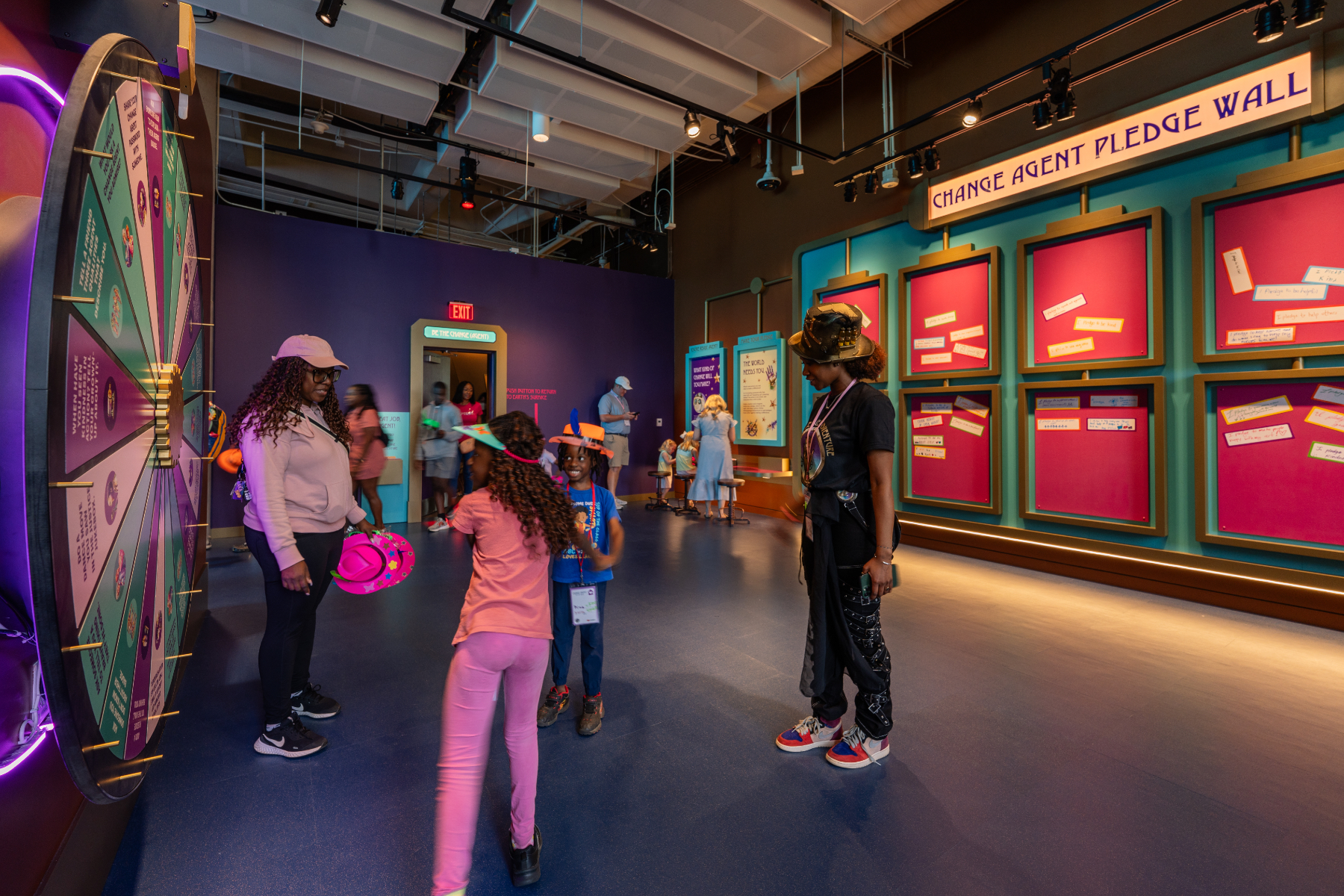
The National Center for Civil and Human Rights has opened an exhibit for children 12 and under that has the ambitious goal of developing children’s interest in social and political change. The new exhibit, “Change Agent Adventure Children’s Gallery,” is the first for children to be created at the Center. It is an interactive play space which is designed to explore what it means for young people to be active participants in their community.

According to the president and CEO of the National Center, Jill Savitt, that’s a process that can begin at any age.
“The main focus of this gallery is that you have the ability to influence the world around you,” Savitt said. “Any child can be a change agent, and the Change Agent Adventure is designed to get people to think that through their own behavior and activities, they have power. That’s our main point.”
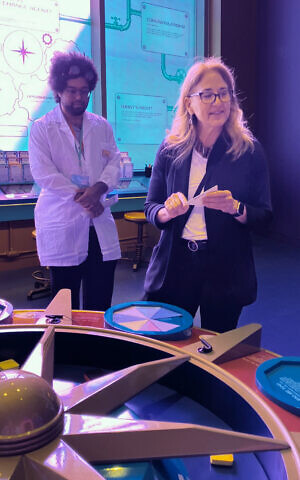
Children, who must be accompanied by an adult to participate, can explore the American Civil Rights movement through the eyes of those who participated in it. That can mean they can learn about a change agent like a 6-year-old Ruby Bridges, who was one of the first Black children to attend a desegregated all-white school in America. Or, it could be like Rabbi Abraham Joshua Heschel, the distinguished American religious scholar and author, who joined the Rev. Martin Luther King, Jr. in marching for civil rights in the American South during the 1960s.
“The main values we want to develop in young people is empathy, belonging, justice, and upstanding,” Savitt commented. “We’re trying to have children see they can be welcoming to other people, They can make people feel like they belong, so they don’t push anybody out. We want them to look at the world through someone else’s eyes, see that people are all different. Justice is kids knowing about fairness. They know things are fair or not fair, so that’s justice. And then upstanding is you have a role to play.”
The opening of the new exhibit marks the completion of the total renovation of the National Center, which over the last four years, has expanded by over 50 percent. The $58 million expansion was boosted by a $25 million contribution by the Arthur Blank Family Foundation. The new exhibit is housed in a newly constructed wing named after the Atlanta philanthropist and entrepreneur.

There are five other newly re-designed galleries, including a central showcase of the personal papers of Dr. King, an updated civil rights gallery, and three classrooms.
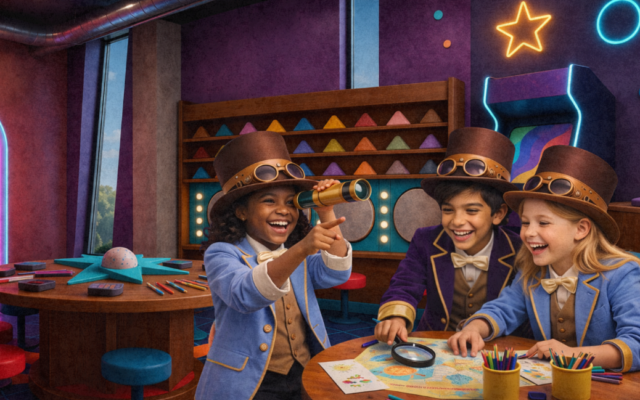
The National Center for Civil and Human Rights currently serves more than 50,000 children annually through its education programs. The addition of a children’s gallery expands the Center’s ability to reach younger audiences, including elementary schools, youth organizations, and summer camps with spaces and content specifically for them.
“I’m hoping that we can plant the seed in some kids who say, I want to pursue this as a life’s work,” Savitt emphasizes. “Some kids want to be astronauts, baseball stars. What if someone says, I want to be a change agent. I want to go out into the world and be an advocate for other people when they’re mistreated.”
Along with a children’s gallery, the Center is introducing Saturday Adventures, a weekly program for children, families, and groups. Activities include story time, art projects, films, and rotating mystery activities — providing families with new reasons to return each week.
To support younger visitors, the Center has also developed a family guide that outlines more than two hours of activities throughout the museum. The map is designed to help families and youths experience accessible content in all the galleries.
Opening next month, to coincide with the World Cup soccer matches in Atlanta, the Center is creating an exhibit about soccer and human rights.
With the expansion and the facelift and the emphasis on a total family experience, the National Center hopes to boost attendance to 200,000 visitors a year. With a prime location in downtown Atlanta, adjacent to the Georgia Aquarium and the World of Coca-Cola and just a short walk from Mercedes-Benz Stadium and the billion-dollar real estate development taking shape nearby on Marietta Street, that goal, with its latest addition, according to Savitch, seems within reach.
“Civic institutions rely on people being drawn to them, and so, you have to win more people with honey than with vinegar. So, we’ve made a honey, a hive of honey here, that we want kids to feel welcome. We want them to think it’s fun, joyous, something to celebrate. We leaned into hope and joy and possibility and agency, literally change agency.”
- News
- Local
- Bob Bahr
- National Center for Civil and Human Rights
- Change Agent Adventure Children’s Gallery
- Jill Savitt
- American Civil Rights movement
- Ruby Bridges
- Rabbi Abraham Joshua Heschel
- Rev. Martin Luther King
- Arthur Blank Family Foundation
- Georgia Aquarium
- World of Coca-Cola
- Mercedes-Benz Stadium
comments