

Rabbi Roundtable: May 31, 2026
The AJT has launched a new monthly feature bringing rabbis together from across all denominations and Jewish Atlanta.
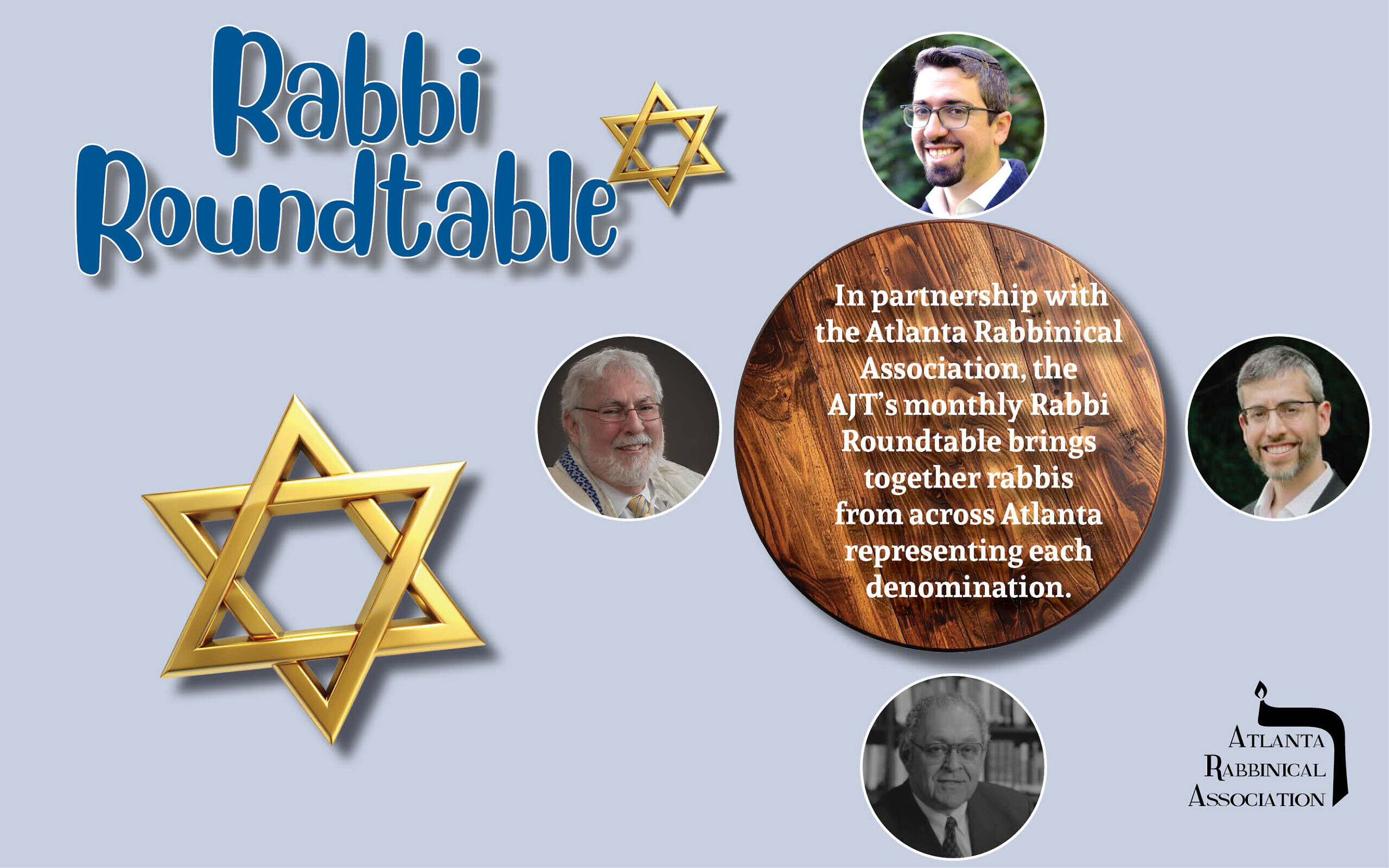
In partnership with the Atlanta Rabbinical Association, the AJT’s monthly Rabbi Roundtable brings together rabbis from across Atlanta representing each denomination.

For this month’s discussion, each rabbi was asked the following question:
 What does it mean for a Jewish community to age well, not just individually but collectively?”
Rabbi Yitzchok Werbin
A Jewish community ages well not just when people live longer, but when the warmth, values, and traditions of Torah life keep getting passed down in a real and meaningful way. It’s less about numbers and more about connection — people feeling connected to their families, their community, and their Yiddishkeit.
A strong community is one where older people continue to feel valued and involved. Our rabbis teach us to honor the elderly because every stage of life brings perspective, wisdom, and life experience that younger generations can learn from. The healthiest communities are the ones where grandparents, seniors, and longtime members still feel deeply connected — in shul, at simchas, and in the everyday rhythm of community life.
At the same time, there’s something special about watching younger families build their lives and raise children surrounded by Torah values, friendship, and support. Kids should grow up feeling that Judaism is warm, meaningful, and full of joy. When people feel genuinely connected and cared about, they naturally want to stay involved and give back to others.

Healthy Torah communities also know how to grow with the times while staying grounded in the values that always matter most — kindness, faith, responsibility, and caring for one another.
Most importantly, a community ages well when everyone feels they belong. Whether it’s a senior living alone, a family going through a difficult time, or a teenager trying to find their place, the strength of a community comes from people showing up for each other. When that happens, a community doesn’t just age well — it becomes stronger, closer, and more meaningful with every generation.
Rabbi Nachman Friedman
The Jewish community is a collective society by nature. We have individual mitzvot, success and accomplishments, but if done completely alone are not deemed true accomplishments. Our life is a constant balance between focusing on the individual and greater community.
Wellness in Jewish law has this balance as well. The Torah states “Vechai Bahem” (you shall live by them) prioritize your life over others. The Torah also states “Ve’ahavta leraacha kamocha,” treat others like ourselves. These verses seem to take us in different directions! Should we prioritize ourselves or others per Torah law?
Rav Shimshon Refael Hirsch on Parshat Yitro posits that the goal of our success and financial gains in this world is to be able to help others. Helping others is our goal, not a kindness we do as we achieve our goal. When we truly accomplish this balance, we will both “live by them” and “Love each other” in harmony and age well as individuals and community. Our goal as we “age well” is to shift from Vechai Bahem, self-security and success, to Vahavta Leracha, success of the collective.
Our secret to aging well as individuals lies in our ability to help our community. Like Avraham, our forefather, focused on helping everyone passing by his tent, so, too, we must make our life’s mission to help others. A smile, kind gesture or action can enhance the well-being of everyone around us and ourselves. We become stronger when we focus less on our net income and more on our net impact.
Rabbi Sol Agin
As one who has been a resident of Atlanta for only two-and-a-half years, I have an incredibly positive view of the question, “What Does It Mean for a Jewish Community to Age Well?”
Most of the time, we think of a person as “Aging Well”; seldom, if ever, do we think in terms of a community “Aging Well.”
I have found the Atlanta Jewish community “not to be aging,” but rather vibrant, progressive, and constantly challenging. My wife and I are always amazed at the variety of programs; be it around films, lectures, book reviews, Judaic studies, and cultural events. Nothing is ever outdated or repeated. In addition, and most importantly, these programs are always open to the entire community.
There is no doubt in my mind that the Atlanta Jewish community is not just aging well, it is thriving! This community is one of the most exciting, dynamic and forward thinking in the country. Being able to stimulate and consistently educate using various avenues to achieve their mission makes a strong statement about the Atlanta Jewish community and its ability to “age well.”
As a concluding comment on this topic, I must acknowledge the leadership of the Atlanta Rabbinical Association for the thought-provoking theme. It is my feeling that in most Jewish communities, little thought is given to this topic. There is no doubt that the theme has relevance and Jewish communities should give it serious consideration.
Rabbi Shalom Lewis
There’s a wonderful old tale of a rather pretentious lady sitting next to a Jewish woman at a civic event. The blue hair turns to her Yiddisha neighbor and with a haughty, affected Brahman accent shares that her ancestors came over on the Mayflower. Without missing a beat, Sadie Finkelstein calmly replies, ‘That’s nice. My family was on Noah’s ark.”
There is a passion within, perhaps even a primordial need, to have a sense of where we have come from. A connection to a past that we can proudly claim. It is not just enough to be a citizen of today but bonded as well to a distant pedigree. Ancestry has become a critical component of our identity and provides us a biography, linkage and pride. We are nervous about mortality but fear oblivion and existential disconnect even more. Bury me but not too deeply in the family plot.
There is comfort in lineage which brings me to a Netflix binge favorite. “The Crown.” A marvelous history of Queen Elizabeth that reveals delicious court intrigue in Buckingham Palace. There is much to relish in this luscious production, but mostly I enjoy the obsession with genealogy. For the Royals in the 21st century to know their 10th-century family and to know what they looked like from detailed, glorious portraits must be thrilling. No need for swabs and Ancestry.com We can be a bit jealous of that remarkable dynasty, their castles, their carriages, their estates but let us not forget that we, too, are royalty. We go back over three millennia and though we don’t know the visage of our ancestors, we do know that we come from the tribe of Judah, from the tribe of Levi and that our distant family stood at the foot of Sinai. The famed historian Arnold Toynbee, no lover of Jews, when asked what he thought was the greatest miracle of history, the remarkable response from an antisemite, ‘The survival of the Jews.”
The sun never set on the British Empire but neither has it set on the progeny of Abraham. Jerusalem is a whole lot older than London.
Rabbi Bios:
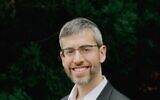
Rabbi Yitzchok Werbin, Orthodox
Rabbi Yitzchok Werbin is the founding Rabbi of Kesher Torah Synagogue (soon to be The Schul at Chastain), a warm and diverse congregation in Sandy Springs. Born and raised in Dunwoody, Rabbi Werbin attended the Greenfield Hebrew Academy (now AJA) and North Springs High School. He traveled south to attend the University of Florida where he graduated with a bachelor’s degree in finance. Enjoying a very successful career in real estate, he was inspired to explore Judaism on a higher level, enrolling in the Machon Yaakov Yeshiva in Jerusalem, where he later met and married his wife, Sarah, before returning to Atlanta to be closer with their parents and family.
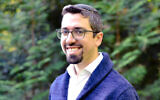
Rabbi Nachman Friedman, Orthodox
Rabbi Nachi Friedman is the rabbi at Congregation Anshi Sfard in Morningside and the school counselor at Torah Day School of Atlanta (TDSA). He enjoys merging his Rabbinic training along with psychology to engage with and learn from people of all ages. When not working, Rabbi Friedman enjoys spending time with his wife, five children, almost as much as he loves playing pickleball.
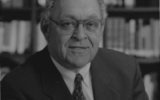
Rabbi Sol Agin, Reform
Rabbi Solomon Agin, D.D. is Rabbi Emeritus of Temple Shalom in Port Charlotte, Fla., and a member of Temple Sinai in Atlanta. During his rabbinical career, Rabbi Agin served pulpits in Fort Myers, Monticello, New York, and St. Louis. Rabbi Agin has also previously served as president of the Southeast Association of the Central Conference of American Rabbis, Chair of the Board of 21st Century C.A.R.E., and interfaith community liaison for Dignity Memorials. He holds degrees from Brooklyn College of the City of New York, Academy for Jewish Religions, and Hebrew Union College-Jewish Institute of Religion.
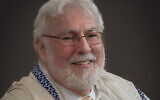
Rabbi Shalom Lewis, Conservative
Rabbi Lewis is Rabbi Emeritus of Congregation Etz Chaim in Marietta. He was ordained through the Jewish Theological Seminary’s rabbinical school in 1978 and served as a student pulpit rabbi in 1977 at Congregation Etz Chaim, before becoming their first full-time rabbi. Rabbi Lewis has served as the president of the Southeast Region of the Rabbinical Assembly, as the president of the Atlanta Rabbinical Association, and on the national board of the Rabbinical Assembly.
- rabbi roundtable
- Opinion
- Rabbis Yitzchok Werbin
- Nachman Friedman
- Sol Agin
- shalom lewis
- Atlanta Rabbinical Association
- Kesher Torah
- The Schul at Chastain
- Greenfield Hebrew Academy
- University of Florida
- Machon Yaakov Yeshiva
- Congregation Anshi S’fard
- Torah Day School of Atlanta
- Temple Shalom
- Temple Sinai
- Southeast Association of the Central Conference of American Rabbis
- congregation etz chaim
- Southeast Region of the Rabbinical Assembly
comments