



Gov’t Restricts Lag b’Omer Gathering at Mount Meron
Hilula celebrants flock to Jerusalem's tomb of Simon the Just.
Lag b’Omer – the 33rd day of Judaism’s somber seven-week “counting” between Passover and Shavuot (Pentecost) – marks the cessation on Iyar 18 in Judaism’s lunar calendar of a plague that killed 24,000 disciples of Rabbi Akiva (c. 50–135 CE). The Talmud (Yevamot 62b) states the plague was a divine punishment inflicted on the sage’s students because they begrudged their comrades’ spirituality and Torah scholarship.
After the grisly flaying in the Roman capital Caesarea of his beloved master R. Akiva – one of the 10 sages martyred by the genocidal Emperor Hadrian – Rabbi Shimon bar Yochai and his son, Eleazar, fled to the remote Upper Galilee. There, according to tradition, they lived in a cave for 12 years, sustained by the fruit of a carob tree and a spring. Bar Yochai, also known by the Hebrew abbreviation Rashbi, is given the pseudepigraphal credit of writing the Zohar – a mystic Aramaic commentary on the Pentateuch, which is the classic text of the kabbalah. He emerged from his refuge an ascetic and charismatic miracle worker. The Midrash states he “revived the Torah at that time” following the Roman persecution. Dying on Lag b’Omer, he became a legendary figure in the lore of Jewish mysticism and folk religion.
In the 16th century, mystics from the kabbalist center of Safed initiated the annual Lag b’Omer hilula (literally “wedding feast”) to bar Yochai’s nearby tomb atop Mount Meron – Israel’s tallest mountain. In recent years, upwards of 200,000 people have come on this early summer holiday, pitching tents, making bonfires, grilling meat, drinking arak, reciting Psalms, and giving three-year-old boys their first haircut in a unique expression of faith and folk religion.
Implicit in their farbrengen (joyous gathering) is the kabbalist principle that the death of a sage marks the reunion of his soul with his maker – i.e. a spiritual marriage. Joy, rather than grief, marks the anniversary of his passing in direct proportion to the rabbi’s saintly reputation as a miracle worker. The grave, in anticipation of the messianic rebirth of the dead, becomes the site of veneration and feasting.
In 2021, 45 pilgrims were crushed in a tragic stampede on a rickety staircase during the Lag b’Omer celebration at Mount Meron caused by the failure of the site’s ultra-Orthodox guardians to implement public safety precautions dictated by the building and fire code. More than 100,000 pilgrims had flocked to the holy site.
On April 26, Prime Minister Benjamin Netanyahu in consultation with the security cabinet canceled the annual mass celebration at Mount Meron except for a symbolic 1,500 pilgrims over four days. The PM cautioned a Hezbollah missile and rocket attack could cause a mass casualty event. Roadblocks were set up Sunday leading to the pilgrimage compound and remained in place for several days. Additionally, Border Police were deployed to prevent attempts to reach the tomb on foot by scaling the mountain.

“Amid the security threats in northern Israel, avoiding blocked routes is the right way to preserve Jewish tradition joyfully and safely,” Israel Police stated in a press release.
Nevertheless, thousands of scofflaw yeshiva bochers tried to ascend the mountain by hopping fences and skirting police barricades.
In lieu of the scaled-back celebration at Meron on Lag b’Omer, which this year fell on May 4-5, an alternative hilula took place at the Tomb of Shimon haTzadik (Simon the Just) in east Jerusalem. The tomb is located in Wadi Joz (Arabic for “the Valley of Walnuts”), the dry riverbed separating the Palestinian neighborhoods of Sheikh Jarrah and the American Colony. The mausoleum consists of a catacomb of three interconnecting stepped chambers and a fenced-in courtyard. Visitors separated by gender celebrate with separate tents for men and women.
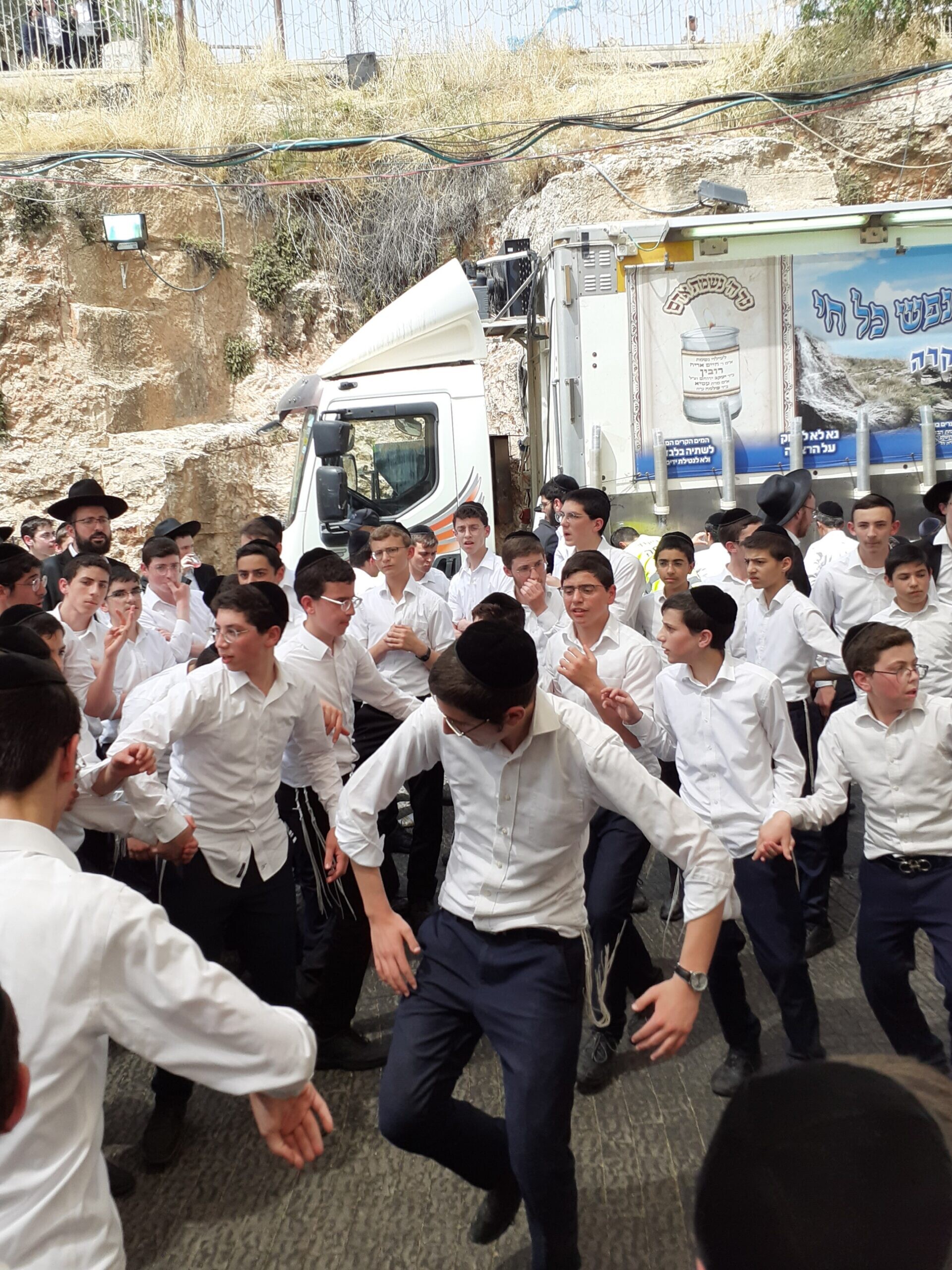
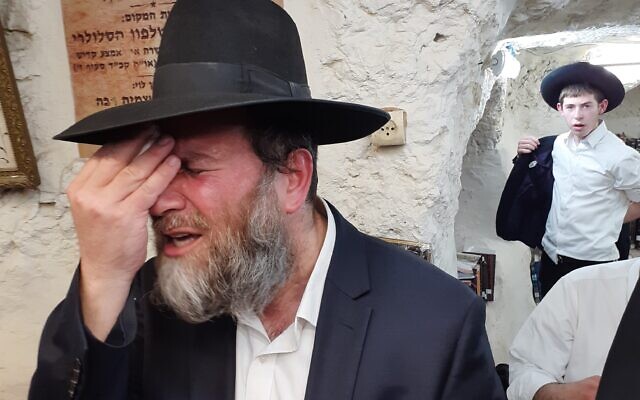
Some 20,000 celebrants packed the pilgrimage site, creating a carnival-like atmosphere with candy floss and hora circle dancing. While Israel Police blocked off the street to traffic, hassidim and haredim (ultra-Orthodox Jews), dressed in their Sabbath and festival finery, streamed to the site on foot and by bicycle from their nearby neighborhoods just across the Green Line that divided Israeli and Jordanian Jerusalem from 1949 to 1967.
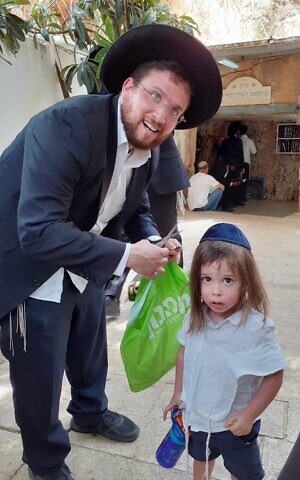
Some arrived by Jerusalem’s Light Rail, getting off at the Shimon haTzadik station and walking through an Arab neighborhood to reach the holy site. The pilgrims jostled their way through the crowd to visit the tomb, light candles and make heavenly petitions. In the evening, there was a huge bonfire.
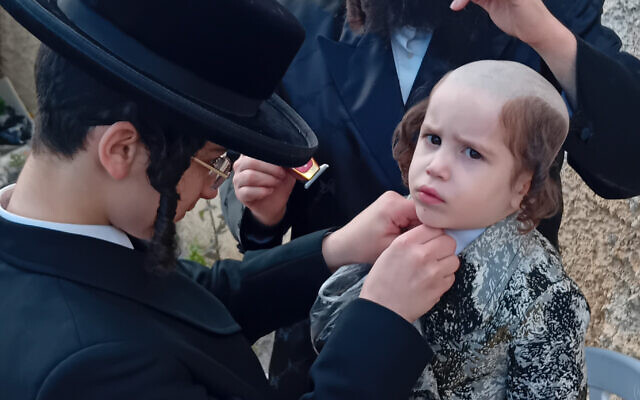
As at Meron, three-year-old boys received their first haircut, called halaka in Hebrew and upsherin in Yiddish. Rabbis and community leaders wielded the scissors. Not surprisingly, many of the children cried or protested, resulting in a botched job – to be fixed later by a professional barber. The locks were left on the sides of a boy’s head to form payot (corners) based on the Biblical injunction (Leviticus 19:27) against shaving the “corners” of one’s head. Traditionally, the first shearing is fed into a fire. Fathers triumphantly paraded their sons on their shoulders while women ululated with joy.
While many contemporary Israelis, both secular and observant, emphasize Judaism’s rational aspect, to witness today’s Lag b’Omer celebrations – whether in Meron or Jerusalem – is to appreciate the profound heritage of kabbala on Jewish life over the centuries.
Gil Zohar is a journalist and licensed tour guide in Jerusalem.
- Gil Zohar
- Lag B'Omer
- Passover
- shavuot
- Rabbi Akiva
- Talmud
- torah
- Caesarea
- Emperor Hadrian
- Rabbi Shimon bar Yochai
- Eleazar ben Shimon
- Upper Galilee
- Rashbi
- the Zohar
- Pentateuch
- Midrash
- Mount Meron
- Benjamin Netanyahu
- Hezbollah
- Israeli Border Police
- Tomb of Shimon haTzadik
- Wadi Joz
- Sheikh Jarrah
- the American Colony
comments