



Jewish Surrogacy: A Mother’s Gift
Local mother is serving as a “mitzvah” surrogate for an attorney in New York.
After 37 years with the Atlanta Journal-Constitution and now with the AJT, , Jaffe’s focus is lifestyle, art, dining, fashion, and community events with emphasis on Jewish movers and shakers.
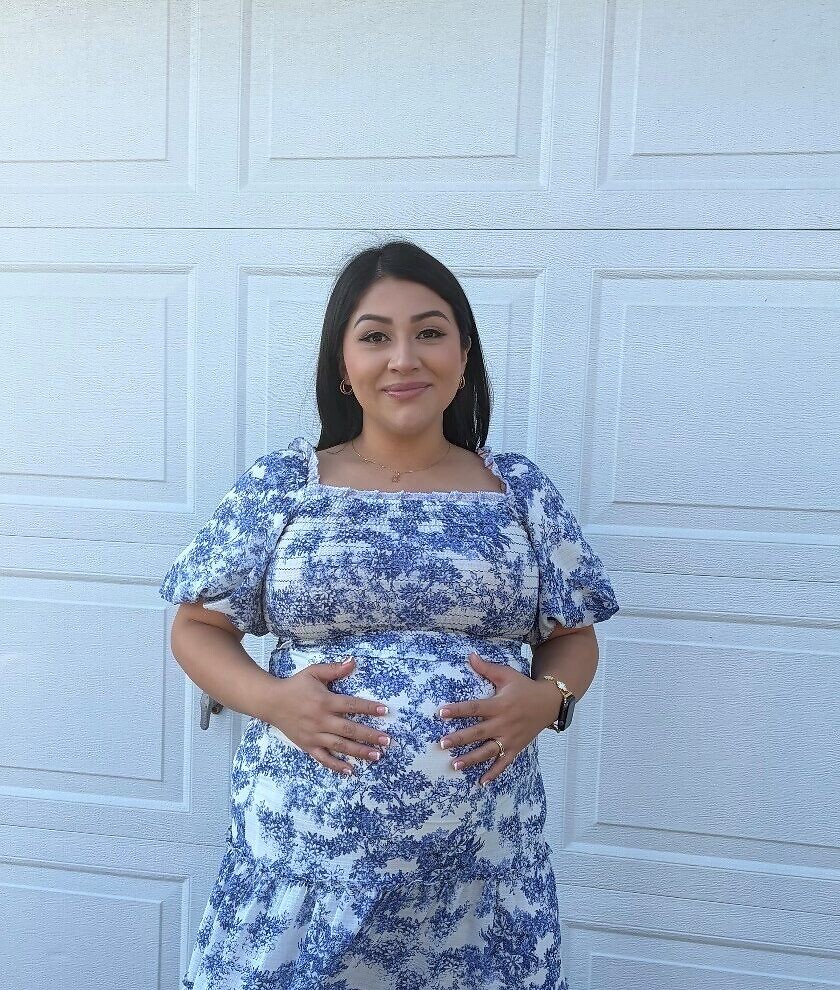
Brenda Borukhov has given birth four times. She gets pregnant easily, and until now, never carried a child that wasn’t hers to keep.

Due Nov. 5, the Atlanta mother of two girls and two boys (13, 11, 4, 3), is serving as a gestational surrogate, carrying a baby boy for a single female out-of-state Jewish attorney. Born in Atlanta with Bukharian roots, Borukhov related, “I know it’s her baby, not mine. I’m very emotional. I cry at movies. I really want to help fulfill someone else’s dream to become a mother.”
Surrogacy has become an increasingly common path to parenthood in the U.S., with roughly 7,000 surrogate births annually, according to the Global Surrogacy and Human Reproduction Council. Most arrangements are gestational surrogacies, in which the surrogate carries an embryo with no genetic connection, essentially as a vessel.
Traditional surrogacy, in which the surrogate’s own egg is used, has become less common. Legal complications recently made national headlines in a closely watched Alaska case, in which a gestational surrogate, with no genetic tie to the fetus, signed an agreement to terminate the pregnancy at the biological parent’s insistence due to severe fetal illness. Instead, she left for Texas, a state with strict abortion restrictions, and carried the baby to term. The child was born with serious heart complications. The case has since become the subject of a lawsuit. The surrogate, an RN and mother of two, offered to raise the child herself.
Borukhov’s arrangement, by contrast, is one she describes as a “mitzvah,” an act of giving life. Working through the Alma Agency, the same organization featured in a previous AJT article about founder, Orly Klein, Borukhov was presented with several prospective parents, including an out-of-state rabbi. She ultimately chose the single attorney, who had endured six miscarriages, because, as Borukhov put it, “This represented what may be the woman’s last chance at motherhood.”
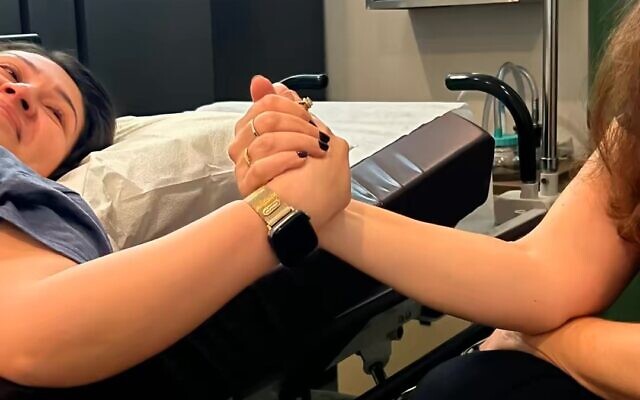
Alma specializes in connecting surrogates and intended parents within the Jewish community, some with Orthodox families, and/or LGBTQ+ hopeful parents. The embryo transfer took place in California, a detail that shows how geographically dispersed, modern surrogacy arrangements can span states.

Asked whether she worries about becoming attached to the baby, Borukhov relayed she will “joyously hand him over as a blessing, placing the baby directly into his mother’s arms without hesitation.”
She hopes to stay in touch with the family for birthdays, milestones, occasional updates, but acknowledged that her own children have been part of the process. The older children, to whom she has explained the basic science of childbirth, speak to the baby in utero with a mix of warmth and clear boundaries.
“We’re glad you’re going to another house, but not to our house, because we have enough children here.”
The youngest children, less focused on logistics, are looking forward to a celebration: they declared, “Let’s have a pizza party when he is born.”
Borukhov credits her husband, Ilya, with making the arrangement cooperative, describing him as, “Fully supportive. He has such a good heart.”
Borukhov described developing a close bond with the baby’s mother during the pregnancy, messaging her frequently with updates and progress.
Becoming surrogate is not simple. Borukhov underwent a rigorous vetting process before being accepted, and Alma’s Klein accompanies her to medical appointments. Borukhov uses her own health insurance and receives a twice-monthly stipend, intended to cover costs such as clothing. Full financial terms of each surrogacy are negotiated individually. Borukhov is aware that Jewish law and tradition contain varied and sometimes debated positions on surrogacy, including whether the surrogate should be Jewish or not, and how a widow’s status might factor into halachic considerations.
For her, the motivation is straightforward. “There is a Jewish covenant about growing and multiplying. I have this wonderful connection, and I like the idea of doing a good deed.”
The Borukhovs are members of Congregation Or VeShalom. Brenda’s father-in-law is Alex, the Sephardic caterer. Brenda, a graduate of Kennesaw State University, laughs, “I’m an OK cook, and my hobby is playing catch with the kids.”
comments