



Meet the Historic ‘Queens of Code’
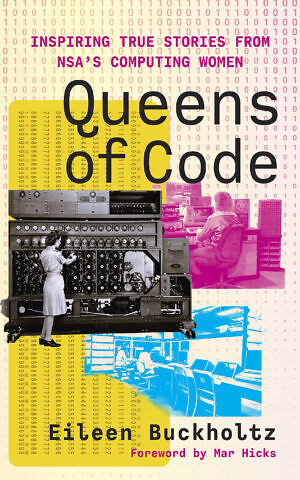
The story is at the heart of author Eileen Buckholtz’s new book, “Queens of Code: Inspiring True Stories From NSA’s Computing Women.”
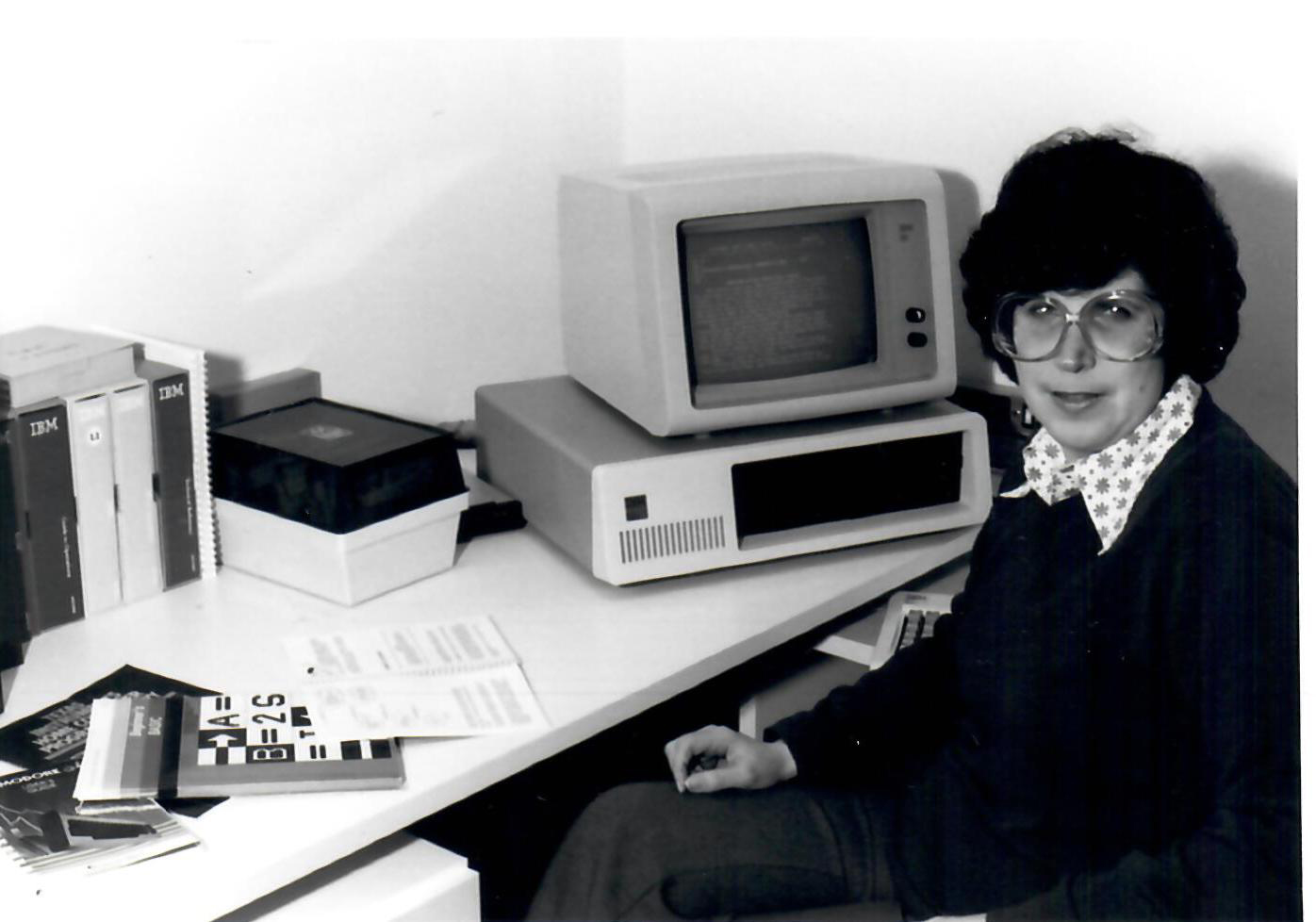
It’s the 1950s, and in Fort Meade, Md., a sprawling complex rises out of what was until recently a woody marsh. It’s here that the fruits of cryptanalysis (the analysis of codes, ciphers, and encrypted text) during World Wars I and II will come to yield fruits in technological leaps in computing and software development through the 1960s, 70s, and 80s.

Until recently, however, hundreds of the pioneers working there were almost completely forgotten. These are the titular “Queens of Code” featured in a new book by Eileen Buckholtz coming out of MIT Press.
The history is one Buckholtz is doubly qualified to write. Already a well-published author of both fiction novels and some of the earliest kids’ books on computers, she herself was a part of the NSA (National Security Agency) as a master computer scientist.
Buckholtz, who was born in Atlanta and grew up in Warner Robbins, noted that this was perhaps the only time such a story could be written, as on one end she had to wait all this time for much of the information to get declassified and for some of the women she interviewed to retire, while on the other many of them had already passed away.
“We lost five women since I started the project. And these were all good friends of mine. So, it was really hard. And some of us are, you know, we’re in [our] 70s, 80s. One or two of the women are in their 90s. So, I wanted to get this story out while I was still alive.
“I only have a couple months until publication date, so I’m hoping I’ll hang in there,” Buckholtz joked.

Soon-to-be necessary reading for anyone interested in the history of software development and/or women in STEM, the book is structured in alternating sections of history and individual profiles of women in the NSA. Many of these profiles are written and contributed by the women themselves, though a few, whose subjects had passed away before they had a chance to contribute, were painstakingly assembled by Buckholtz.
“I went through over 2,000 documents. I went through 5,000 images. I went through 40 years of NSA newsletters that had recently been digitized. So, I was trying to find not only my own memories of this but go back and base things on facts that had been recorded.”
While she had been working on the book for years, Buckholtz was partially inspired by the recent success of the film, “Hidden Figures,” seeing that there would be interest in a story like this. Though in this case, she wanted to highlight as many of the women as possible, instead of, as earlier publishers she had approached put their preference, “three women in a race against time to save the world.”
“It was kind of surprising that they [NSA] would hire during the heart of the Cold War and also the middle of the Vietnam War, 150 women to manage the most sophisticated computers to program in the world.”
The required skill and secrecy of the organization were noted to be a double-edged sword for these women. The barrier to entry was higher, but the agency could not afford to waste talent, and opportunities for growth within the agency were often better than those outside of it.
“NSA saw itself as a learning organization, and what that meant, it was kind of, I think, unique among a lot of agencies in that it wanted to keep getting better. It wanted to invest in the people in the workforce. So, there was training not only on your job skills, but also management skills and communication skills and team building skills and things like that.”
Among the dozens of women profiled in the book, Buckholtz also highlighted several Jewish women besides herself, including Carol Friedhoffer, who helped make the decision to standardize UNIX as the NSA’s main operating system, and Lois Gutman, the NSA’s first female deputy chief in the Laboratory for Physical Sciences. Buckholtz highlighted a personal connection with the latter.
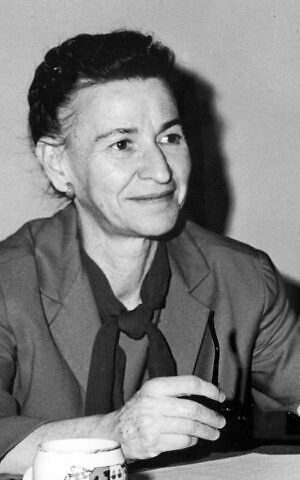
“After she [Lois Gutman] had died, her daughter contacted me and I was able to give her this information that Lois had provided me,” said Buckholtz, “and it was like getting a message from her mom, you know, because Lois had not talked to her about it. So, that meant a lot to me. It meant a lot to Sarah [Gutman], too.”
An especially detailed section was given to pioneering computer scientist and cryptanalyst, and a mentor of Buckholtz’s, Dorothy Toplitzky Blum.
“Dottie was like the top woman in technology in the group. And she was like a Jewish mother to all of us.”
Born to immigrants from Ukraine and the Austro-Hungarian empire, Blum cut her teeth working on early computing machines like the Army’s Bombe, which helped break codes in WWII, and later Harvest, one of IBM’s most groundbreaking systems.
She provided additional education and mentoring to other women in the field, and was a member-at-large on the board of Women in the NSA. Though she told no one at the time, she also personally contributes thousands of dollars for legal fees in the Predmore lawsuit, which helped bring women onto the promotion boards in the NSA.
Buckholtz notes some similarities between the struggles of that time and those of today.
“I think there’s a war on women and war on minorities, a war on anybody who’s different, and it’s very sad because diversity is really what makes an organization stronger.
“I think this book is kind of needed now more than ever to show that … the good and the benefits that organizations can get by having a supportive environment for all their employees, really, no matter whether you’re a female or whether you’re from an underrepresented group.”
On the whole, Buckholtz hopes the book will serve as inspiration for the next generation of female cryptanalysts.
“After ‘Hidden Figures’ came out, it really encouraged a lot of girls to go into science and STEM areas. And I hope that this will be that kind of encouragement for them, too.”
“Queens of Code” officially releases Nov. 17. If you’re interested in pre-ordering or in other “Queens of Code”-related events and advocacy, please visit queensofcode.com.
comments