



American Technion Society Board Meets in Atlanta
Meeting at The Dupree caps the society’s first national gathering in Atlanta.
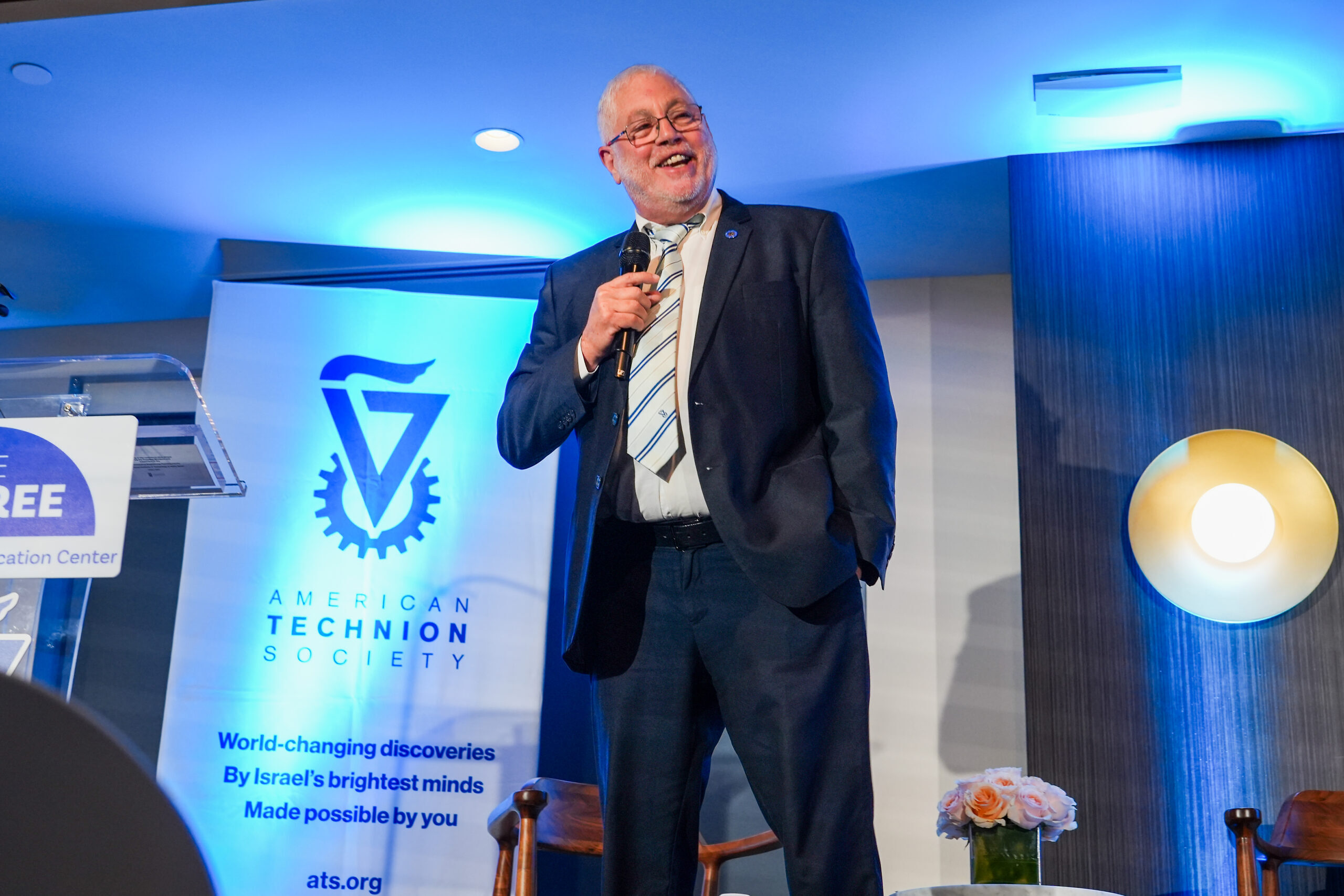
For the first time since it was established 86 years ago, the American Technion Society, which supports Israel’s technological university, the Technion in Haifa, held its annual national board meeting in Atlanta. Capping a weekend of discussions, the Society held a public gathering at The Dupree in Sandy Springs that brought together the national board members with the Technion graduates in Atlanta, prominent local supporters of the university, and other members of the public.

Making her first appearance at the meeting was Janet Shatz, of Washington D.C., who has just begun her term as the national board president. In her professional life, she is a real estate developer and has served as vice president of marketing of the Federal National Mortgage Association, or Fannie Mae. She has been involved in the work of the American Technion Society for a quarter-century and has served on the national board for the past dozen years.
“My conviction in our mission is stronger than ever,” she pointed out. “By supporting the Technion, I am helping build the Israel I want my children and grandchildren to inherit — strong in its defense, prosperous in its economy, inclusive in its society and leading the way in solving humanity’s greatest challenges.”
Over the years, the American Technion Society has raised more than $3 billion to support research that has literally changed the world. Technion researchers have made important contributions in such diverse areas as cybersecurity, flash drive technology, space exploration, and even in the development of new agricultural products like the cherry tomato. More than 80 percent of the scientists who developed Israel’s Iron Dome anti-missile technology were graduates of The Technion.
The president of the Technion, the renounced physicist, Professor Uri Savan, said the contributions that the Technion has made to Israel cannot be measured and that without it he doubts whether the country would survive.
“When I sit at my desk every morning, Dr. Savan said, “I have those three things on my mind, Israel’s security, Israel’s economy, and Israel’s society. It’s not that anybody really imposed that on this institution, is something that we took upon ourselves. The fact that we opened our doors in 1924, a quarter-century before the state of Israel was founded, meant that we had to take that responsibility. There was nobody else.”

Dr. Savan’s rise to the Technion’s presidency typifies the development of the university from its earliest days as a place where Jews could gain a technological education that was denied them by many of the governments of Europe during the first decades of the 20th century. His parents came to Palestine in 1936 because, as Jews, they were banned from a higher education in Europe. Their son taught at the Technion for 28 years and became a world leader in nanotechnology research — the manipulation of extremely small particles of matter. In the process of reaching out to help others develop their intellectual gifts, the Technion became a key component of the industrial development of Israel.
“It is not exaggeration to say that the Technician carried on its shoulders essentially all the engineering aspects that you can imagine in the state of Israel,” Dr. Savan said. “Essentially, all civil infrastructure that you see in Israel has the fingerprints of our faculty or our alumni, And, essentially, all of Israel’s industry was established by either Technion graduates or Technion faculty, starting with aerospace, microelectronics, and the chemical and food industries. You name it, it’s ours.”
And they’ve been supported by researchers like Georgia Tech Regents Professor Ben Zinn, an expert in rocket technology who grew up in Israel and helped fund the Atlanta Aeronautical Engineering Teaching Center at the Technion. He and his wife, Adrienne, were honored at the evening event for the Technion.
But it is not just in engineering and industrial technology where the Technion excels. The university is one of the world’s few technology centers that has a school of medicine and affiliated teaching hospital and, in recent years, it has produced groundbreaking research.
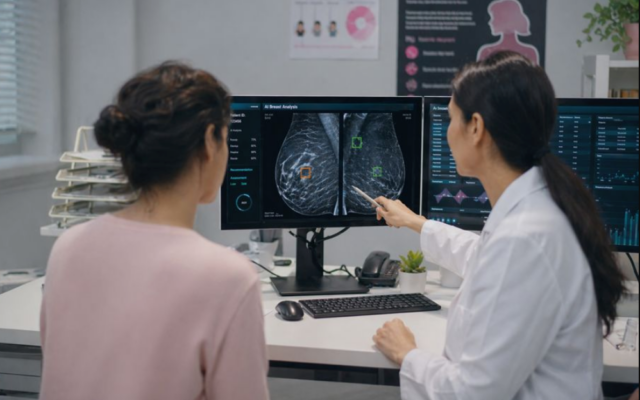
Typical of the advances that have been made this year is the development of a new method that accelerates and enhances MRI scans used in breast cancer imaging. It is a disease diagnosed in more than two million patients each year, most of them women. The approach, which was developed at the Technion’s faculty of biomedical engineering, combines artificial intelligence with advanced mathematical modeling to enable dynamic MRI imaging at what the researchers describe as unprecedented speed and accuracy.
This, the researchers say, could improve the detection of small tumors, help distinguish more accurately between benign and malignant growths, and enhance the study of tumor biology.
comments