



JBI Has ‘Vision’ for Creating Connections
The New York-based JBI Library serves more than 11,000 patrons worldwide.
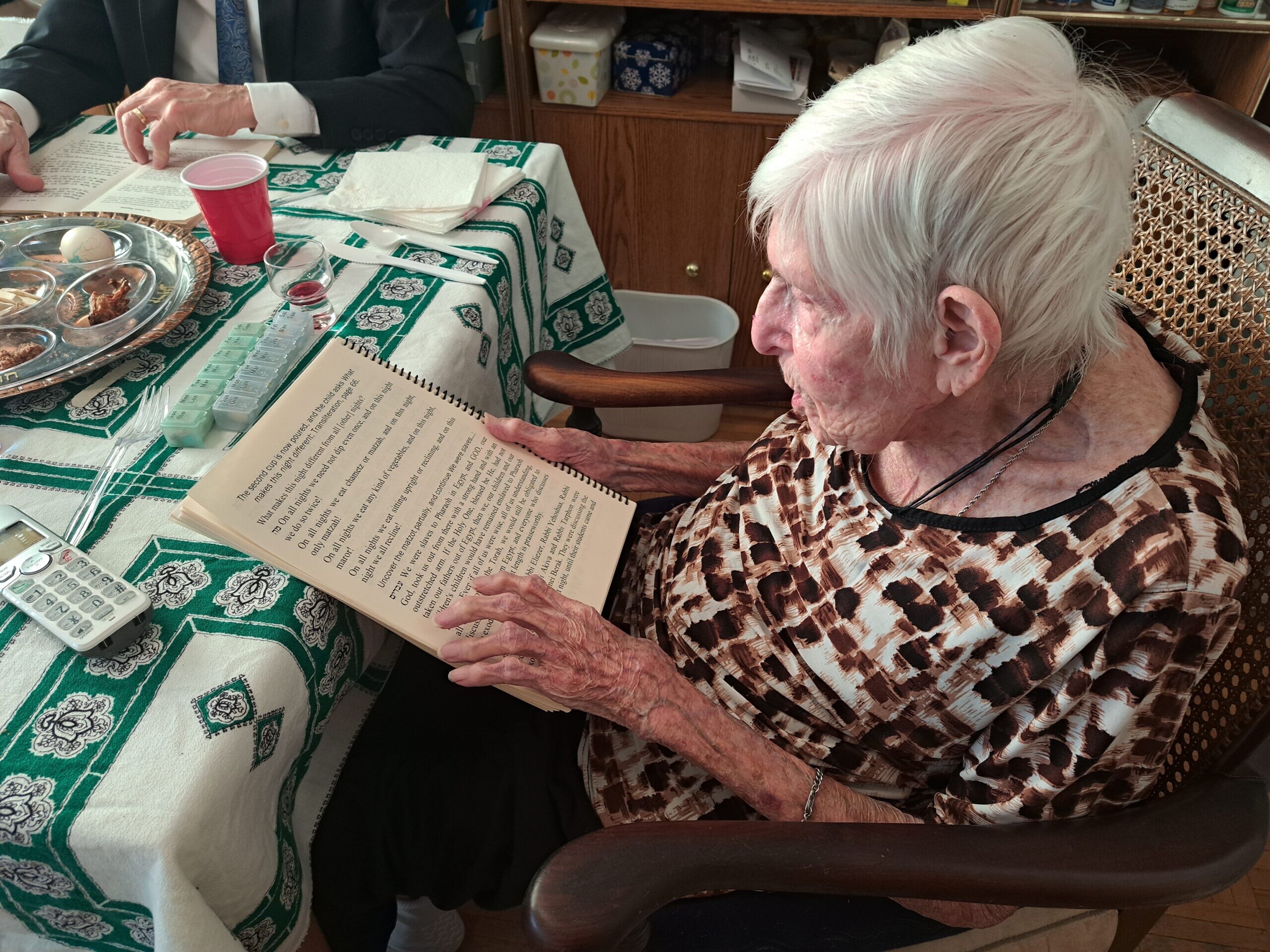
An estimated one in five adults will experience vision loss in their lifetime, according to government data. But one organization seeks to assist those with vision loss in maintaining, even enhancing, their connections to Jewish learning, literature, and even community.

New York-based JBI Library serves more than 11,000 patrons worldwide, providing a variety of materials from Jewish texts, prayer books, and other liturgical resources to popular literature, fiction and even magazines, as well as children’s materials. JBI’s circulating library currently has about 16,000 titles in a variety of forms for people who are blind or have low vision, including large print, braille, and audio books, all completely free of charge to the user.
JBI’s stated mission “is to ensure anyone that is blind, has low vision or other print disability can fully participate in and feel connected to all aspects of Jewish life, from culture, education, and community to religious practice.”

“We’re one of the Jewish community’s best kept secrets,” said JBI Executive Director Michelle Shapiro Abraham, whose goal as its director of less than a year is to get the word out about this important resource. “It’s something every Jewish leader should know about,” she said.
Many Jewish publishers make prayer books in commercial large print, which tends to be about 16 point at the most and are often really heavy, explained Shapiro Abraham. “While this does work for some people, it does not work for others. Therefore, JBI produces its own large print versions that are 22-point sans-serif type in order to really be able to help people fully participate.” More, she added, “if someone gets a prayer book in braille or in jumbo print from JBI, it’s theirs to keep.”
In its Manhattan offices, staff and volunteers produce audio books and materials in its own recording studio and have the ability to produce braille and large print materials in-house. The organization is an associate agency of the National Library Service for the Blind and Print Disabled at the Library of Congress, which provides free, easy-to-use playback machines for their audio recordings.

“We also have a team of three amazing librarians who don’t just answer the phones. They really support people in whatever they need in order to access the materials,” according to Shapiro Abraham.

In addition to its circulating library which mails materials postage paid and the large catalog of items available via its website, JBI fills custom requests. For example, they can supply b’nai mitzvah students who have low vision or are blind with their Torah portion and educational materials in braille or a specific large print.
In one unique request, JBI assisted a woman whose mother was a Holocaust survivor and had written down her memoir. After she passed away, her daughter didn’t have the vision to be able to access the work, so she reached out to JBI, which produced a braille version and then, because she was local, JBI had it hand-delivered to her to avoid the risk of losing it in the mail.
Founded in 1931 as the Jewish Braille Institute, with funding from the National Federation of Temple Sisters (now the Women of Reform Judaism), JBI was the first to publish the Hebrew braille code developed by Rabbi Harry Brevis, who, as a rabbinic student at the Reform seminary, was losing his eyesight to a degenerative disease. Today, that Hebrew braille is used around the world.
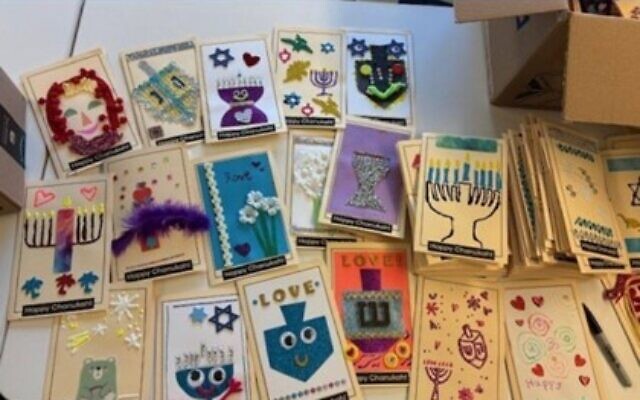
JBI also offers other educational, cultural, and community-building programs. Recently, two Atlanta synagogues – The Temple and Temple Sinai – participated in a Chanukah card project. All told, more than 100 groups requested the pre-brailled, large print cards with space for volunteers to add decorative tactile artwork such as fabric, raised shapes, and textured materials so that the recipient could experience the greeting via touch.
Jillian Penson, coordinator of teen and family experiences at The Temple, led the activity there with about a dozen ninth-grade students. “The teens really enjoyed this project,” she said. “They loved putting their creativity into it and making these Chanukah cards special for those who may not always get them. Each student made at least two cards with bright colors and beautiful designs. This will definitely be a project we do again next year!”
The Nathan L. and Suzanne K. Wolfson Merit Scholarship supports Jewish undergraduate and graduate students who are blind or have low vision and are attending an accredited university or college. Scholarship recipients demonstrate a strong academic record and engagement in the Jewish community. Two Georgia students, one currently attending University of Georgia, and another who completed undergraduate studies at Georgia Tech, have been recipients of the scholarship. Applications for the 2026-27 scholarship cycle are now open via JBI’s website.
JBI Library Board Co-chair Susan B. Gold, who is a Jewish public health professional, believes JBI’s programs help combat today’s epidemic of loneliness and social isolation, one reason that compelled her to take a leadership position in the organization.
“The very personal connections made between our patron friends and our staff is a community of its own. And not just our staff, but our volunteers as well: those who record audio books, those who create tactile Chanukah cards, those who assist with mailings of materials, those who host virtual book discussions and poetry talks, all become connectors and lifelines of their own. As thought leaders in the accessibility frontier, we actively seek out opportunities to offer our services – to individuals, groups, and organizations – filling a niche we know we do well and stemming the devastation of social isolation.”
For more information or to register to become a JBI patron, visit jbilibrary.org.
- Health and Wellness
- Community
- Fran Putney
- JBI Library
- Michelle Shapiro Abraham
- National Library Service for the Blind and Print Disabled
- Library of Congress
- Jewish Braille Institute
- National Federation of Temple Sisters
- Women of Reform Judaism
- Rabbi Harry Brevis
- The Temple
- Temple Sinai
- Jillian Penson
- Nathan L. and Suzanne K. Wolfson Merit Scholarship
- University of Georgia
- Georgia Tech
- Susan B. Gold
comments