



Kahn Shines Light on ADHD Diagnoses in Females
Dr. Gilly Kahn drew from her own experience as a “difficult child” to find the answers to this behavior and set out to write a book to help others.
After 37 years with the Atlanta Journal-Constitution and now with the AJT, , Jaffe’s focus is lifestyle, art, dining, fashion, and community events with emphasis on Jewish movers and shakers.

Psychologist Gilly Kahn drew from her own experience as a child with ADHD to arrive at her occupation and subsequently publish her new book, “Allow Me to Interrupt: A Psychologist Reveals the Emotional Truth Behind Women’s ADHD,” which highlights the missed emotional dysregulation component of ADHD that is mistakenly not included in the diagnostic criteria.
Kahn explained, “Emotional dysregulation involves difficulties with regulation of intense emotions, moving past these emotions, and suppressing problematic emotional responses. Research shows a close link between these challenges and ADHD.”
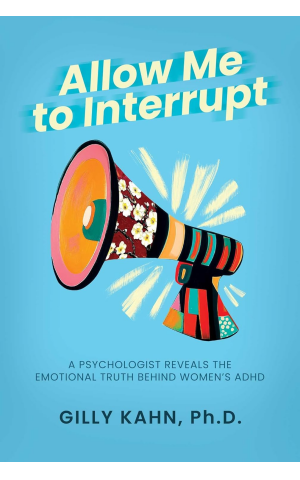
She feels that there are a lot of misconceptions surrounding ADHD and how it presents, especially in girls and women because the ADHD diagnostic criteria were developed on samples of mostly young boys.
She said, “In females, ADHD’s presentation is more complex, especially when considering basic biological differences between males and females like menstrual cycles, common co-morbidities, and differences in brain development and functioning.
In addition to writing, Dr. Kahn works at a private group practice in Buckhead where she treats patients across the lifespan, but specializes in working with neurodivergent (e.g., ADHD, autistic) teens. She explained, “After graduating with college degrees in creative writing and psychology, I’m now able to officially pursue both of these passions. I blog for “Psychology Today” and have contributed my clinical insights to major magazines including “TIME,” “Forbes,” “Prevention,” and “Parents.”
Kahn and her brother were born in Miami after their parents immigrated from Haifa. Her father (whom she refers to as “Aba” in the book) grew up in poverty and struggled with getting a higher education. Thus, when he first arrived in Florida with the plan to provide a comfortable life for their mom (“Ima” in the book), he lived out of his car and used the public rinsing stations at the Miami beaches to take showers. Once he found a job and an affordable place to live, their mom joined him.

Kahn’s parents spoke to the children in Hebrew and visited Israel annually. When Kahn was 3, her mother (an artist) pushed for the family to move to Israel because she wasn’t happy living in Miami, and they bought an apartment in Haifa. Tragically, right before the parents were about to execute the move, her mother had a routine breast exam and was diagnosed with an aggressive, silent form of breast cancer. She passed away when Kahn was 4.
Kahn reminisced, “Like my mom’s experience, I didn’t want to stay in South Florida. Despite this, I kept getting accepted into schools in that area, so I ended up completing college, a master’s program in experimental psychology, and my Ph.D. in clinical psychology — all in South Florida. I guess it was ‘kismet,’ and I loved attending all of those universities. In graduate school, my husband and I visited Atlanta. We fell in love with the people, culture, and weather. So, we moved here.”
Thus, Kahn was raised by a single father as she struggled significantly with regulating her emotions. Her dad described her as an “emotional child,” and often made comments about her brother being “easier.” She was described as “too emotional” and “difficult.”
As a child, she presented with many of the more well-known ADHD symptoms like describing reading assignments as “excruciating to plow through.” She explained, “I still find myself rereading paragraphs after finding that somehow my brain transported me to ‘la la land’ instead of focusing on the reading material.”
She was diagnosed with ADHD in her early 30s, and started writing the book shortly thereafter, once she realized how deeply misunderstood ADHD in women is among professionals and the general public.
She stated, “The main purpose of my book is to validate these types of experiences for other women with ADHD because hearing this type of feedback can be so damaging, especially in the absence of early diagnosis. We end up feeling misunderstood and mislabeled, because we were, and, unfortunately, many of us still are.”
Published by Post Hill Press and being sold internationally, Kahn’s book is available for preorder at www.simonandschuster.com/books/Allow-Me-to-Interrupt/Gilly-Kahn/9798888457276bb
comments