



Lipstadt Warns Antisemitism Threatens American Democracy
In a speech at Haifa University conference, she calls out Jew hatred as an issue for all in America to face.
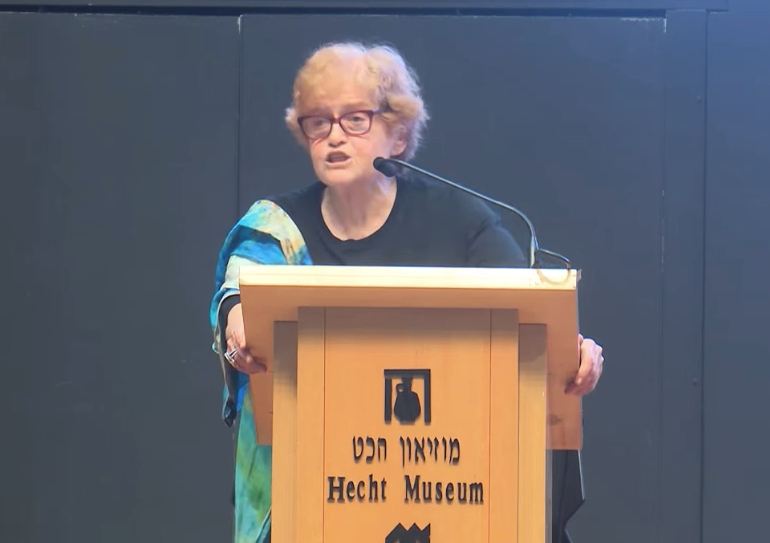
Atlanta-based historian, Deborah Lipstadt, warned an international academic conference what she described as the “ferocious rise in antisemitism” is not just a threat to Jews, it is an attack on democracy, itself.

Lipstadt, has taught Jewish studies at Emory University for more than 30 years and is also a University Distinguished Professor, a rare appointment that has been shared by only three other individuals there. She told the Contemporary Antisemitism Conference at Israel’s University of Haifa that antisemitism is not just an attack on contemporary Jewish society.
“Jew hatred, whether ideological or utilitarian, is being used not just to wreak havoc with Jewish life, but to erode that democracy and create doubts about its long-term viability.”
She said that was one of the lessons she took away from her role as ambassador in the Biden Administration and Special Envoy for Monitoring and Combating Antisemitism.
During her three years of extensive travel and her meetings with leading government officials, she became convinced that attacks on Jews must be seen in a broader context. Antisemitism, she believes, is a perfectly crafted instrument for those who hate democracy, the rule of law, and international stability.
“The onus is on society at large,” Lipstadt said. “If it fails to comprehend that it, too, is in the crosshairs and that it must commit itself to responding forcefully and unequivocally, then the pessimism of which I spoke a few moments ago will be more than justified. For the sake of democracy’s survival, those who treasure it cannot afford to look away from the scourge of antisemitism.”

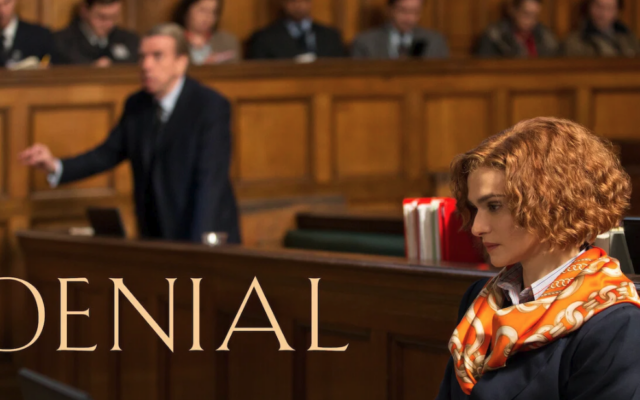
Lipstadt, who has a long history of publicly battling antisemitism, is perhaps best known for the lengthy British court case she won against Holocaust denier, David Irving. The book she wrote about the trial was successfully adapted into the motion. picture, “Denial,” released in 2016, starring Rachel Weisz. In 2019, she wrote the bestselling winner of the National Jewish Book Award in Education, “Antisemitism Here and Now.”
In her address in Haifa, which she described as an examination of “Contemporary Jew Hatred: A Structural Analysis and Personal Reflections,” she described how she sees the development of antisemitism today.
Political activists on the far right and the far left may have different beliefs on a full range of issues ranging from their view of how capitalism operates to the role of feminism in society and how sexual identity is treated in society. But when it comes to their promotion of antisemitism, she maintains, “their views coincide” and they are “bound together by this shared hatred.”
But there is another important element that is present, she believes, in the way Jews are treated in the world today.
“The third and increasingly most dominant force in the spread of Jew hatred is Islamist jihadism. On campus classrooms and the quad, at protest marches in Sydney and in London, and a myriad of other settings, Islamist extremism has been a galvanizing force in the spread of overt and often deadly Jew hatred. It poses an existential threat to Jewish physical and communal survival.”
“More than just a common cause, the far right, far left, and Islamists have built a coalition,” Lipstadt says, “in which this cross-ideological antisemitism becomes the unifier, the glue that holds these ideological opposites together.”
This new coalition of hate has been aided by what has been described as Foreign Malign Influences (FMI) who have the financial resources, professional expertise, and political power to drive the international campaign against Jewish life to new heights.
“These FMI’s,” Lipstadt pointed out, “work through proxies, social media bots, and direct contacts as they instigate, magnify, and promote Jew hatred and anti-Zionism, they spread antisemitic disinformation.”
What all these allies have managed to promote in their free access to social media and the Internet is what Lipstadt calls, “the toxification of Jewish life.” It is most evident, she believes, in the ever-present armed guards that are frequently a part of b’nai mitzvot and weddings, and almost always a part of Shabbat and holiday worship.
Again, according to Lipstadt, much of the responsibility based on her experience as a well-traveled American diplomat can be traced back to militant Islam.
“There’s a double tragedy here. Not only do these Islamist radicals target Jews and Jewish institutions, but they also target their fellow Muslims, including minority Muslim sects, Muslim liberals, and Muslim women and girls who refuse to comply with their Islamist religious precepts. These, too, are in their crosshairs. We are, to use a contemporary term, throwing moderate Muslims under the bus.”
comments