



Breman Opens ‘Bronx Boys: Storytelling with a Lens’
The exhibit brings together the work of two Bronx-born photographers who captured pivotal moments of societal change in 20th century America.
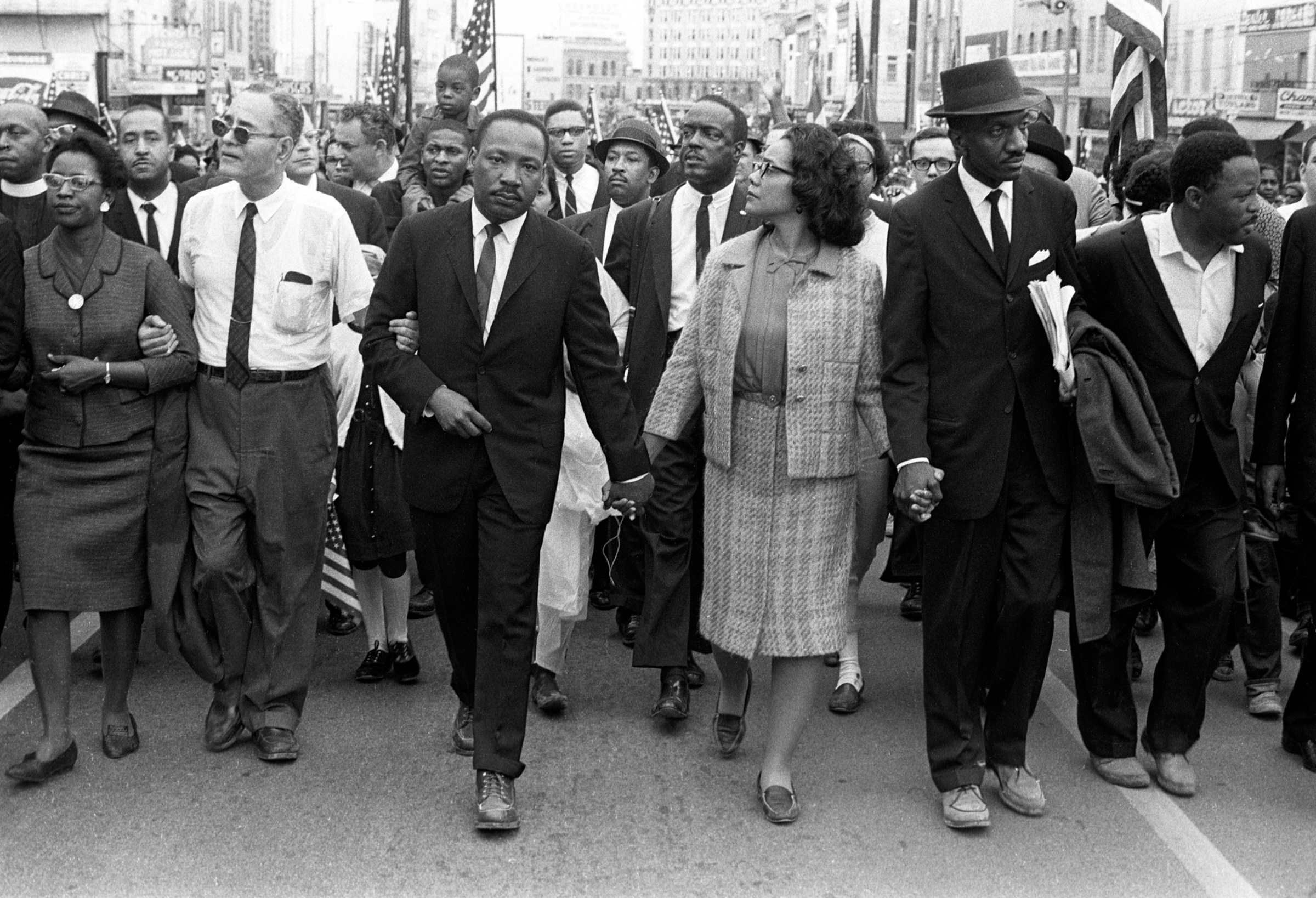
The Breman, Midtown’s museum and cultural center dedicated to sharing the richness of Jewish culture with diverse Atlanta audiences, has opened an exhibition of photographers Morton Broffman and Jules Aarons.

Presented in partnership with Atlanta’s Lumiére Gallery, “Bronx Boys: Storytelling with a Lens,” brings together the work of two Bronx-born photographers who captured pivotal moments of societal change in 20th century America. While they never met, their work reflects a shared commitment to capturing humanity, resilience and connection found in both historic events and daily life.
Morton Broffman (1928-1992) served as photographer for the National Cathedral in Washington, D.C., from 1966 to 1992. Broffman documented historical events – including Martin Luther King Jr.’s final sermon, days before his assassination, the Selma march and Pentagon protests opposing the Vietnam War – as well as social challenges including poverty in Appalachia. His work, which had largely gone unseen after his death, came back into the light when several of his photos were included in a 2009 exhibition of civil rights photography at Atlanta’s High Museum of Art.
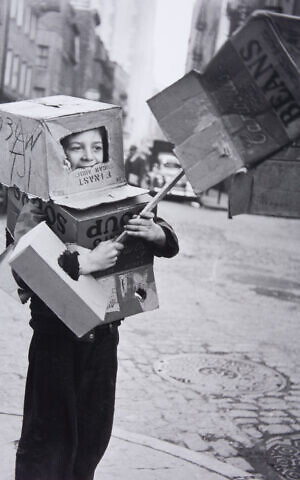
Jules Aarons (1921-2008), a physicist and engineer by trade and a professor at Boston University, began focusing seriously on photography in 1947. Influenced by Henri Cartier-Bresson and New York street photographers, he captured the life of the streets of Boston’s ethnic neighborhoods but also photographed during far-flung travels to stops including Paris, India, and Japan.
Broffman and Aarons were born in the New York borough of the exhibit’s title to Jewish immigrant parents. Both became college educated, U.S. Army veterans, teachers and masters of photography. That, and they shared a deep interest in, and compassion for, people.
But their parallel paths also allowed for differences: in career directions, the subjects of their work, geographic emphasis, and editorial perspective. While Broffman was a full-time professional photographer, Aarons pursued a career in science yet also achieved acclaim in his driven side pursuit of photography.

With their cameras, Broffman and Aarons recorded important moments of history in the 1940s and across the next four decades. Each produced excellent photographic images, comparable to the best by photographers who inspired them: Cartier-Bresson, Dorothea Lange, Helen Levitt, Walker Evans and Berenice Abbott.
It’s accepted in the world of photography that a disproportionate number of historically important photographers have been Jewish for a variety reasons, perhaps including a shared desire to document and preserve memory.
“Telling the stories and sharing the art of these gifted visual storytellers aligns with The Breman’s mission to connect people to Jewish history, culture and arts,” The Breman Executive Director Leslie Gordon says.
comments