

Donors Drive Major Alzheimer’s Breakthroughs
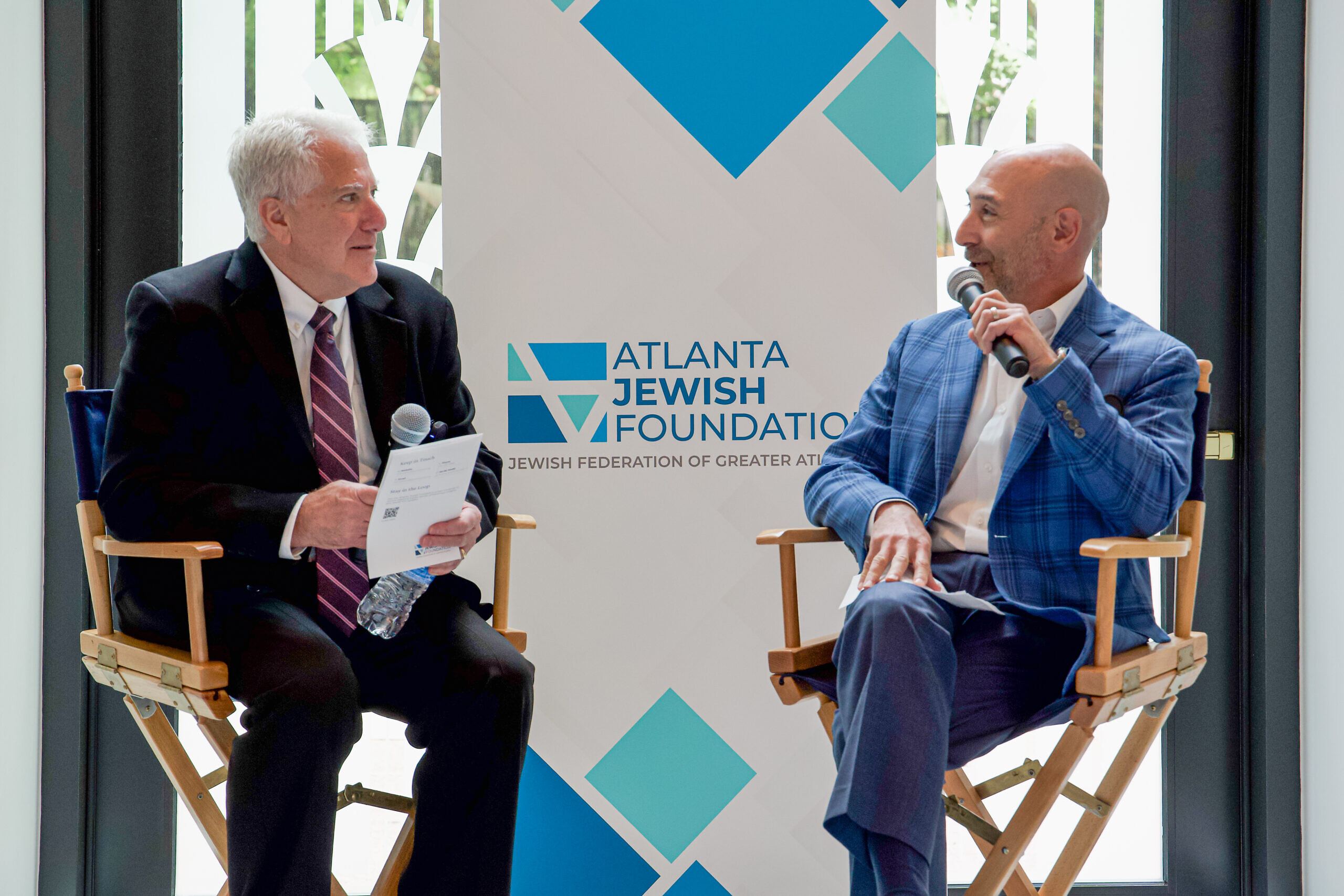
Atlanta Jewish Foundation hosted its Community Conversations series on June 10 with the focus on how philanthropy helps propel research into Alzheimer’s.
What once seemed impossible is now becoming reality in the fight against Alzheimer’s disease.

Researchers can now detect signs of Alzheimer’s years – even decades – before symptoms appear. New treatments are helping slow disease progression. Blood tests are making earlier diagnoses possible. And for the first time, scientists can realistically envision a future where prevention becomes as important as treatment.
These extraordinary advances – and the vital role philanthropy plays in accelerating them – were the focus of the Atlanta Jewish Foundation’s recent Community Conversations event, held June 10 and presented in partnership with Pearlann and Scott Horowitz.
The Community Conversations series brings together thoughtful donors and nonprofit leaders to talk about the community’s pressing and long-term philanthropic needs.
The recent program featured a conversation between Jeffrey Gopen, president and CEO of Jewish HomeLife, and internationally recognized neurologist and neuroscientist Dr. Allan Levey.
Dr. Levey, founding director of the Goizueta Brain Health Institute and director of the Goizueta Alzheimer’s Disease Research Center at Emory University School of Medicine, has spent more than four decades studying Alzheimer’s disease.

“When I started, people really didn’t know what Alzheimer’s disease was,” said Levey. “Everybody used the term ‘senility,’ and that was just thought to be normal aging.”
Four decades later, the field has been transformed, and new discoveries have shifted the focus from treating symptoms to preventing the disease.
“By the time somebody comes to see us for care and treatment, they’ve probably had the disease for at least 20 to 30 years,” Levey said. “The future, our path, is one toward prevention.”
Researchers can now identify disease-related changes through advanced imaging, spinal fluid testing, and increasingly, blood tests that may allow for earlier diagnosis and intervention. New therapies that remove amyloid plaques from the brain are also beginning to show measurable results.
“It’s almost like the first time man stepped on the moon,” Levey said. “We’ve now landed. We’ve stepped on the moon, and we have our first treatments which can slow down the disease.”
At Emory, approximately 400 patients have received these therapies.
“Over the course of two to three years, over half of them have not changed,” he said. “This is a progressive disease, so to see people not change is really, really remarkable.”
Researchers are also learning more about how lifestyle factors – including exercise, nutrition, blood pressure management, stress reduction, and quality sleep – can support brain health.
“It’s been estimated that maybe 45 percent of cases of Alzheimer’s disease could be prevented through lifestyle changes,” Levey noted.
The discussion also underscored the important role philanthropy plays in advancing medical research.
“While challenges remain, there’s never been more hope than there is today,” said Ghila Sanders, vice president of philanthropic advisory at the Atlanta Jewish Foundation. “Advances in research, diagnosis, treatment, and prevention are changing what is possible, and philanthropy continues to play an important role in helping move that progress forward.”
Levey emphasized that charitable support has been instrumental in advancing Alzheimer’s research.
“Philanthropy has had a dramatic impact on not only my career and our program at Emory, but really globally,” he said.
While challenges remain, there’s never been more hope than there is today. Advances in research, diagnosis, treatment, and prevention are changing what is possible, and philanthropy continues to play an important role in helping move that progress forward.
Philanthropic support helps researchers pursue innovative ideas, invest in new technologies, recruit talented scientists, and accelerate promising discoveries. Levey noted that endowment gifts are particularly impactful – providing long-term stability.
“One of the things that I’ve seen in my career is that every dollar of philanthropy that’s come into us at Emory gets translated probably 100 to 1 in terms of research,” he said.
For many philanthropists, donor-advised funds (DAFs) provide a flexible and tax-efficient way to support causes such as Alzheimer’s research, senior care, and other meaningful causes both locally and globally.
The consequences of losing donor support would be significant.
“If we didn’t have the support of donors, we would have had to lay off probably 70 percent of our research team,” Levey explained. “And laying them off means you don’t just stop the research for a year. You’ve stopped a generation of people from doing research.”
The program also highlighted the importance of caring for older adults currently living with memory loss and cognitive decline. With donors’ generosity, Atlanta Jewish Foundation and Jewish Federation of Greater Atlanta support seniors through initiatives such as AgeWell, the Holocaust Survivor Support Fund, and community partnerships across Jewish Atlanta.
As Levey said, “We all want people to have great golden years.”
Closing the event, Carolyn Oppenheimer, incoming campaign chair of the Jewish Federation of Greater Atlanta, reflected on the impact of the conversation.
“As someone who understands firsthand the pain and heartbreak of living with someone with Alzheimer’s, what I got from today is hope,” she said.
For more information about the Atlanta Jewish Foundation and charitable giving opportunities, including donor-advised funds, visit www.atlantajewishfoundation.org, email foundation@jewishatlanta.org, or call 404-436-0089.
This story was submitted by the Atlanta Jewish Foundation.
- Senior Living
- Community
- Alzheimer’s disease
- Atlanta Jewish Foundation
- Pearlann and Scott Horowitz
- Jeffrey Gopen
- Jewish HomeLife
- Dr. Allan Levey
- Goizueta Brain Health Institute
- Goizueta Alzheimer’s Disease Research Center at Emory University School of Medicine
- Ghila Sanders
- jewish federation of greater atlanta
- AgeWell
- the Holocaust Survivor Support Fund
- Carolyn Oppenheimer
comments