



Healthy Air USA Makes Breathing Easy
Let experts detox the air in your home.
Robyn Spizman Gerson is a New York Times best-selling author of many books, including “When Words Matter Most.” She is also a communications professional and well-known media personality, having appeared often locally on “Atlanta and Company” and nationally on NBC’s “Today” show. For more information go to www.robynspizman.com.
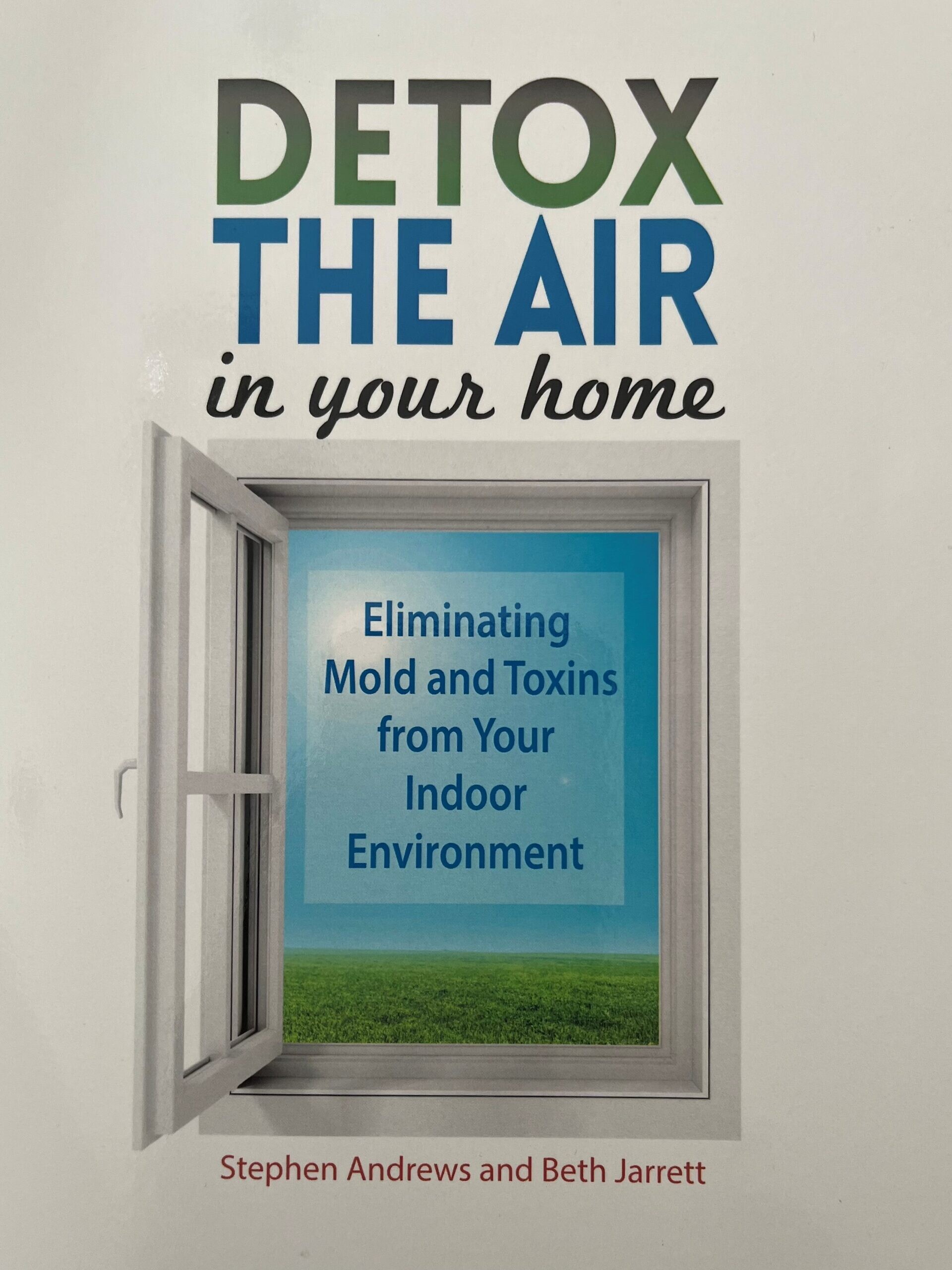
The term “healthy air” is a timely and hot topic. Stephen Andrews, author of, “Detox The Air in Your Home – Eliminating Mold and Toxins from Your Indoor Environment,” is the CEO and founder of Healthy Air USA and a leading authority, whose company, headquartered in Atlanta, specializes in systems that keep your air clean of toxic mold and allergens.

Andrews, a highly respected go-to resource, built his success on experience, science, and a passion to make air healthier. His credentials include being a certified mold inspector, certified mold remediator, indoor air quality professional, and a licensed Georgia conditioned air contractor. He has devoted his life’s mission to ensuring healthy air in homes, schools, hospitals, and workplaces.
As consumers, we often focus on comfortable systems that provide cool or warm air. However, Andrews is adamant that the air we breathe should be clean. Andrews defines healthy air as invisible protection — clean, balanced, and free from the invisible threats that quietly erode our well-being. He advocates that it isn’t just about what you can see or smell; it’s about the microscopic world you can’t. Healthy air exists in an environment where mold and biological contaminants can’t survive — where conditions are deliberately maintained to support health, not harm.
Andrews explains, “Most people are shocked to learn that the air inside their homes is often more polluted than the air outside. If someone is dealing with chronic sinus infections, fatigue, skin rashes, headaches, or wake up daily feeling stuffy — and especially if they feel noticeably better when they leave the house — consider what’s in the air. These symptoms are often linked to hidden mold, volatile organic compounds (VOCs), or other airborne pollutants. Testing and assessing your indoor air isn’t just a precaution — it’s the first critical step to uncovering what you’re breathing and whether it’s affecting your health.”
Andrews’ career began in the plumbing industry in 1968, and by 1979, combined plumbing with heating and air-conditioning services. That insight led to the founding of R.S. Andrews Services Inc., a company he built from the ground up with just two service trucks, eventually evolving into a substantial operation with more than 100 trucks. In 1999, Andrews sold the business to a subsidiary of Kansas City Power and Light, a utility company.
Regarding his company, Andrews shared, “Healthy Air USA was born out of need, and around that time, my health began to deteriorate. I was battling relentless allergies and undergoing weekly allergy shots with no relief. Frustrated, I turned to my research and became increasingly convinced that my symptoms were tied to something far more insidious — mycotoxins in the air. That discovery led me to a renowned ear, nose, and throat specialist in Atlanta, and this evolved into a lifelong commitment to helping people breathe clean, healthy air. That passion continues to drive my work every day.”

Andrews wanted to shed light on the problem, share what he learned, and demonstrate how your home should be a place of healing and healthy living, not harm. Regarding poor air quality, he advised, “Watch for clues like a faint, musty odor, or water stains creeping across ceilings or behind furniture. Notice foggy windows with beads of condensation that return, black dust gathered around vents, or simply a dense or heavy feeling in the air you can’t quite explain. A closer look often reveals paint that bubbles or peels, warped, swollen baseboards, and windowsills quietly rotting beneath the surface. These are the home’s way of whispering that something deeper is wrong. Moisture readings in walls, floors, or concrete can reveal hidden dampness that feeds mold colonies, often out of sight. And inside your HVAC system, a speckled layer of black buildup often signals the perfect storm for airborne contamination. These signs may seem small on their own but form a powerful warning: the air in your home may be quietly undermining your health. Your HVAC system is the lungs of your home — and depending on how it’s maintained, it can either purify the air you breathe or poison it.”
The difference lies in the details, as Andrews explained, “High-quality filters — rated MERV 13 or higher — can trap microscopic particles as small as 0.3 microns, including allergens, bacteria, and mold fragments. If indoor moisture levels exceed 50 percent, your HVAC system may inadvertently fuel mold growth. The sweet spot is 35 percent to 45 percent — a range where mold can’t thrive, and the air feels fresh, not damp. A clean, optimized HVAC system safeguards your health. While modern air conditioning makes it easy to control temperature, managing moisture is a far more elusive — and dangerous — challenge. Older homes are especially vulnerable. In a city like Atlanta, managing air quality isn’t a luxury; it’s a necessity. This means keeping volatile organic compounds (VOCs) at exceptionally low levels — ideally below 0.016 parts per million over an eight-hour exposure period. Healthy air is your safeguard.”
He further described, “Unhealthy air is the kind of danger that slips into your body unnoticed and slowly takes its toll. It starts with elevated humidity, rising quietly above 50 percent, creating the perfect climate for mold to flourish. Add a cocktail of airborne particles and chemical off-gassing from furniture, building materials, and household cleaners, and the air in your home becomes a toxic brew. The longer it goes unchecked, the more damage it can cause.”
A clean, optimized HVAC system safeguards your health. While modern air conditioning makes it easy to control temperature, managing moisture is a far more elusive — and dangerous — challenge. Older homes are especially vulnerable.
Devoted to his healthy air mission, Andrews spent years walking into homes where the air was making people sick — and walking out knowing their lives were about to change. He said, “The real proof is in the people. I’ve stood with families at their breaking point — parents who had seen specialist after specialist, children missing school, and then we found it: hidden mold behind a wall, high VOC levels in a nursery, a damp crawlspace poisoning the entire house. Once the source was uncovered and removed, everything shifted. Although a water event from the foundation, a pipe break, sewage back-up, or a continuous water drip can create a toxic environment from black mold, most homes become sick because of air-conditioners. Numerous air-quality problems result from ‘oversized’ air conditioners, improperly sized air ducts, a lack of air duct insulation, and leaking air ducts. The problems they create are usually invisible and slow to develop, so people become sick without even realizing it’s their home making them sick, especially infants and the elderly with underdeveloped or weakened immune systems. Most air-quality professionals look for or test for mold, but not the cause. It’s more important to identify the reason a building is sick. If one simply cleans the toxin without eliminating the cause, the problem will return.”
Healthy Air USA advocates that the air we breathe may be invisible — but its power over our health is undeniable. A genuinely healthy air system weaves together three essential pillars: powerful filtration, precise humidity control, and fresh, filtered outside air. And none of it works without an HVAC system that’s properly sized and engineered — not just to move air, but to move clean air without dragging contaminants through your ductwork.
Andrews added, “When we test the air in a house and investigate the duct systems and HVAC units, we believe our customers deserve a healthy indoor environment with quality, uncontaminated air. A healthy home impacts every breath you take, which should bring peace of mind, not uncertainty. Your home can be a place where healthy living begins, and that’s our mission. You can breathe easier when Healthy Air USA is at work.”
Visit Healthy Air USA at www.healthyairusa.com or the main office at info@healthyairusa.com or (770) 205-1710.
comments