



Hirsch Keynotes National Jewish Theater Conference
For 17 years, Mira Hirsch was the director of the Jewish Theater of the South, an innovative project at the MJCCA.
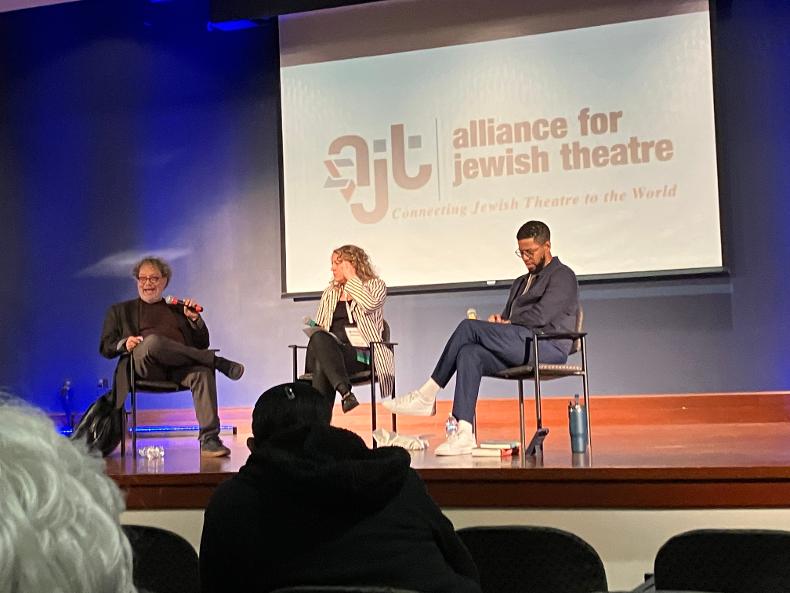
For the first time in seven years, the Alliance For Jewish Theater, which promotes live performances in local communities around the country, met to discuss the state of Jewish theater face to face.

The two-day program, which was hosted at The Breman, discussed a wide range of issues. The topics ranged from how best to produce and promote new works to a discussion of the past and present of Holocaust-related theater. They looked at how the Orthodox experience is being portrayed on stage as well as the state of Jewish theater around the world.
The keynote speaker for the event was Mira Hirsch, who for 13 years was the driving force behind the Jewish Theater of the South, which was once a project of at the Marcus Jewish Community Center of Atlanta (MJCCA).The theater’s mission, as she described it, was to tell theatrical stories with Jewish content and a universal appeal to an audience from a variety of backgrounds. Later, she served as education director of the Theatrical Outfit. Most recently, she directed a series of theater readings at The Breman of plays with Jewish themes. She also teaches theater at a private high school in Atlanta.
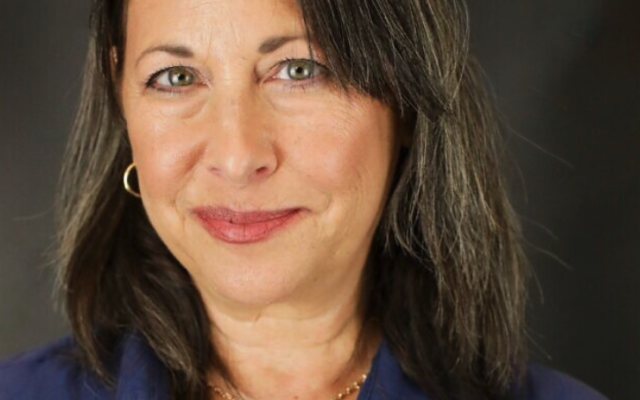
Hirsch recently spoke to the AJT about her work and her role in the Jewish theater community.
AJT: What was the most important question you asked your audience when you talked about Jewish theater at the recent conference?
Hirsch: Well, I asked my audience how they see their contribution to the Jewish cultural canon. Should it be “business as usual” for each of us in our respective roles in the Jewish theater world? Should our role be to create safe spaces for our Jewish audience? Or should we be shifting to react to the dangerous and unsettling climate we find ourselves in?
AJT: And how did you answer those questions?
Hirsch: I said to my audience that I think we can make a difference in educating, enlightening, and creating empathy and understanding – both among our fellow Jews and our neighboring communities. We are ambassadors. We can influence perspectives, and we can affect change.

AJT: And what is it that you believe are the greatest challenges the Jewish theater community faces?
Hirsch: I think it’s the same challenge we have as Jews in the 21st century, I mean, what we’re being faced with now, like I said to my audience at the conference, who could have imagined? I mean, the extreme anti-Israel, anti-Zionism that is also manifesting as extreme antisemitism. We’re not the new immigrants anymore. We’re, you know, we’re the old timers. We have obviously had periods of time where people have been sort of anti-Israel, but nothing like we have now, and I think it’s a real challenge for us to combat the propaganda and the hate that has become so vocal and loud through social media and literally on the streets.
AJT: And how does theater do that?
Hirsch: Community theater is, to me, one of the most significant Jewish community builders we have. The theater experience puts you in the same space with not only other people around you in the audience, but with the actors on the stage. It’s a very visceral, very immediate experience that does something that other dramatic art forms cannot. It also brings together people in the creative team, the actors and the directors and the designers who are creative people from our own community.
AJT: We’ve had some outstanding productions of Jewish theater, like the Atlanta Opera’s “Fiddler On The Roof” last year and “The Lehman Chronicles” at Theatrical Outfit. With productions like these, do we really need a full-time Jewish theater?
Hirsch: There’s just no consistency here. This season, in particular, there’s very little you could call Jewish theater. And that’s nothing new. Before I started Jewish Theater of the South so many years ago, every once in a while, a theater company in town would do a play with Jewish content. That is still what mostly happens.
AJT: So why don’t we have a Jewish theater in Atlanta? In smaller communities like Sarasota and St. Paul, Jewish theater is thriving.
Hirsch: It just takes one or two leaders in our Jewish community to say this is important, this is something we should support, and this is how we should support it. If we could find that leadership, we could accomplish two tremendous tasks. The first is to provide a safe space for the Jewish community to share our stories and to enjoy our stories together and discuss our stories together. Second and simultaneously, to serve as a cultural ambassador to the rest of the community. To me, it’s so clear the contribution that Jewish theater makes seems like a no brainer to me.
comments