



Breman Program Celebrates the Jews of Shanghai
Representatives of the two communities remembered Shanghai as a refuge that helped save thousands of Jews from the Holocaust.

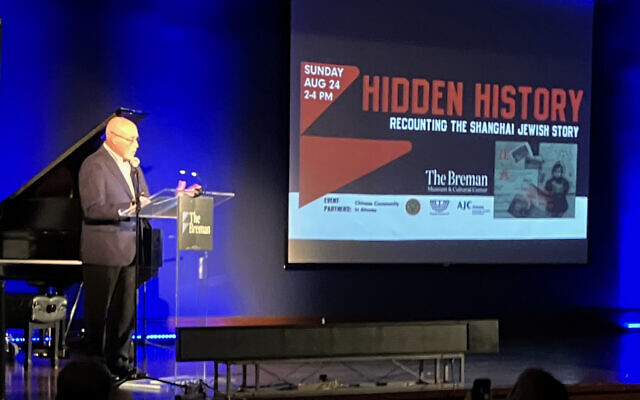
Representatives from Temple Emanu-El in Dunwoody teamed up with members of the Chinese Arts Alliance in Atlanta to commemorate the important historical ties between the two communities. The program, which was held at The Breman Museum, coincided with the current exhibit about China and Jewish life there, particularly during World War II.

The co-chair of Temple Emanu-El’s Interfaith and Intercultural program, Bob Grossman, praised the ties that have developed between the Atlanta temple and the Asian community that finally brought them together at the museum.
“When we first came together,” Grossman said, “our goal was simple. It was just to learn from one another, to explore our cultural traditions and to discover the values that we share. But what has emerged is something truly meaningful.”
In China, there has been an active Jewish community for centuries and the kind of ties that the two groups have forged in Atlanta is not unlike the relationship that developed in one of China’s most important cities, Shanghai. Those historical ties are highlighted in a current exhibit at The Breman.
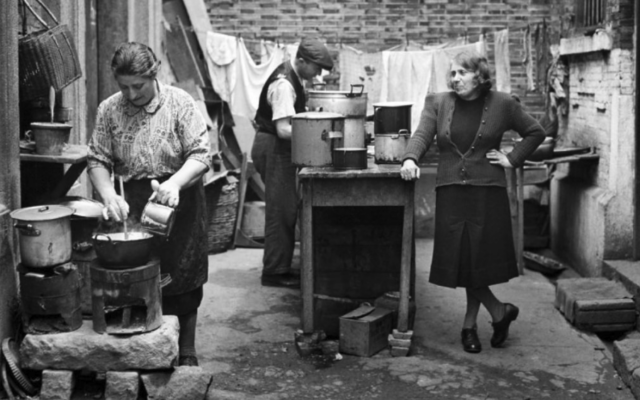
It’s called “Hidden History – Recounting The Shanghai Jewish Story.” It outlines the development of the Jewish community in the free and cosmopolitan environment of the Chinese city, once the fourth largest population center in the world.
There were Jews there over a thousand years ago. They were attracted by the plentiful business opportunities that stretched back from their former homes to the so-called Silk Road in Asia. And, as Rabbi Joseph Prass, director of Breman’s Holocaust Education project, told his museum audience, word spread of the fortunes to be made in China.

“This is a place that we can exist,” Rabbi Prass recounted. “We can thrive, and we don’t face antisemitism like we do back in Europe.”
The first synagogue there was established during the Jin Dynasty in 1163 and over the centuries Jews maintained their traditional religious life while incorporating teachings from Confucianism and other Eastern cultural influences.
But it was not until 1843, when the British won their so-called Opium War with China that Shanghai was among five Chinese cities declared to be open ports. The cities were free to welcome newcomers to develop and expand existing networks for trade, transportation, and communication. The Jewish Sasoon and Kadoori families built fortunes that rivaled those of the Rothschilds in Europe.
But it was not until the Nazis took over Germany and the spread of antisemitism took on new life in Europe that Shanghai became a beacon of hope for Jews who had been denied refuge in country after country. As the exhibit recounts, as many 20,000 Jews fled persecution to make the long journey to relative safety in Shanghai. The journey for many of them was facilitated by a Chinese diplomat in Vienna, Feng Shan Ho, who issued as many as 5,000 visas for his country.
Even more remarkable was the work done by Chiune Sugihara, who was the vice-consul for Japan in Kaunas, Lithuania, a center of European Jewish life. Despite serving as a representative of a nation that was allied with Nazi Germany, he wrote, by several estimates, as many as 6,000 exit visas for Polish and Lithuanian Jews facing almost certain death.
Even though Shanghai provided a refuge, it was a city under Japanese occupation during the war years. The thousands of immigrants were tightly packed into what was called the Hongkew Ghetto, of less than a square mile. There was widespread squalor and disease and life was difficult, but they and their Chinese neighbors endured.
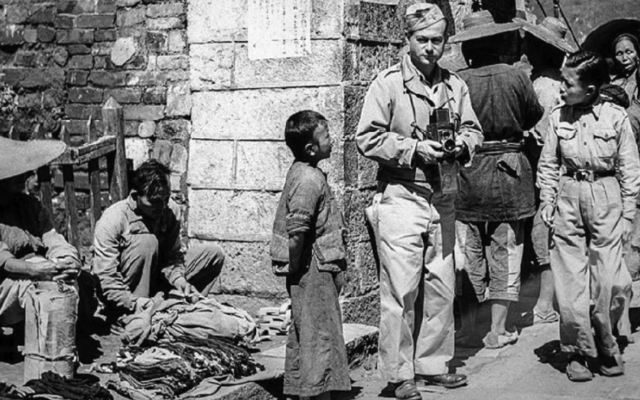
After the war, their plight was documented by Arthur Rothstein, a Jewish American photographer working for the United Nations, which was rebuilding China. In an interview with the Canadian Broadcasting Corporation, his daughter, Annie Segan-Rothstein recounted how her father was well aware that his parents and grandparents had also escaped persecution before their journey to America. His photos of the Hongkew Ghetto, she says, portray his empathy for the people he photographed.
“I see beautiful images that tell a wonderful story of inclusion and tolerance,” she says, adding that she hopes “people can look at her father’s photos and learn to be more accepting of others.”
It was in much that same spirit that brought together the Jewish community of Temple Emanu-El and Chinese Americans at The Breman. Tracy Xu, an Atlanta insurance executive who played a key role in organizing the intercultural program, praised the bonds that have developed between the two communities.
“It is truly remarkable that today we stand together here with one identity, American, rooted in an ancient and proud tradition, Both of our communities have also faced immense struggles, yet, here we are tall and strong.”
- Bob Bahr
- Local
- Temple Emanu-El
- dunwoody
- Chinese Arts Alliance
- The Breman Museum
- World War II
- Interfaith and Intercultural program
- Bob Grossman
- Shanghai
- Silk Road
- Rabbi Joseph Prass
- Holocaust Education project
- Jin Dynasty
- Opium War
- Sasoon Family
- Kadoori family
- Rothschilds
- Vienna
- Feng Shan Ho
- Chiune Sugihara
- Kaunas
- Lithuania
- Hongkew Ghetto
- Arthur Rothstein
- Canadian Broadcasting Corporation
- Annie Segan-Rothstein
- Tracy Xu
comments