



‘Sacred Cycles’ is an Interfaith Experience for Sukkot
The multimedia exhibit at Pullman Yards originated at Jerusalem Tower of David Museum.
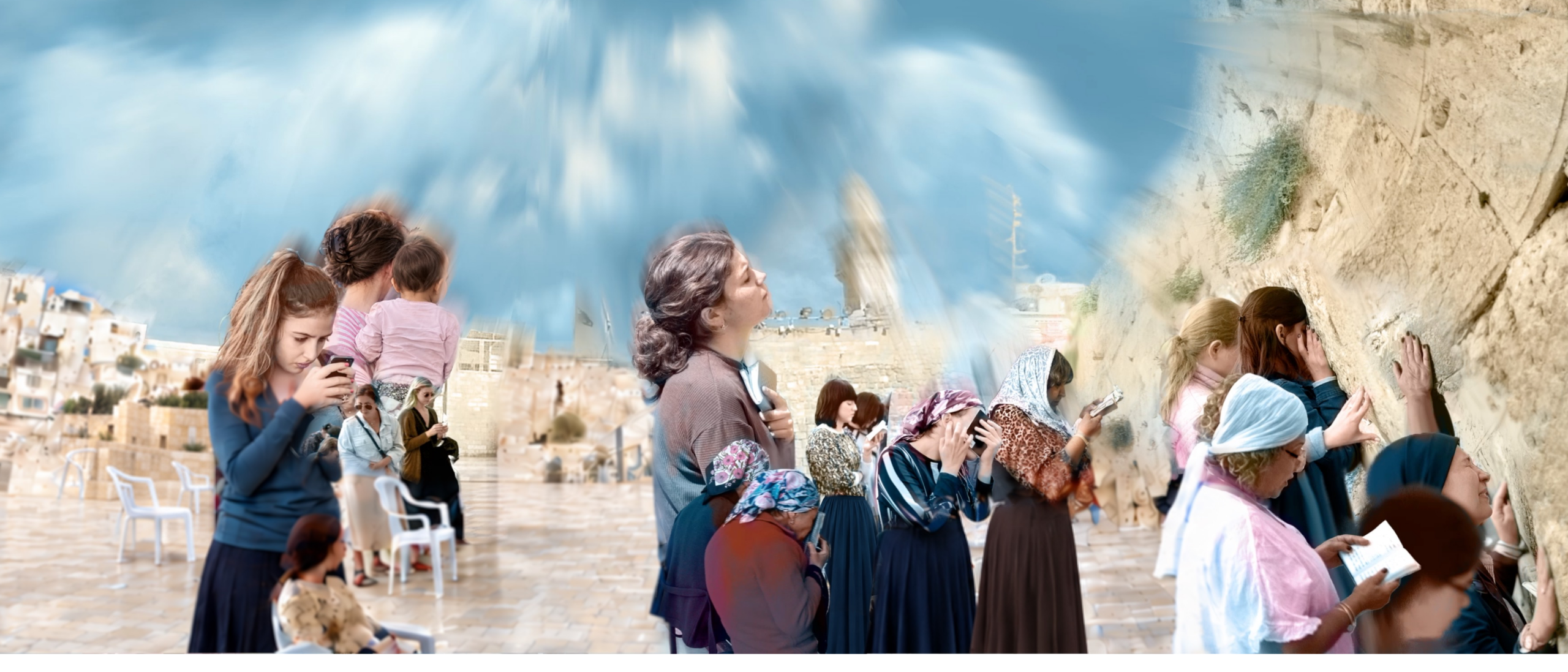
Two local organizations that aim to broaden ties between the Jewish and non-Jewish communities are celebrating the conclusion of the Sukkot holiday with an ambitious multimedia presentation this weekend at Pullman Yards in East Atlanta.
The presentation, which is entitled “Sacred Cycles,” is a free exhibit housed in a building adjacent to this week’s Atlanta Art Fair. It is built around the yearlong cycle of sacred traditions of the three Abrahamic faiths — Judaism, Islam, and Christianity in Jerusalem. More than 1,000 photographs were incorporated into the work which features a soundtrack created from the voices and music of 60 different singers, choirs, musicians and prayer leaders from the three major religions.
The exhibit is co-sponsored by The Spring, which builds Jewish community in Atlanta’s Intown neighborhoods. It’s also a project of Bamah, which works to create transformative cultural connections between Israel and members of the non-Jewish community, particularly in the several important historically Black college and university communities in Atlanta.
According to Flo Low, founder and executive director of Bamah, who has booked a large group of students from these schools to visit the exhibit, culture can be a bridge to greater understanding.
“Politics can divide us, but culture connects us, and we want to be creating relationships between Jewish communities and future Black leadership. If you want to be in conversation with future Black leaders, working with historically Black schools is a fabulous place to be,” Low said.
Bamah, which has produced over a hundred public workshops and performances during the past five years, has worked to place world class artists from Israel for extended teaching visits at its collegiate partners. Among Bamah’s funders is the Molly Blank Family Foundation.

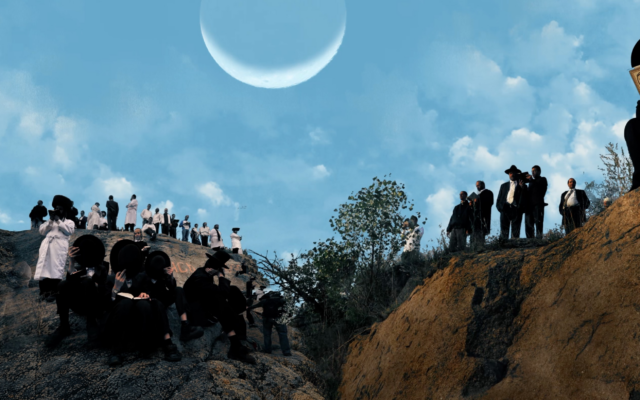
Accompanying the exhibit is Amit Hai Cohen, who is intimately familiar with the challenges of cross-cultural connections. His soundtrack for the gripping presentation includes chants from the Greek Orthodox Palm Sunday march, the sound of a winter rainstorm in Jerusalem, noise from the city’s legendary traffic jams and a timely reference to the waving of the lulav and its accompanying etrog by observant Jews on Sukkot. His partner, Neta Elkayam, assisted in presenting “Sacred Cycles.”
Cohen’s family originally came from Morocco in the modern Jewish exodus from that country and settled in Nativiot in Southern Israel. He sees “Sacred Cycles,” which he was instrumental in producing for its run at Pullman Yards, as a way to bring together the separate strands of race, culture, and religious tradition.
“People, pray every day,” Cohen said. “They go to their synagogue, they go to their church, they go to their mosque, but they seldom really get together. The space we’ve created may be the first time actually that many people come together with other religions, with other communities, and feel connected, in a way.”
Amit Hai Cohen’s collaborator in the project, who was not involved in the Atlanta installation, is David Polonsky, one of Israel’s most distinguished illustrators and creative figures. He is perhaps best known here as the art director and lead artist of the 2008 animated documentary, “Waltzing With Bashir,” about Israel’s war in Lebanon, which was nominated for an Academy Award. Polonsky found much of his inspiration for the project in nature.
“I made a map of things that can be connected, We found these motifs like water, stone, fire, oil, palm branches, that appear in different rituals in Judaism, Christianity, in Islam. I was looking for this kind of visual metaphor for the uniting energy, this kind of movement that exists in the three religions,” he said.
The co-sponsor of the presentation, The Spring, has worked to present innovative projects that are often grounded in art and music to build interfaith understanding.
“We think that it’s really important for Jewish art and Jewish culture, from artists from Israel,” according to Samara Minkin, The Spring’s executive director, “to be a part of the greater mix, and to be seen in the most prominent spaces of Atlanta.”
The exhibit originated at the recently rebuilt Tower of David Museum, where it is featured in one of the 10 galleries that occupy the centuries-old structure on the Western Hill of Jerusalem. Some believe that it may have been the location of King David’s palace 3,000 years ago.
The museum was reopened three years ago after a $50 million renovation and a comprehensive restructuring of its exhibits. The “Sacred Cycles” exhibit there is presented by an array of 10 video projectors and an eight-speaker audio surround system. The design and installation, which is projected on the vaulted ceiling of the old building in Jerusalem, took over a year to develop.
comments