



Marcus Center Proving Pivotal in Autism Research
The Center, which is part of Children’s Health Care of Atlanta, has gained $40 million in research grants this year to study severe autism.
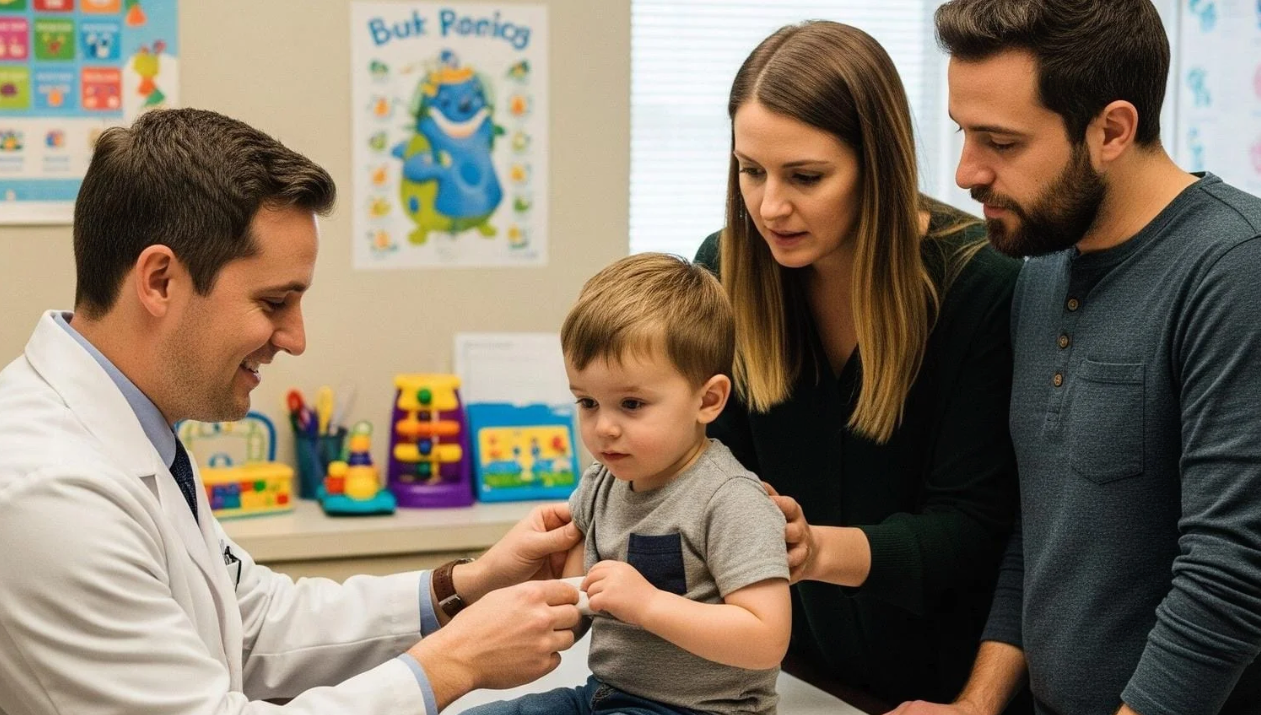
Atlanta’s Marcus Autism Center has launched an intensive research program to come up with a better understanding of severe autism in children and develop a new generation of treatments for the often-devastating condition. The center, which has been a part of the Children’s Healthcare of Atlanta network since 2008, has received a $17.25 million grant from Aligning Research to Impact Autism (ARIA), an ambitious healthcare initiative funded by Sergei Brin, one of the co-founders of Google.

The four-year grant, which the Center shares with the Emory School of Medicine, is aimed at helping to develop medical treatments for severe autism and other chronic neurodevelopmental conditions. Earlier this year, the Center received a $21.9 million contribution from the Marcus Foundation in Atlanta to fund what is believed to be the largest ever study of the brain and the genetic biomarkers that characterize the disorder across the autism spectrum.
The late Bernie Marcus, who founded the Center in 1991, was an early supporter of autism research and was instrumental in developing it into one of the nation’s foremost autism research centers. He helped recruit the Center’s distinguished leader in 2011, Ami Klin, PhD, its Israeli-born director, who will also serve as the head of the $40 million research effort.
Severe autism is a serious national problem, which affects more than 600,000 children in the United States, representing about one-quarter of the 2.3 million children with autism. According to Klin, children with severe autism are both difficult to treat and difficult to study, scientifically. They may have severely limited intellectual ability and can be minimally verbal or even unable to use verbal language.
“The families with children who have severe autism carry the greatest burdens of autism because their children require around-the-clock support,” Dr. Klin said. “Typically, they have severe to profound intellectual disabilities and severe behavior challenges.”
Dr. Klin estimates that at present, 80 percent of the main symptoms of severe autism can be treated, but he points out that those treatments are very expensive.

The Marcus Center of Children’s Health Care of Atlanta is fortunate to not only have a large, dedicated center off Briarcliff Road, but has four satellite facilities in the metropolitan area, with more on the drawing board. The center has 560 faculty and staff and treats 6,000 children with over 65,000 clinical visits each year. As one indication of the growing need for services, the Center is expanding its parking lot with an additional 160 spaces.
But access to care here, which is still very limited, is exceptional compared to many locales in America. There are “whole swaths of the country,” in Dr. Klin’s words that don’t have access to these behavioral-based treatments.
It to that end that the Marcus Center has received its latest grant from ARIA. It’s an accelerated attempt to create medically based treatments utilizing the latest advances in gene-based therapies. The grant has the support of the Division of Child Neurology and Neurosciences and the Behavioral and Mental Health Center at Children’s Healthcare of Atlanta as well as the Department of Human Genetics and a data science center at Georgia State University.

Atlanta is one of 10 sites in America, with one in Canada and one in England, that are linked together in a research network that ARIA has put together with Dr Klin’s participation to advance medical research.
“We believe that we need to make advancements in medical science, in the biological sciences,” Dr Klin pointed out, “because we believe that it can be a major opportunity for us to improve the outcomes for these children with severe autism.”
Other recipients of the ARIA grants include researchers from Harvard and Yale Universities who will share $46 million.
As an example of the work the RIA is undertaking in, the next several years researchers from Harvard and Yale Universities who will share $46 million. Among the research there is the study of three-dimensional tissue models, called brain organoids, to study the processes in early brain development across large group of individuals with and without autism.
One of the Harvard biology professors involved in the large study, Paola Arlotta, hailed the opportunities that the new funding will provide.
“What is different with this grant is that it allows really us to connect with the clinic in ways that we couldn’t do before,” Arlotta said. “It’s a scale that is unprecedented, and the hope is that this would really allow us to identify this element of convergence across genetic states and patients.
The ARIA funded network has the financial support of Brin who immigrated from the former Soviet Union with his Russian Jewish parents when he was six.
- Bob Bahr
- Marcus Autism Center
- Children's Healthcare of Atlanta
- Aligning Research to Impact Autism
- Sergei Brin
- Emory School of Medicine
- The Marcus Foundation
- Bernie Marcus
- Ami Klin
- Children’s Health Care of Atlanta
- Briarcliff Road
- Division of Child Neurology and Neurosciences
- the Behavioral and Mental Health Center
- Georgia state university
comments