



Conservative Judaism Adopts New Rules on Interfaith Couples
The movement’s committee on religious law has taken steps to allow synagogues to be more welcoming while still remaining opposed to interfaith ceremonies.
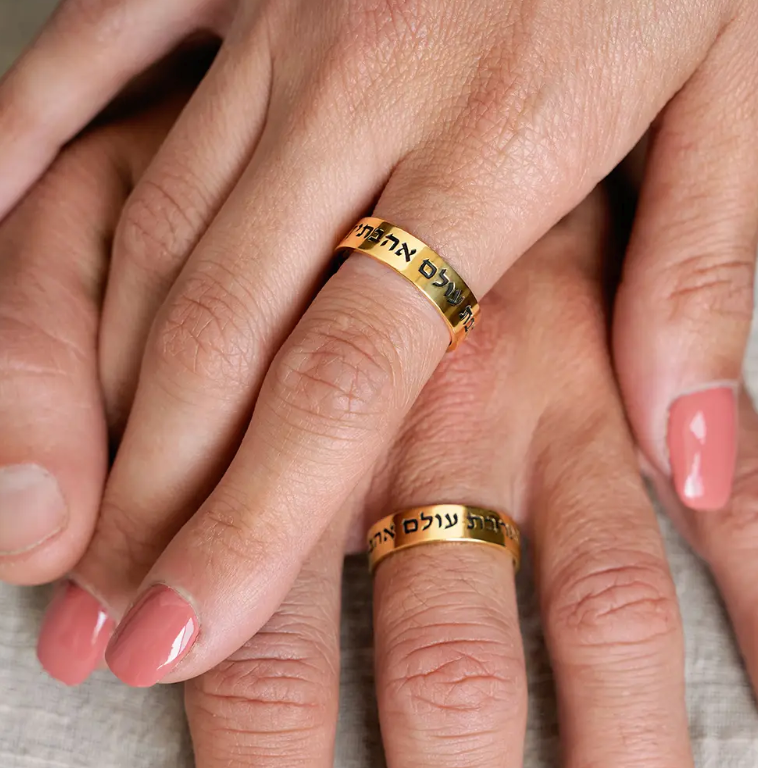
The Conservative movement has taken another step to enhance the welcome that interfaith families receive in their synagogues and Jewish communal life. The movement’s leadership and rabbis, acting through their Committee On Jewish Law and Standards of the Rabbinical Assembly, have adopted a series of halachic rulings or teshuvah broadening how interfaith couples can participate in religious life.

The movement still prohibits its rabbis from officiating at interfaith weddings and forbids them from participating verbally in the ceremony or by signing any marriage documents, But, under the new rules, Conservative rabbis may offer blessings before and after the wedding if the couple has a commitment to establish a Jewish home and to raise their children in the Jewish faith. The ruling also allows Conservative rabbis to conduct funerals for family members and permits a full range of mourning practices for those who are not Jewish. It also affirmed the recitation of Kaddish for a non-Jewish parent or child or spouse.
The Committee’s 37-page document, which was entitled, “Gateways Into Jewish Living; Guiding the Conservative/Masorti rabbi in supporting families with non-Jewish loved ones,” was in line with recent cautious attempts by the movement to recognize the growing role that interfaith couples play in the work of the movement.
“There is no room in harboring ill feeling toward those individuals who have intermarried if they wish to create a Jewish household,” the rabbis wrote. “These families should be seen as Jewish families, fully integrated into the life of the synagogue.”
Rabbi Daniel Dorsch, Senior Rabbi at Congregation Etz Chaim in East Cobb, was critical of the slow pace of change in the Conservative halachic body. He pointed out that many congregations moved to be more inclusive years ago.
“I appreciate the attempt by our movement to update long since outmoded standards practices,” Rabbi Dorsch said. “I would hope that going forward our legal authorities would push the boundaries a little more forward in terms of our creative potential. The times we live in require nothing less than our full attention to this issue.”

Recent statistics underscore Rabbi Dorsch’s concern. According to a 2020 survey by the Pew Research Center, 72 percent of non-Orthodox Jews who have married since 2010 have non-Jewish partners.
At Congregation Or Hadash in Sandy Springs, Rabbi Lauren Henderson mentioned that the congregation permits interfaith aufrufs, the practice of calling a couple to the reading of the Torah prior to their wedding. And she is considering other changes in the congregation’s Conservative practice.
“This teshuvah represents many ways to say yes to interfaith couples when so much of what they heard was a loud no,” she commented. “I think the value of this is in putting into writing many practices that rabbis might have been doing on their own.”
The caution by the Conservative movement around sanctifying interfaith marriages is motivated by some Conservative leaders who see the issue as unacceptable under Jewish law and a betrayal of Conservatism’s traditional roots.
Others, particularly younger leaders, see the trend of Jews marrying outside the faith as an undeniable reality that should be addressed if the movement wants to keep couples connected to Judaism, particularly Conservative Judaism.
They believe that it is hypocritical to make interfaith couples welcome while denying them a synagogue wedding. They point out that the movement’s refusal to marry interfaith couple has not discouraged intermarriage but may have discouraged the couple’s participation in Conservative Jewish life.
At its peak, in the middle of the 20th century, the Conservative movement was the largest movement of American Jews. As many as 40 percent of synagogue membership then was Conservative. Today, that number has shrunk to 15 percent and less than half of those Jews who were raised in Conservative congregations have retained their affiliation.
The Committee that issued the recent rulings commented that they reflect a “deepening commitment to intermarried couples and families building a Jewish home. Among the practices that the rulings nullify is one that that goes back 37 years. It discouraged congregations from formally congratulating intermarrying couples or accepting donations to the synagogue on their behalf.
“We should see each encounter with intermarried couples,” the latest statement reads, “as an opportunity to guide them to actualize a Jewish present and future, inspired and shaped by Jewish traditions.”
Reform Judaism and Reconstructionist Judaism, particularly in the last 40 years, have generally left it up to individual rabbis whether they want to marry interfaith couples. Two years ago, Hebrew Union College, which educates the Reform clergy, lifted the requirement that students studying for the rabbinate have a committed partner who is Jewish.
comments