



Summit Renews Historic Black-Jewish Alliance
Local Grammy winner/producer and performer Mali Wilson “spills her positive honey,” representing both the Black and Jewish communities in fighting antisemitism and racism.
After 37 years with the Atlanta Journal-Constitution and now with the AJT, , Jaffe’s focus is lifestyle, art, dining, fashion, and community events with emphasis on Jewish movers and shakers.
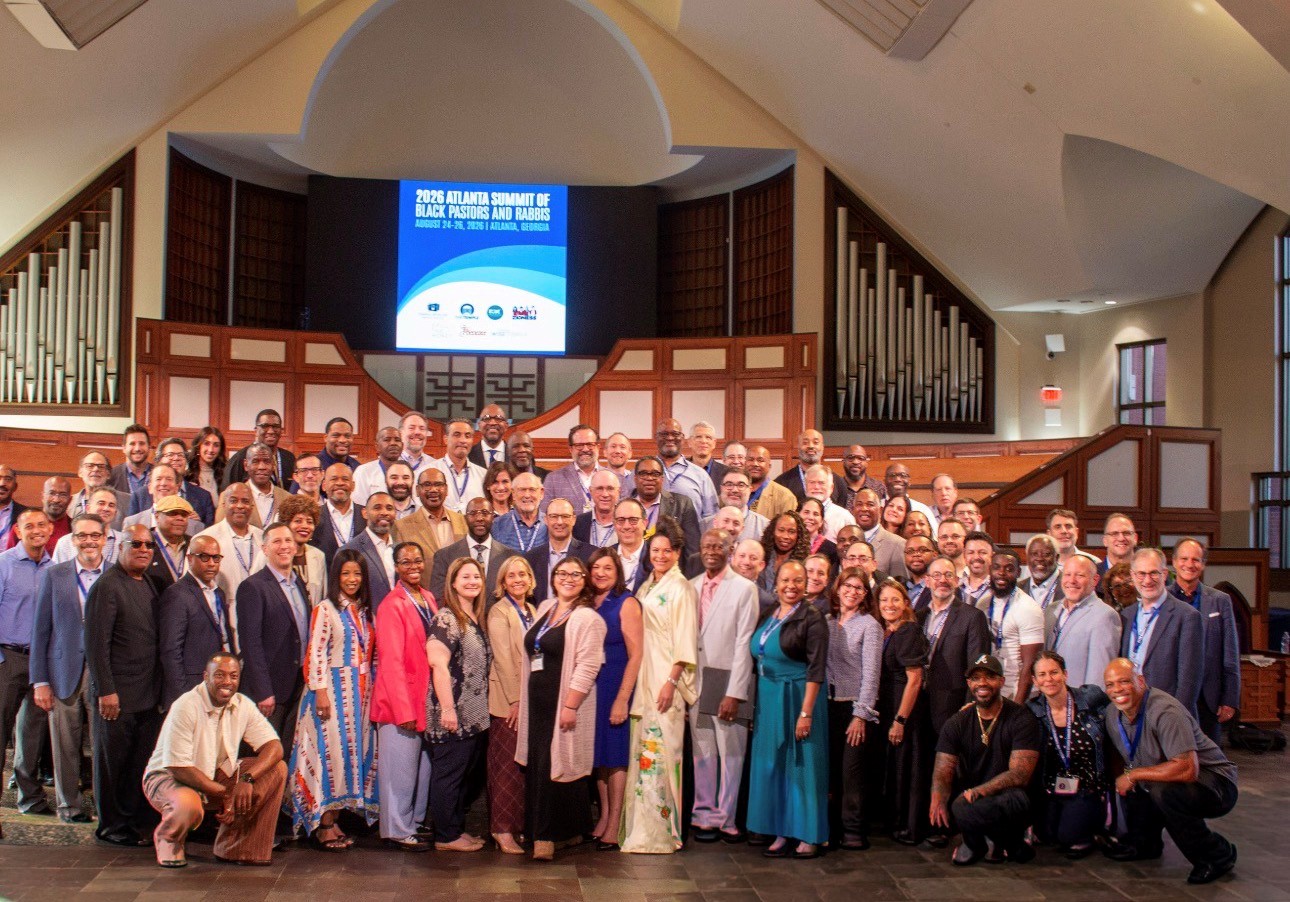
In a city where the legacies of the Black freedom movement and the historic Black-Jewish partnership remain intertwined, 100 rabbis, Black clergy, Black Jewish leaders, scholars, and activists gathered from Aug. 24–26 for the Atlanta Summit: “Renewing the Black/Jewish Alliance,” bringing together national leaders at a moment marked by rising antisemitism, racism, political polarization and mistrust.
Its ambitious goal was to revive the historic alliance and transform its legacy into a renewed commitment to confront hatred and advance justice, equality and human dignity.
Part of the emotion was stirred by Atlanta’s own Mali Wilson, Grammy-nominated producer, singer-songwriter and composer, who performed, “No More Silence,” which she co-authored with songwriter and producer, Craig J. Snider, and her husband, Deacon Eric Wilson.
Wilson, who scored the film, “Shared Legacies,” and is herself both Black and Jewish, lent a personal dimension. Standing in the historic sanctuary where Dr. Martin Luther King, Jr. preached, she transformed what was portrayed on screen into a call to action: to refuse silence in the face of antisemitism, racism, and hatred and to use one’s voice in defense of others.

Among the prominent speakers were civil rights strategist Eric Ward, former U.N. Ambassador Andrew Young and political commentator Van Jones. The Rev. Raphael Warnock, senior pastor of Ebenezer Baptist Church and a U.S. senator, also addressed the gathering after being invited and introduced by Rabbi Peter Berg of The Temple.
Participants viewed a 20-minute movie version of “Shared Legacies: The African American-Jewish Civil Rights Alliance,” the award-winning documentary based on eyewitness testimonies, recorded for the 50th anniversary of the Selma marches. The interviews show accounts of some who lived through and helped shape the Black-Jewish partnership during the Civil Rights Movement. The film has since evolved into an educational initiative, with an adaptable five-session curriculum, bringing the history and shared responsibility to high school and middle school students and educators nationwide.

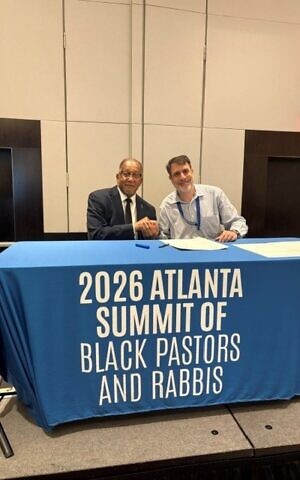
The gathering culminated in the consecration and signing of a Sacred Covenant, declaring that the relationship between Black and Jewish communities cannot simply be remembered as “a chapter of the Civil Rights Movement.”
Co-sponsor Rabbi Berg said, “The Black-Jewish covenant cannot be sustained by nostalgia alone. Sacred memory must become present responsibility.”
The summit brought together 40 rabbis and 40 Black pastors from around the country, many attending as rabbi-pastor pairs. Along with The Temple, Ebenezer Baptist Church co-sponsored the summit and hosted participants at their respective congregations, allowing exploration into the institutions’ histories.
Rabbi Berg noted, “The summit did not shy away from difficult issues. Participants engaged in challenging conversations, including discussions about Israel and Palestine, subjects that can divide both Black and Jewish communities. It was amazing how both groups listened and respected each other, even when we disagreed.”
The Covenant emphasized that the alliance must extend beyond dialogue. Grounded in the “Oneness of G-d and the Oneness of Humanity,” it declares, “Because G-d is One, humanity is one. Our histories, identities, traditions, and experiences are distinct, but our humanity is indivisible.”
Participants pledged to oppose antisemitism and anti-Black racism, defend communities targeted by hatred, protect houses of worship and community institutions, challenge misinformation and dehumanization, strengthen democratic participation and educate a new generation of Black, Jewish and Black Jewish leaders. The Covenant specifically recognizes Black Jews, affirming that they “belong wholly within Black communities and wholly within Jewish communities” and should be regarded not as symbolic participants, but as “essential leaders.”
Drawing on Jewish and Christian prophetic traditions and the legacies of Rabbi Abraham Joshua Heschel, Dr. King, Howard Thurman, and James H. Cone, the summit concluded aligning with Berg’s message: “The purpose of our gathering was to reinvigorate that relationship. We make this covenant not because our histories are identical, but because the One G-d calls us into shared responsibility.”
Rabbi Ari Kaiman, Congregation Shearith Israel, was the only other Atlanta rabbi participant.
- Marcia Caller Jaffe
- Community
- Mali Wilson
- “No More Silence”
- Craig J. Snider
- Deacon Eric Wilson
- Shared Legacies
- Dr. Martin Luther King Jr.
- Eric Ward
- Andrew Young
- Rev. Raphael Warnock
- Van Jones
- Ebenezer Baptist Church
- Rabbi Peter Berg
- The Temple
- Rabbi Abraham Joshua Heschel
- Howard Thurman
- James H. Cone
- Rabbi Ari Kaiman
- Congregation Shearith Israel
comments