



Fallen Lone Soldier Denied Military Burial
The IDF soldier who died by suicide after PTSD struggles was denied military burial in Jerusalem.
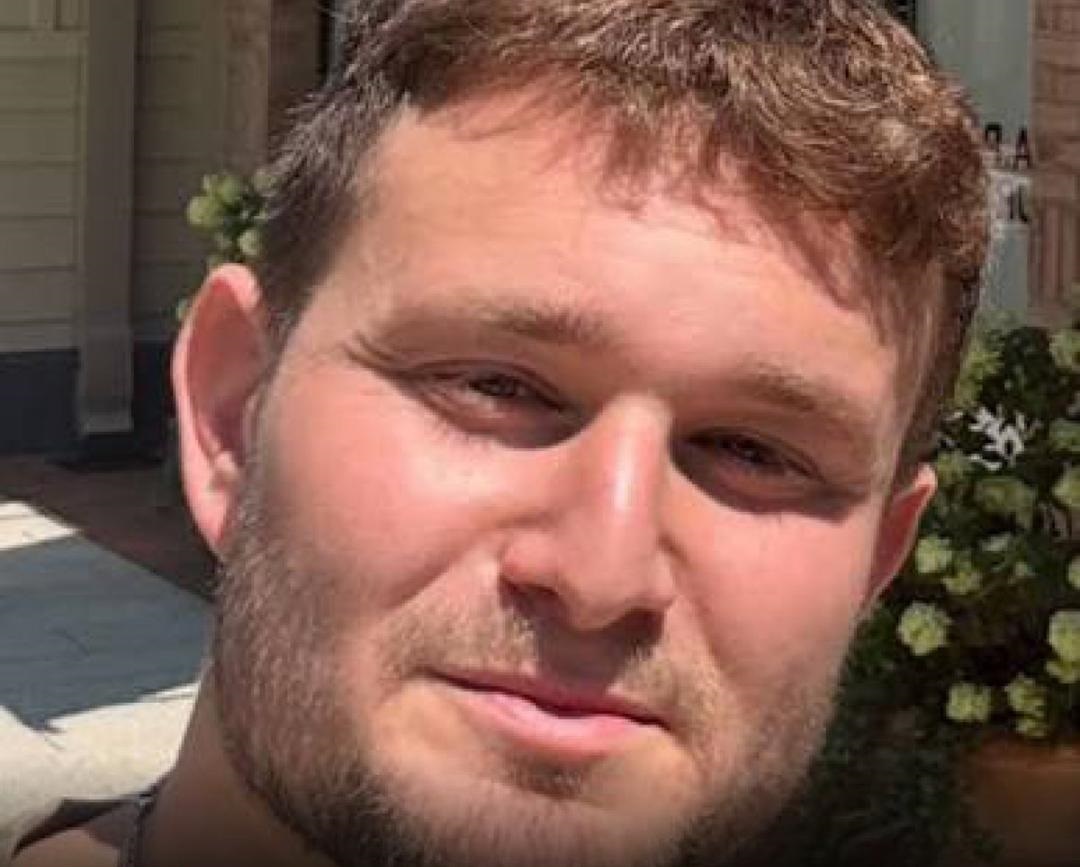
While the Israel Defense Force makes great efforts to integrate immigrant soldiers without family in the Jewish State and its army, sometimes Zahal combatants suffering from PTSD as a result of their military service fall between the cracks. The result can be tragic.

William (Ze’ev) Shakin, 25, from Great Neck, N.Y., immigrated to Israel following Hamas’s Oct. 7, 2023, massacre. Through the Mahal (overseas volunteers) program, he enlisted in the elite Golani Brigade’s 13th Battalion. As an infantry soldier, he saw action in Gaza – and witnessed the death of fellow soldiers and his friend, Staff Sgt. Tuval Lifshitz. Those horrors triggered an acute deterioration in his mental health.
While serving, Shakin lived in Ra’anana at HaBayit shel Benji (the Home of Benji), which provides housing and support services for Lone Soldiers. After his discharge, staff members there contacted his parents due to concerns about his wellbeing.
Never officially recognized as a combat trauma victim, Shakin returned to New York. The assistance provided by the IDF and Defense Ministry ceased when he left Israel.
Haim Meizlish, a volunteer with the New-York-based nonprofit Navigating, which supports former Lone Soldiers facing mental health difficulties, said Shakin was not recognized as suffering from PTSD during his service and did not receive the support he needed. According to Meizlish, the Defense Ministry required Shakin to return to Israel to appear before a recognition committee. He said this posed a significant difficulty, as returning to Israel would have separated Shakin from his family support system in the U.S.
The Defense Ministry disputed Meizlish’s claim that Shakin would have needed to be physically present in Israel to seek recognition. It said no application had been filed in his name. It stressed that claims can be filed digitally and that medical committee hearings can be held remotely with prior coordination.

Meizlish also pointed to broader difficulties in providing support to wounded IDF veterans and combat-related trauma victims living in the U.S. He said some 1,200 cases involving such veterans are registered in the country, with only two Defense Ministry representatives handling them.
Struggling with severe psychological distress, Shakin took his life on Aug. 9. His family requested that he be recognized as a victim of the Gaza war and be given a hero’s funeral at Jerusalem’s Mount Herzl Military Cemetery. But his suicide after he completed his military service did not meet the Ministry of Defense’s strict criteria for such burials. Instead, on Aug. 13, Shakin was interred at Har Menuchot – Jerusalem’s main civilian cemetery.
More than 1,000 mourners attended his funeral. Many more watched the ceremony which was broadcast via livestream. Among them was Phyllis Chesler, a psychotherapist and professor emerita of psychology and women’s studies at the College of Staten Island (CUNY).
“As we now know, Shakin was war-wounded and could not find a way to continue on in this life after seeing so much evil cutting down his haverim in the Golani 13 Brigade; after he witnessed his friend killed in battle – perhaps after he understood that the war against the Jews and against Israel seems to have been going on for millennia and was not about to end anytime soon,” she eulogized.
“Will was an ‘all-American guy’ who loved hockey, fishing and skateboarding. Will was generous. He bought gloves, long johns, and a generator for his fellow soldiers. He was a holy fire, a pure soul.”
Every speaker, friend and relative at the funeral apologized for not having understood how much Will had been suffering, for not having been able to console him or to help him find the help that he needed.
“When Will returned to America, he enrolled in Yeshiva University’s School of Social Work. However, he was suffering from what they once called ‘shell shock’ after WWI and Post-Traumatic Stress Disorder (PTSD) after the Vietnam War. This is more serious than a broken bone (Will did not know that he came home with a fractured ankle, which was more easily mended than his non-visible wounds). PTSD has often been underrated, even mocked by those who do not understand that psychic wounds can steal the color from one’s life, make continuing to live dishonorable, unbearable.
“The symptoms include nightmares, insomnia, flashbacks, intrusive memories, anxiety, numbness, hypervigilance, an inability to focus. This goes on, day after day. Night after night. Some war-wounded soldiers remain trapped on the battlefield with no respite, no exit.
Therapy is not always effective nor is it always available. Drugs may or may not be effective. Time alone may not heal a fractured soul. We do not understand why one soldier can return to life (almost) as he knew it before, and why another one cannot do so, however hard he tries.
Following the Shakin family’s appeal, the IDF conducted a preliminary review under a framework established by a committee headed by retired Maj. Gen. Moti Almoz.
“At the conclusion of the examination, it was found that the circumstances of the death of the late William may be related to his military service,” the IDF said.
It added that the family would be given guidance and assistance in approaching the Defense Ministry.
“The IDF honors the significant service of the late William Shakin and shares in the family’s grief.”
Shakin’s newly-dug grave – at block 15, section D, row A, grave 67 – is a symbol of the ongoing tragedy of the Gaza war. If formally recognized as a victim of PTSD, Shakin’s family would be eligible for the financial and social benefits provided in such cases.
comments