


High Holiday Sermons Keep Atlanta Rabbis Busy
The High Holidays begin early this year on Sept. 11.
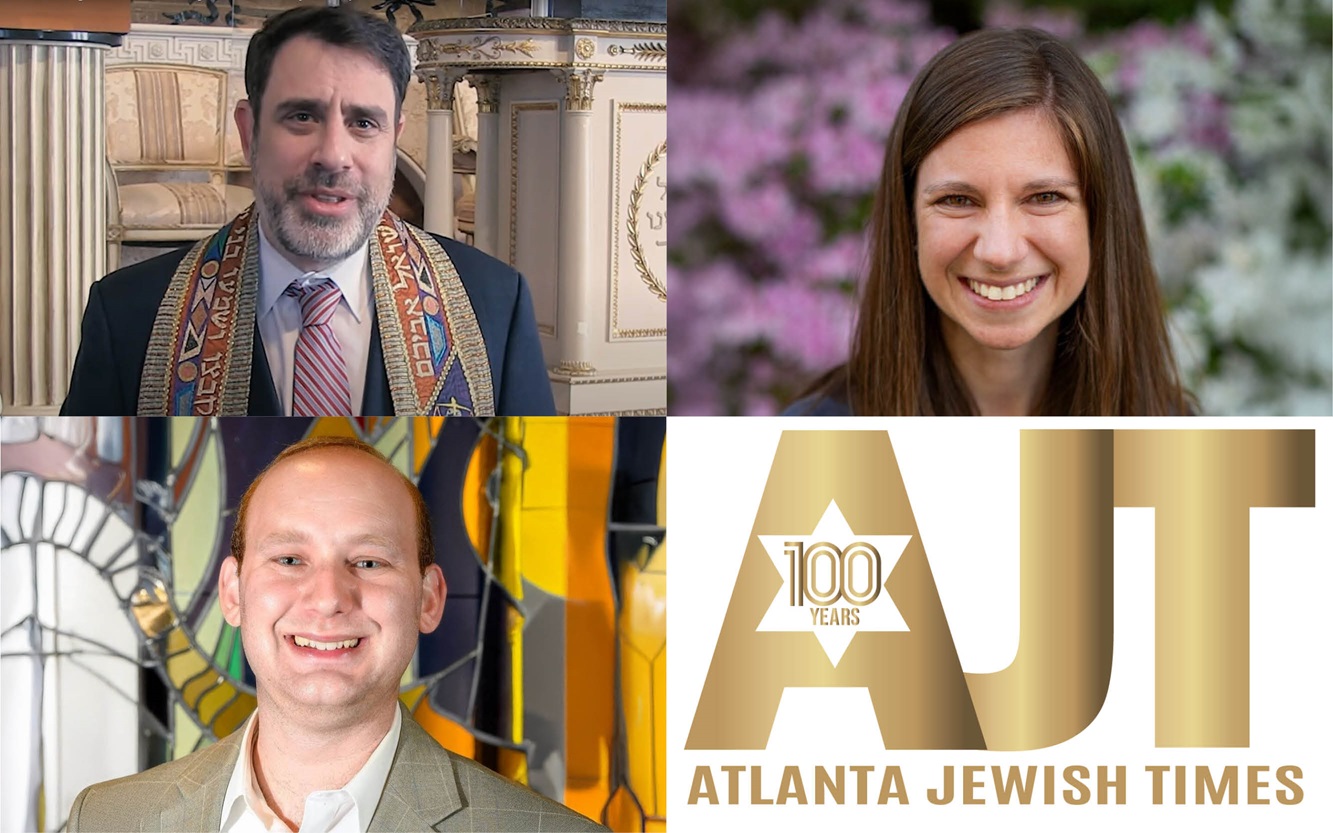
While many Atlanta Jews were taking vacations this hot summer, local pulpit rabbis were feverishly preparing their sermons for the High Holidays which start early this year, on Sept. 11.

Although the rabbis share the experience of coming up with sermon ideas and organizing those concepts into coherent, meaningful talks, each has his or her own method for creating their High Holiday messages for their congregants.
This year, Rabbi Peter Berg, senior rabbi at The Temple, is writing two full sermons, one for Rosh Hashanah morning, one for Kol Nidre, and a short drash for the afternoon mincha service on Yom Kippur. “It’s very typical that we divide the sermons between our clergy,” he said.
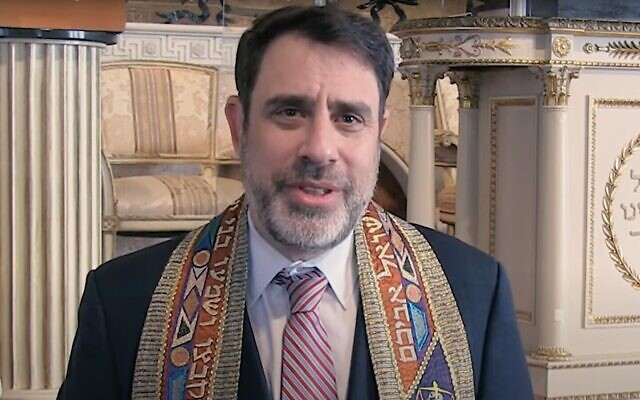
At the end of July, Rabbi Berg had already started writing his Rosh Hashanah sermon, which is probably his easiest to write this year, partly because it’s so personal to him. He had recently returned from a five-day mission to Ethiopia which, he proclaimed, was “one of the most impactful things I’ve ever done. It was extremely powerful.”
The sermon will be “theological,” not a travelogue. “I was stunned.” He noted Operation Moses, which brought many Ethiopian Jews to Israel in 1984 and Operation Solomon in 1991, but “there are 15,000 Jews still in Ethiopia who are trying desperately to get to family in Israel, and they are living in abject poverty.”
In his sermon writing, Rabbi Berg said there are never topics he wants to avoid. “I’m willing to engage in issues that are complicated.” During the year, he keeps a folder into which he throws ideas for possible sermons. He acknowledged that he will probably address the fraught topic of the rise in antisemitism “at some point.”
But he recently gave a sermon about it.
More likely, he will speak about another hot issue, Israel, addressing what it means to be a Zionist, that it’s OK to be a Zionist and yet also be critical of the Israeli state. He understands that his sermon topics may be what congregants want to hear and sometimes they won’t. “I must be authentic to myself.” A good sermon inspires and challenges, he emphasizes.
Rabbi Berg explains that he writes his sermons both at home and in the office. “I must block out three hours at a time. I enjoy the challenge of more difficult topics. I usually write at the end of July and in August. I’m right on track.”
Congregation Etz Chaim Senior Rabbi Daniel Dorsch, on the other hand, said he tries to write his High Holiday sermons before the summer so he can enjoy the season. This summer, he traveled to Costa Rica.
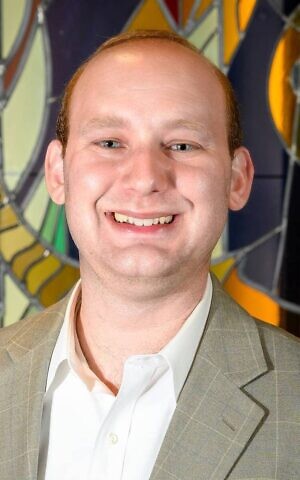
But he admits that he’s still in the process of writing his three sermons, one for Rosh Hashanah, one for Kol Nidre, and one for Yizkor. Although there are no topics that are “out of bounds, this year the state of the country is on my mind.”
The U.S. is celebrating its 250-year anniversary “and it seems like no one even noticed. It was a blip.” In contrast, when American Jews celebrated 350 years in America in 2004, Dorsch recalled, there was a lot of fanfare.
“Where are we as Jews in this whole shebang? Where do we sit in this whole thing? The state of the country is on my mind. We live in a time of great disagreement. Rising antisemitism is a concern.”
Rabbi Dorsch said his best sermon writing occurs at Camp Ramah in North Georgia. “I teach in the mornings and write in the afternoon. I get ideas from the kids I teach. It’s a great place to speak with my colleagues of all denominations. The interface time with them is invaluable.”
According to Rabbi Dorsch, a great sermon tries to weave together many perspectives. “I try to speak to people where they are. It’s very hard. But what brings us together rather than takes us apart? What is the common thread? And, as a rabbi, what is our common faith and values? I’ve gone to shivas of all denominations and 90 percent of them are the same.”
Congregation Shearith Israel Rabbi Ari Kaiman in late July was still drafting the sermons he will present on Rosh Hashanah, Kol Nidre, and Yizkor. For the latter, though, he intends to introduce to his congregation the concept that “it’s a gift to show up for minyan, a gift of showing up for loved ones, to know you’re needed, to know you care. The implication is that they would show up for you, too. There’s a mutuality.”
For Rosh Hashanah, he said he wants to look at the idea of short-term and long-term goals. “There’s a teaching in Jeremiah – build houses, plant gardens, seek the welfare of the place you’re in, even in exile. That’s the short-term work. But there’s also Micah’s vision of a day when every person sits under their own vine and fig tree, afraid of no one – that’s the long-term aspiration. I think the flags on our bimah are asking us to hold both: the immediate work in front of us, and the vision we’re not there yet but never stop reaching for,” Kaiman said.
Rabbi Kaiman spent part of his summer in Israel studying at the Shalom Hartman Institute from which many of his sermon ideas came. “When I speak on the High Holidays, my greatest desire is that collectively we feel inspired to be better people and make the world better. I don’t think of balancing constituencies. If something inspires me, I hope it will inspire others.”
During the year, Congregation Or Hadash Rabbi Lauren Henderson doesn’t really give sermons. “It’s not my preferred method for engaging the congregation. I prefer conversation and hearing different viewpoints,” she said. But for the High Holidays, she does give formal sermons. “I understand that this is an opportunity. I love the writing. I love the process of absorbing from all sources. I’m like a sponge, taking in as much as possible.”
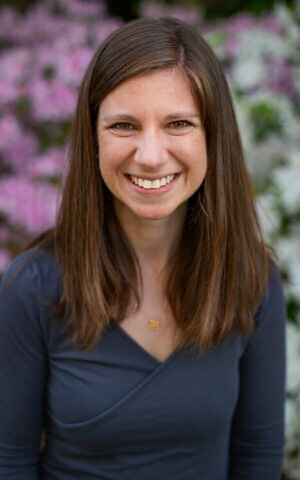
So, during the past months, she has read a lot, listened to lectures and collected notes. After that, she starts organizing the ideas. Some of that organizing is pasting notes on her dining room wall like a police detective solving a crime. “I love the idea generation part. The dicey part is the way in which people want to feel represented by the rabbi.”
She knows that in some way she will focus on the “core dimension of humanity that is being brought forward, through a Jewish lens.” She may focus on the topic of existential fear. “Can it be a useful dimension of our lives and can we make it constructive?”
She knows that if she speaks about anything in the political world, she can’t win. “I’ve lost them,” pointing out how one of her sermons last year “people heard in the wrong way. My role is not to be a pundit.”
Once Rabbi Henderson sifts through the intellectual part of the process, she then sits with it “and sees how it lands with my mind. When I read it aloud, what do I feel? If I cry while reading, there’s something here. That’s what I’m searching for. Or, if my body feels angst, something’s off. I have to listen to my body.”
Like other rabbis, Henderson said she gets feedback on her sermons from her spouse. “Joel doesn’t hold back.”
Likewise, Temple Sinai Senior Rabbi Brad Levenberg said he shares his sermons with his wife, Rebecca. This year, he’s giving sermons on Rosh Hashanah, Yom Kippur, and Shabbat Shuvah, splitting the responsibility for High Holiday sermons with the other clergy at his synagogue.
He has been thinking, letting ideas percolate before sitting down and writing.
“Some sermons are easier to write” than others, said Rabbi Levenberg, who is also president of the Atlanta Rabbinical Association. “This year, it won’t take long to get a first draft, but then I spend weeks tweaking.”
At Temple Sinai, each rabbi makes short vignettes that they intersperse in their sermons. The videos focus on inflection points. For instance, this year, Sept. 11 is an obvious inflection point because the High Holidays fall on that date. Rabbi Levenberg said he will take a video of himself at Atlanta’s zero-mile marker at the Georgia Historical Society and use that inflection point to recall how the Israelites stood at the edge of the sea before crossing. That could be used before the mi chamocha prayer.
Since the services are live-streamed, Rabbi Levenberg feels that using vignettes gets the people at home watching along with those in the synagogue to focus on the same thing. “It unifies the congregation,” he said.
As Atlanta pulpit rabbis contemplate and compose their sermons, they are conscious of the fact that they have wider audiences during the High Holidays. It’s a tricky balancing act. What exactly is the purpose of High Holiday sermons?
As Rabbi Henderson said, “If there’s a capital ‘T’ truth message, I’m just channeling it. My role is to be a curator of Jewish wisdom, as opposed to me having it all figured out, like a capital ‘A’ for answers.”
comments