



IVF Halachic Supervision Available in Georgia
Local doctor explains the much-needed leap in providing local religious oversight.
After 37 years with the Atlanta Journal-Constitution and now with the AJT, , Jaffe’s focus is lifestyle, art, dining, fashion, and community events with emphasis on Jewish movers and shakers.

According to reproductive/fertility medical doctor, Quinn Katler, infertility affects one in six couples worldwide, as the number of children born through assisted reproductive technology (ART) and in vitro fertilization (IVF) continues to rise.

From the Biblical account of Rebecca’s struggle with infertility to the post-Holocaust emphasis on rebuilding the Jewish population, Jews have consistently been given the mandate to “be fruitful and multiply.” As more Jewish couples pursue IVF and infertility treatment, the need for halachic supervision, religious oversight ensuring adherence to Jewish law, has also increased.
In observant Jewish communities, some halachic authorities require hashgacha, a formal religious supervision process for all fertility treatments. Under this system, a trained observer (mashgiach) must be physically present during key procedures, including the egg retrieval, fertilization of the egg, sperm collection, embryo evaluations, and embryo transfer. The presence of a mashgiach ensures that the genetic material that is used aligns with Jewish legal and ethical guidelines.
While hashgacha is widely available in Israel, it has historically been difficult to access in the southeastern United States — particularly in Georgia.
According to Dr. Katler, that has now changed. He said, “For the first time, observant Jewish couples in Georgia can undergo fertility treatment with full halachic supervision without needing to travel out of state. This breakthrough fills a critical gap in care for Orthodox families and reflects a broader commitment to religious inclusivity within reproductive medicine.”
Dr. Katler, a reproductive endocrinologist at Shady Grove Fertility (SGF), spearheaded this initiative in collaboration with the Atlanta Jewish Fertility Foundation (JFF-ATL), ATime, and local rabbinic leaders.

“Access to halachic supervision was a major barrier for some Jewish couples considering IVF in Georgia,” says Katler. “Our goal was to provide a local solution so patients could receive treatment without added stress or disruption to their care. No one should have to leave their city, their doctor, and their support system to start a family. I knew we had to make a change.”
Katler worked closely with Rebecca Guttman (JFF-Atlanta manager), Rabbi Heilpern (ATime), and local leaders, Rabbi Yossi New and Dovid Barber, to recruit and train a team of certified mashgichim. The training process includes classroom instruction, in-person experience at SGF’s IVF lab, and collaboration with embryologists to develop a halachic oversight system that aligns with both Jewish law and medical protocols.
“This program is life-changing,” says Guttman. “It allows observant Jewish couples to pursue their dream of parenthood without having to choose between their faith and their medical care.”
For observant patients, hashgacha ensures that eggs, sperm, and embryos are continuously monitored throughout the IVF process. Dovid Barber, who helped establish the program, emphasizes the importance of this milestone.
“This initiative bridges the gap between modern medicine and religious practice, allowing more observant Jewish families in Georgia to pursue IVF with confidence and peace of mind.”
Dr. Katler trained in Israel and has long been involved in Jewish fertility advocacy. He sees this as an essential step forward. “The demand for fertility treatment among Jewish couples is growing, and now, those who require halachic supervision have an option here in Georgia. This was long overdue, and I’m thrilled to see our community stepping up to make fertility care accessible to all.”
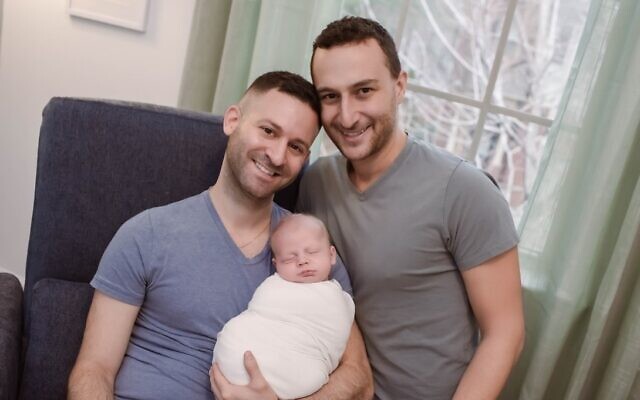
Beyond his professional work, Katler has a personal connection to fertility treatment. He and husband, Jamin Gluck, recently welcomed their first child through IVF and surrogacy.
“I understand firsthand how much this means to families,” he related. “Every family’s path is unique, and I’m committed to ensuring that all Jewish families, regardless of their level of observance, have access to this care.”
Dr. Katler also hopes this model can be replicated in other regions facing similar challenges.
IVF Halachic Collaborators
• Jewish Fertility Foundation – Atlanta (JFF-ATL): Since 2015, JFF-ATL has provided financial, emotional, and educational support to individuals and couples facing infertility.
• SGF Atlanta: The largest fertility clinic network in the U.S., SGF offers fertility evaluation and treatment at its flagship Atlanta office in Sandy Springs.
• ATime: A New York-based nonprofit specializing in fertility support for observant Jewish patients, ATime helped implement Georgia’s halachic supervision program. For more info, please visit https://www.shadygrovefertility.com/our-care-team/doctors/katler/
comments