



JCC Maccabi Games Receives Nearly $20M Donation
The Marcus Foundation and Samueli Foundation pledged to anchor the fundraising efforts for a four-year, $19.5 million initiative to broaden the reach of the Games across North America and return them to Israel in 2028.
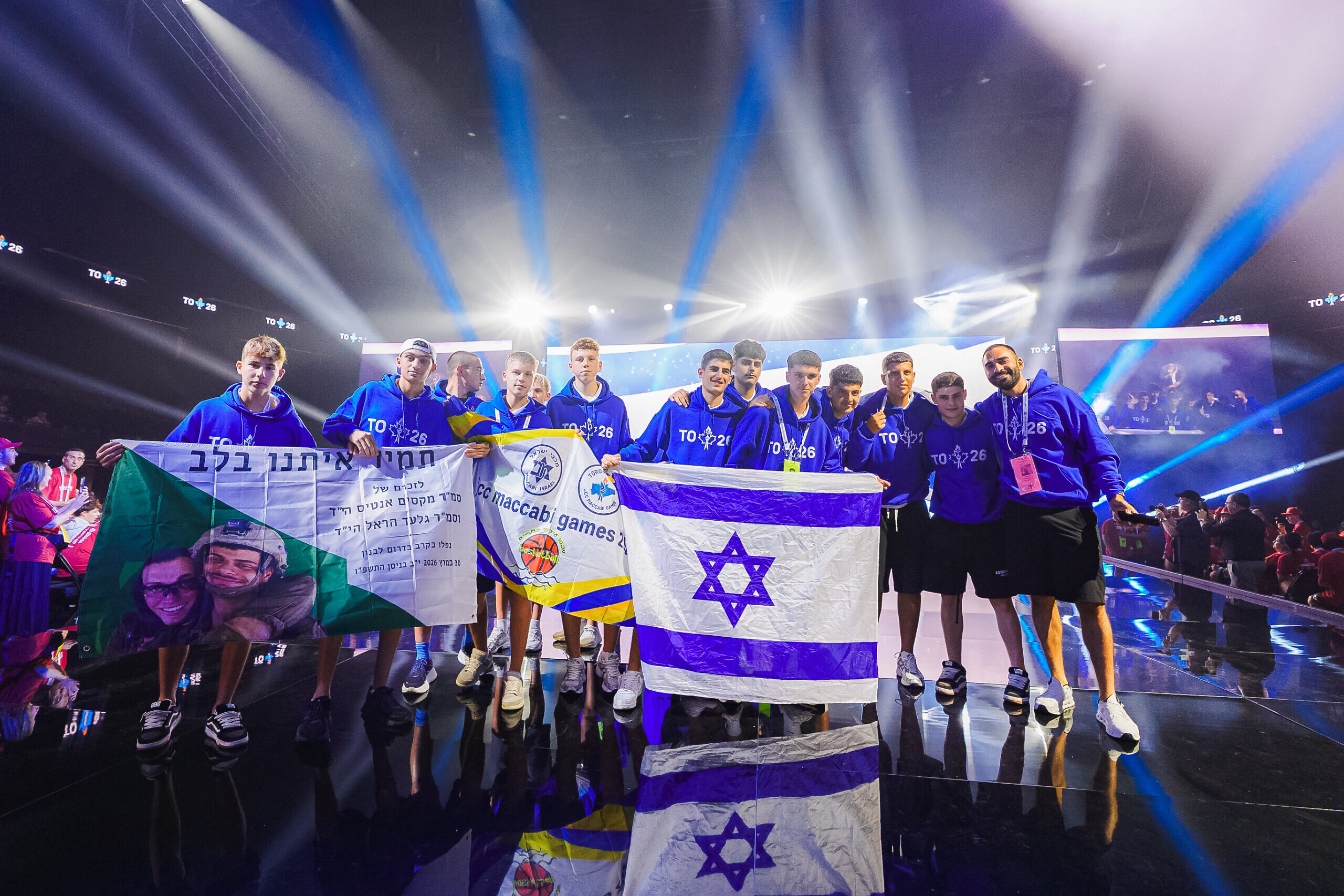
In its 44-year history, the JCC Maccabi Games has engaged more than a half-million people worldwide. The signature program of the JCC Association of North America has annually hosted over 2,500 world-class athletes. Current prominent ones such as Zeev Buium (Vancouver Canucks defenseman), Danny Wolf (Brooklyn Nets power forward), and Lenny Krayzelburg (four-time Olympic gold medal-winning swimmer) are all proud JCC Maccabi alums. However, judging by a monumental development late last month, it seems that the best is yet to come for the JCC Maccabi Games.
Just two weeks before this year’s JCC Maccabi Games got underway in Toronto and Kansas City, it was announced that The Marcus Foundation and Samueli Foundation pledged to anchor the fundraising efforts for a four-year, $19.5 million initiative to broaden the reach of the JCC Maccabi Games across North America as well as return the Games to Israel in 2028. The Marcus Foundation is focused on developing JCC Maccabi across North America, with its $5 million investment earmarked for bolstering participation (the overarching goal is to welcome 4,000 teen athletes every summer), developing the organizational infrastructure to accommodate the influx of participants, and enhancing corresponding Jewish and Israeli education programs.
“The Marcus Foundation has been a core JCC Maccabi partner for several years, and this initiative represents an opportunity to deepen that partnership around a shared belief in the power and potential of JCC Maccabi,” Samantha Cohen, senior vice president and director of JCC Maccabi, told the AJT last week. “Yoni Kaiser-Blueth [program director of the Jewish Portfolio] and Jay Kaiman [president] have been key partners in this work. They have believed in JCC Maccabi and the broader JCC Movement and in our ability to meet this moment by engaging the next generation of Jewish teens. The program has been incredibly successful, but there is significant potential to expand its reach and deepen its Jewish impact.”
Meanwhile, The Samueli Foundation, behind its $6.25 million pledge, is laser-focused on there being a JCC Maccabi Israel Games in summer 2028, with over 1,000 Jewish teens and 500 coaches, delegation heads, volunteers, and JCC professionals worldwide in attendance. The long-term goal is for JCC Maccabi Israel Games, in partnership with Maccabi World Union, to become a permanent, quadrennial event. Interestingly, over half of JCC Maccabi teens have never been to Israel, but, according to Cohen, the majority of participants express interest in taking part in a future JCC Maccabi Games in Israel.
From a fiscal perspective, with close to two-thirds of the JCC Association of North America’s $19.5 million campaign goal already realized, it’s apparent that never before in its nearly half-century-long history has the JCC Maccabi Games been positioned to undergo such a transformative expansion.
“JCC Maccabi is one of the most powerful expressions of JCC Association’s mission to strengthen Jewish identity, build community, and inspire lifelong engagement in Jewish life,” said Barak Hermann, president and CEO of JCC Association of North America, in late July. “As a cornerstone of our Center for Jewish Peoplehood, JCC Maccabi has shaped generations of Jewish teens through shared experiences, leadership, and belonging. We are deeply grateful to The Marcus Foundation, the Samueli Foundation, and our other philanthropic partners for making this bold vision possible for thousands more young people — and the coaches, delegation heads, families, volunteers, and JCC professionals who experience JCC Maccabi alongside them.”

For many of the teens who sign up, the JCC Maccabi Games represents the most impactful Jewish cultural experience of their young lives. In fact, it was recently reported that approximately 59 percent of JCC Maccabi teen athletes have never stepped foot in a Jewish day school or summer camp. But thanks to the JCC Maccabi Games — which showcase cultural celebrations and community service initiatives alongside the action on the playing fields — generations of Jewish athletes are able to experience a weeklong slate of Judaic-focused activities and exposure to Israeli culture that may otherwise be unavailable.
“Every summer, we see young people who love sports arrive to compete and leave with something much more enduring — a stronger sense of who they are, where they belong, and a spark to seek out Jewish life,” shared Cohen. “For over four decades, JCC Maccabi has built a community that extends far beyond the Games themselves. We are now welcoming the children of former athletes and seeing thousands of alumni return as coaches, volunteers, professionals, and lay leaders within JCC Maccabi and across the Jewish world. We are proudly delivering on our motto: ‘Today’s Jewish athletes, tomorrow’s Jewish leaders’ — a powerful reminder that the relationships, connection, and Jewish identity fostered through JCC Maccabi endure across generations.”
Even aside from this landmark commitment, the JCC Maccabi Games have been riding a nice wave of momentum of late. What started out as a 300-person affair in Memphis during summer ’82 has mushroomed into one of the most prestigious Jewish youth sporting events across the globe. Just last week at the Prosserman JCC and Schwartz/Reisman Centre in the Greater Toronto area, some 2,500 teen athletes representing 85 communities all over the world (some came as far away as Ukraine, which had its largest ever delegation, and Argentina) partook in the JCC Maccabi Games while over 15,000 spectators attended. Atlanta, in fact, was well-represented at the Toronto Games with the 17U boys soccer team taking home gold. Stateside, the JCC of Greater Kansas City staged its version of the JCC Maccabi Games with 820 visiting athletes and 200 coaches, including those from Israel, Bulgaria, Romania, Mexico, Panama, and Ukraine, immersed in the festivities.
Indeed, this year’s dynamic edition of the JCC Maccabi Games, which included inaugural pickleball and girls’ hockey games, marked the beginning of the aforementioned four-year plan to magnify the scope of the event. Backed by The Marcus Foundation’s investment, JCC Maccabi has already initiated outreach and recruiting efforts to attain its goal of achieving a 60 percent increase in athlete participation by decade’s end, as well as boosting the number of coaches, delegation heads, host families, and volunteers. Over the next four years, there will also be a full-fledged campaign to recruit Jewish thought leaders, philanthropists, athletes and other special guests to engage with teens and expand partnerships with organizations including RootOne, Birthright Israel, Hillel, AEPi, Chabad on Campus, Maccabi World Union, and Repair the World.
“This is exactly the kind of investment that moves the needle — meeting teens who might otherwise have no connection to Jewish life and giving them an experience powerful enough that they go looking for more,” shared Kaiman. “JCC Maccabi’s growth, and its expanding partnerships across the Jewish communal world, make it one of the strongest gateways we have into a lifetime of Jewish engagement.”
comments