



Memoir Traces Life Before and After Oct. 7
Three members of Shoshan Haran's family were murdered and seven more, including the author, were kidnapped when Hamas attacked Kibbutz Be'eri.
Dave Schechter is a veteran journalist whose career includes writing and producing reports from Israel and elsewhere in the Middle East.
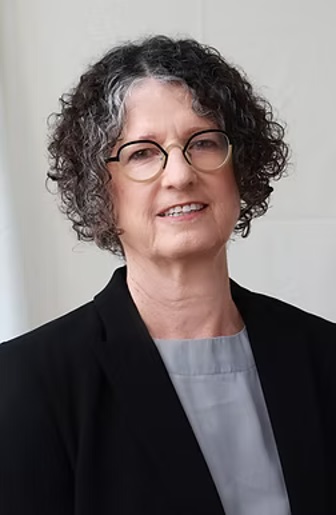
Shoshan Haran has written an emotionally charged, first-person account of the ordeal her family endured beginning on Oct. 7, 2023, when Hamas terrorists attacked a section of southern Israel known as the “Gaza envelope.”

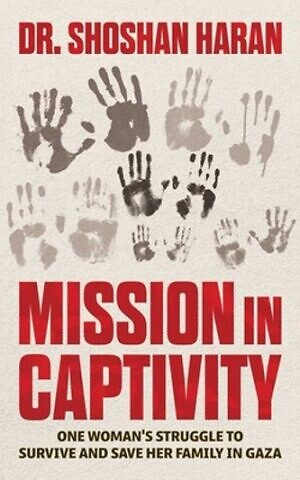
“Mission in Captivity: One Woman’s Struggle to Survive and Save Her Family in Gaza” was published in Hebrew earlier this year and awarded the 2026 Bernstein Prize, an Israeli literary honor. An English translation, published by Wicked Son (distributed by Simon & Schuster), releases on Oct. 6.
“My country, where were you? Our world, where were you?” Haran asks in the preface.
Haran is an agronomist, with a doctorate from the Hebrew University of Jerusalem. She is the founder and president of Fair Planet, a non-governmental organization that has aided a half-million subsistence farmers in Ethiopia, Rwanda, and Tanzania by providing high quality seeds and training.
Her parents, Rina and Avram Havron, were among the founders in 1946 of Kibbutz Be’eri, located three miles from Gaza. Shoshan and her husband, Avashalom Haran, made the kibbutz their home, as did her younger sister, Lilach, and brother-in-law, Eviatar Kipnis, who lived 300 feet away.
[Disclosure: Haran and I share a set of great-great-grandparents. Her great-grandfather, Israel Schechter, was the twin brother of my great-grandfather, Solomon. Before Oct. 7, I knew nothing of her and relatively little about the Israeli side of my family tree.]

During the Simchat Torah holiday, Shoshan and Avshalom hosted their daughter and son-in-law, Adi and Tal Shoham; their grandchildren, Naveh, 8, and Yahel, 3; and Avshalom’s sister, Sharon Avigdori, and her daughter, Noam, 12.
On Oct. 7, the government’s assurances that technology would protect the “Gaza envelope” were proven horribly flawed. The Israel Defense Forces were hampered by an insufficient number of troops available (due in part to the holiday), incomplete information from the battlefield, disrupted communications, and what Israelis call “conceptzia,” the governing assumptions about Hamas that trumped intelligence reports and warnings of preparations for an attack. (The word “conceptzia” was coined by the Agranat Commission that examined the failures leading up to the 1973 Yom Kippur War.)
Beginning at 6:29 a.m., as Hamas fired thousands of rockets toward Israel, an estimated 3,800 members of its uniformed commando unit, followed by some 2,000 civilians, breached fences separating Gaza from Israel. They rampaged through kibbutzim, towns, and an outdoor music festival, slaughtering 1,200 men, women, and children. Another 251, including the bodies of at least two dozen dead, were kidnapped and taken into Gaza.
Haran’s husband, sister, and brother-in-law (and his caregiver) were among 101 civilians — 10 percent of the population — killed at Be’eri. Thirty residents were taken hostage.
As she draws a line between life before and after Oct. 7, Haran writes as an exceptionally self-aware narrator. [The quoted material that follows is from the English translation, which was provided to the AJT.]
As terrorists attacked the Haran home with assault weapons, a bulldozer, and likely thermobaric grenades, Shoshan, Avshalom, and their guests huddled in the safe room.
“Naveh asks Tal, ‘Daddy, are we going to die now?’”
“And Tal, who values trust with his children above all and is always totally open with them about everything, cannot bear for the last thing he might say to Naveh to be a lie. So, he answers, ‘I don’t know.’”
There is no escape.
“We have mere seconds to decide. After a split second, Avshal concedes: There is no choice. We decide to surrender. We can already hear grenades exploding outside. The terrorists might throw a grenade inside at any moment and wipe us all out. Avshal and Tal raise their hands above their heads, and Tal shouts in Arabic, ‘Waladi, waladi!’ There are children with us.
“We stop resisting. Avshal opens the steel panel on the safe room window. We are totally mute. Tal climbs out first through the gaping hole. Avshal follows.
“That will be my last glimpse of my beloved partner in life.”
Hours after being separated from her husband and son-in-law, after seeing dead bodies in her neighborhood and black smoke billowing from her sister’s home, after being deposited at a Gaza apartment (where the terrorists had stashed toys and other diversions, preparing for kidnapped children), “A sudden realization washes over me: There is no point thinking about our former life. It’s all gone. It is futile to look back.”
A new reality sets in.
“I understand I must conquer my rage and terror to achieve one singular mission of shielding my family from these monsters and their twisted, malicious values. I look at Naveh and Yula, so young, so delicate, so innocent, and I know: I must not lose control. I cannot show weakness. I must look the terrorists directly in the eyes, never lower my gaze, display no emotion. I must project only determination and inner resolve.
“From the moment of our abduction, my role is clear to me: I am bringing everyone home alive. I say this to nobody but myself, over and over. This is my mission.”
Haran resolves not to break. “The bathroom is the only place where we can let out emotion, anger, and frustration; the only place we can cry freely, away from the eyes of children or captors. But even there, all throughout my captivity, I do not cry. I fear crying will crack the hardened armor I have donned. It will weaken me, make me fall apart.”
Prompted by a conversation with one of their captors, Haran contemplates the consequence of her kibbutz (and others) employing Gazans. “We thought that the simple fact that they earned a dignified living with us, providing for their families while befriending ours, would help to foster deeper familiarity between our two peoples and thus lay the groundwork for future coexistence and peace.
“But we did not fully understand the ferocity of their frustration as they saw our spacious homes, manicured lawns, and pretty trees and flowers, gaining a glimpse of our comfortable lives. We could not fathom the power of the envy festering in their hearts when, at the end of each workday, they returned to their homes in Gaza — back to neglect, hardship, and widespread unemployment. We foolishly assumed that they would see us as a model and become inspired to build a better future for themselves and their families.”
She wonders whether the Gazans who worked at Be’eri provided intelligence that aided Hamas.
The relationship between captors and captives is clear. “Everything is in the terrorists’ hands. Our lack of control over the most trivial things, which we take for granted in the free world, is psychologically shattering and undermines our sense of self.”
That includes basic needs. “The conditions in captivity are harsh. Beyond the constant life-threatening danger and the deprivation of freedom, food is scarce and hygiene is dismal.”
Inside the Gaza apartment, Haran can feel the rumble of Israeli air strikes. She fears for the children’s welfare. The women work to keep them occupied for hours on end, day after day.
Everything is in the terrorists’ hands.
On Nov. 25, 2023, after 50 days, Haran, her daughter, sister-in-law, and the three children were part of an exchange of hostages for Palestinians imprisoned by Israel.
As they meet other hostages, a young woman relates her experience as a captive. “As she speaks, I am struck by the realization that other hostages genuinely went through hell: degrading conditions, sadistic physical abuse, forced isolation, cruel psychological manipulation, and even moments when they were forced to witness their friends dying in agony.”
Though Haran was impressed by the IDF’s preparation for their care, “I think about the sharp contrast between the army’s absence, the abandonment and neglect we experienced on Oct. 7, and the meticulous welcome it has prepared for us now, with soft teddy bears, coloring books, clothes, and refreshments.”
“Where was the IDF when we truly needed its protection?”
When her sister, Lilach, is not among family members who visit the hospital unit, “I understand: She is gone.”
There is even more traumatizing news.
“Then comes the most terrible moment of all. Shaked and Yuval [her children] ask me to join them in my private room. Through choked voices and tears, they tell me that my beloved Avshal, their father, is not being held hostage by Hamas after all.
“He was murdered in Be’eri on that black Saturday.
“The news strikes me like the blade of a cold, sharp ax.”
The government is almost too efficient. Haran receives a new ID card. “There, in black and white, next to ‘relationship status,’ it reads: ‘Widow.’ It has only been a few hours since my children told me Avshal was murdered, and already I have a new official status. It hurts. It is cruel. It is unfathomable.”
There is no home return to at Be’eri. Haran moves into an apartment elsewhere in Israel. “I still cannot grasp that I have no home. That I am homeless in the full sense of the word. I still cannot absorb that I have no clothes that are truly mine. None of the treasured objects I collected over the years. None of the jewelry passed down through generations of my family.”
The pain of her husband’s death is intense. “And now he is missing from my life, missing from our children’s lives, missing from the lives of the grandchildren he loved so much.
“Grief washes over me. Grief over him, over me, over us. We will no longer complete the circle of life together.”
Haran puts her energies into efforts to free the remaining hostages, including travels to Washington, D.C., and speaking at the United Nations.
Tal was held hostage, in worse conditions, for 505 days, until his release on Feb. 22, 2025, as part of a ceasefire deal. Haran recorded reactions as the family watches television: “09:47 — There he is, that’s Tal, walking onto the stage! We erupt into colossal screams. Yuval leaps in the air with joy. Mor and Lee, Tal’s siblings, burst into tears and embrace. He is thin, very thin, pale as chalk, blinking in the first daylight he has seen after many months held in the darkest tunnels.”
Despite all that she has experienced, all she has witnessed, all that she has lost, and for all of her grief and anger, she resolves “to blaze my own path,” without her husband, her sister, and her brother-in-law. She writes at the end: “With renewed strength and a most profound recognition of the need to strive for a better world, I report for duty before the future.”
- Dave Schechter
- Books
- Shoshan Haran
- October 7
- hamas
- Gaza
- “Mission in Captivity: One Woman’s Struggle to Survive and Save Her Family in Gaza”
- Bernstein Prize
- Simon & Schuster
- Hebrew University of Jerusalem
- Fair Planet
- ethiopia
- Rwanda
- Tanzania
- Rina Havron
- Avram Havron
- Kibbutz Beeri
- Avashalom Haran
- Eviatar Kipnis
- Lilach Kipnis
- Israel Schechter
- Solomon Schechter
- Adi Shoham
- Tal Shoham
- Sharon Avigdori
- the Agranat Commission
- Yom Kippur War
- Washington DC
- United Nations
comments