



Rabbi Roundtable: Sept. 15, 2025
The AJT has launched a new monthly feature bringing rabbis together from across all denominations and Jewish Atlanta.

The AJT has launched a new monthly Rabbi Roundtable which will bring together rabbis from across Atlanta representing each denomination.

For the initial discussion, each rabbi was asked the following question:
“We blow the shofar to remember the Binding of Isaac — but let’s be honest, that story is traumatic. Why should our spiritual awakening hinge on a tale of a father willing to kill his son? What does it say about us that we center it every year?”
 Rabbi Ira Bedzow
I don’t believe the blowing of the shofar is meant to awaken us spiritually so much as morally. It forces us to ask whether we truly understand what we want from ourselves, and what God wants from us. In the Binding of Isaac, there are three actors—Isaac, Abraham, and G-d—and each time we hear the shofar, we hear messages from all three sides of the story.
From Isaac’s perspective, we face the question of what we are willing to die for—perhaps not literally, but figuratively. Even as we pray for a good year, the shofar reminds us not to care only about our own health and happiness. We are called to live for ideals—justice, lovingkindness, faith—that may require sacrifice.
From Abraham’s perspective, we face the question of what we are willing to lose for conviction’s sake. Self-sacrifice—of time, money, even one’s own life for a child—can feel natural. But are there moments when we must give up what we love most for a higher calling? And how can we discern whether the situation truly demands it?

From G-d holding back Abraham’s hand, we are reminded that divine tests are not for G-d’s sake but for ours. They push us to grow. In Abraham’s time, child sacrifice was an accepted practice, but the story affirms that G-d does not ask us to do what is common. G-d asks us to do what is right.
The Binding of Isaac was traumatic for father and son, and, thankfully, we are spared such trials. But we can still learn from it. The sages play on the word nisa (“test”) to suggest that G-d raised Abraham like a banner (nes), so the world could learn from his experience. When we hear the shofar, we feel Abraham’s and Isaac’s anguish, and it calls us to examine our own goals, convictions, and direction.
Rabbi Joshua Heller
The binding of Isaac, Genesis 22, is one of the most powerful stories of Rosh Hashanah, but it did not start out that way. The Talmud (Megillah 31a) first assumed that there will be only one day of Rosh Hashanah, and the reading would be Genesis 21, which tells two other stories. First, the story of Isaac’s birth would be a reminder that G-d remembers his promises. Then, the story of Ishmael, the disobedient teen, being sent away but then saved from death.
Ishmael’s salvation gives us hope. Ishmael is not a righteous figure in our tradition – his misdeeds caused him to be sent away, and the nations that bore his name would later afflict us. And yet, in that moment of need, G-d saves and forgives him. Even if we are unworthy, we can ask G-d to forgive us based on who we are in this moment.
When a second day of Rosh Hashanah was added, it was logical to continue with the next chapter, which includes the story of the binding of Isaac. The story is a troubling counterpoint to the first day. Isaac is an innocent child, bound on the altar by his father, undeserving of death. If Ishmael could be saved, could we not at least expect the same?
For generations of Jews, that story became the tail that wagged the dog. It was symbolic of the oppression and even death they suffered for their faith. Just as Abraham was rewarded for his faithfulness in the face of testing, could we not expect G-d’s blessings? Today, we can read the story and ask if G-d is testing us, and hope that personal and national travails are part of a divine plan. Just as Abraham received a reward for his faith and perseverance, we pray for the same.
Rabbi Yossi New
Paul Harvey, a popular radio personality, featured on his show a segment called, “The Rest Of The Story,” in which he revealed unknown facts to otherwise hard to believe stories, giving them context and plausibility.
So, here is a little-known fact. At that time, Isaac was actually 37 years old, a fully-fledged adult. G-d’s command to Abraham did not obligate Isaac. On the contrary, Jewish law would license Isaac to kill his father as an act of self-defense. If G-d wanted Isaac to be sacrificed, G-d needed to tell Isaac Himself.
In the title, “The Binding Of Isaac,” the Sages shifted the focus from Abraham to Isaac, to indicate how willing Isaac was to be sacrificed. This was based on the flawed ideology that we humans can only experience the spiritual by freeing ourselves of the limitations and desires of the body and by transcending our physical existence. This is what inspires adherents of the church doctrine to practice celibacy and for followers of radical Islam to blow themselves up. It is axiomatic – the more you glorify death the less you will respect life.
Naming it “The Binding Of Isaac” and not “The Sacrifice Of Isaac” is meant to be instructive. It conveys the message to remain firmly “bound” to this physical world. The path to a closer connection to G-d is achieved by transforming and elevating all of the physical aspects of our lives. (For example- spiritualizing the act of eating by observing the Kosher laws).
From this perceptive, the story is actually a repudiation of human sacrifice, and a somber warning of how susceptible humans are to it and to belief systems that are driven by the potentially dangerous ideology of spiritual transcendence.
Isaac seems to have learned his lesson well. In the next chapter of the Torah, he pivots towards marriage and family life. This is an essential and timely lesson in today’s world.
Shana Tova U’metukah!
Rabbi Elizabeth Bahar
Shofar cries: “Though my father and mother abandon me, G-d will gather me in” (Psalm 27).
A close reading of the Akedah reveals a narrative marked by trauma, distrust, angels, and a test of Abraham.
Later Biblical writers remember Abraham’s faithful heart: “You are the LORD G-d … Finding his heart true to You, You made a covenant with him” (Nehemiah 9:7-8) – knowing, if Abraham could, then so could they.
The rabbis were multifaceted. Some imagined Isaac died and became ashes, while others imagined Isaac was a willing participant because he was no longer a child. Their polyphonic voice understood that trauma was ritually remembered; it was a plea, a protest, and a prayer: “Remember the covenant with our ancestors, who bound themselves to You.” Trauma had a voice in sacred ritual.
The medieval masters like Bahya ibn Paquda understood this to be a moment of spiritual practice, of self-examination, turning inward. The Mussar masters would teach us to bind our ego, our anger, our selfishness, and place them on the altar to G-d.
Rabbi Ephraim of Bonn, who witnessed the violence of the Crusades, saw his community reflected in Isaac’s sacrifice:
“He made haste, he pinned him down with his knees,
He made his two arms strong.
With steady hands he slaughtered him according to the rite,
Full right was the slaughter” (from “The Slaughter of Isaac and his Revival,” S. Spiegel’s, “The Last Trial,” 1967).
The modern era brings post-traumatic growth – pain intertwined with compassion can flutter toward meaning. As a butterfly emerges from its cocoon, so, too, is Abraham’s journey down the mountain – not done, but transformed, and now he flutters ahead with the knowledge of what he almost did. We flutter even as we walk after trauma.
The ram’s horn reminds us that the past cannot be undone, yet the future is ours.
Our traumas cannot be undone, yet we can choose to sanctify our painful moments.
About The Rabbis
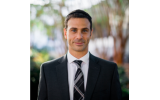
Rabbi Ira Bedzow, Orthodox
Rabbi Ira Bedzow, Ph.D. (Emory University) is the Executive Director of the Emory Purpose Project, one of the signature elements of its Student Flourishing Initiative, whose mission is to unite diverse partners across the Emory community in providing opportunities for students to develop a muscle for reflection on purpose and meaning. Rabbi Bedzow is an Associate Professor in the Department of Medicine, a core faculty member of Emory’s Center for Ethics, a senior fellow in the Center for the Study of Law and Religion, and the unit head of the International Chair in Bioethics at Emory University. He is also Senior Scholar of the Aspen Center for Social Values, and co-director of the Maimonides Institute for Medicine, Ethics and the Holocaust (MIMEH).
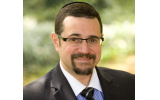
Rabbi Joshua Heller, Conservative
A ninth-generation rabbi, Rabbi Heller has served as a rabbi of Congregation B’nai Torah since July 2004, and with the congregation’s growth, became the Senior Rabbi in 2009. He has served as President of the Atlanta Rabbinical Association, Founding President of MACOM, (the Metro Atlanta Community Mikvah,) and has served on the boards of the Jewish Federation of Greater Atlanta and Jewish Family & Career Services.
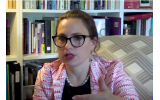
Rabbi Elizabeth Bahar, Reform
Rabbi Bahar is spiritual leader of the historic Temple Beth Israel in Macon, as well as president of the Southeast Central Conference of American Rabbis. She was recognized by The Forward as one of “America’s 33 Most Inspirational Rabbis” in 2015.
After being ordained by Hebrew Union College–Jewish Institute of Religion in 2009 (where she also earned her Master of Arts in Hebrew Letters), she served as spiritual leader of Temple B’nai Sholom in Huntsville for nine years before moving to serve at Congregation Ahavath Chesed in Jacksonville. She joined the Temple Beth Israel family in 2020.
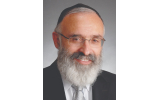
Rabbi Yossi New, Chabad
Rabbi Yossi New has been the spiritual leader of Congregation Beth Tefillah since he and his wife, Dassie, came to Atlanta in 1984.
Born and raised in Melbourne, Australia, Rabbi New’s religious education includes studies at Keren B’Yavneh Yeshiva in Israel and the Rabbinical College of Canada in Montreal. He was ordained in 1981 at Central Lubavitch Yeshiva in Brooklyn, N.Y., and married that same year. His education continued through post-rabbinic work at the Kollel’s Halachic Research Program, also located in Brooklyn. Rabbi New also serves as the Director of Chabad of Georgia.
comments