



Rabbi’s New Book Asks Us to Face Spiritual Reality
The Rabbi Emeritus of Congregation Etz Chaim, Shalom Lewis, outlines a philosophy that demands that faith come from more than a leap in the unknown.
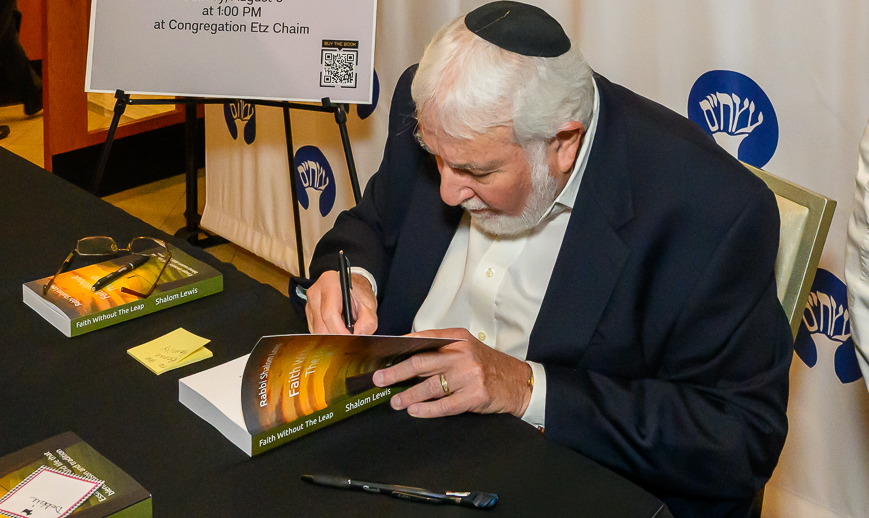
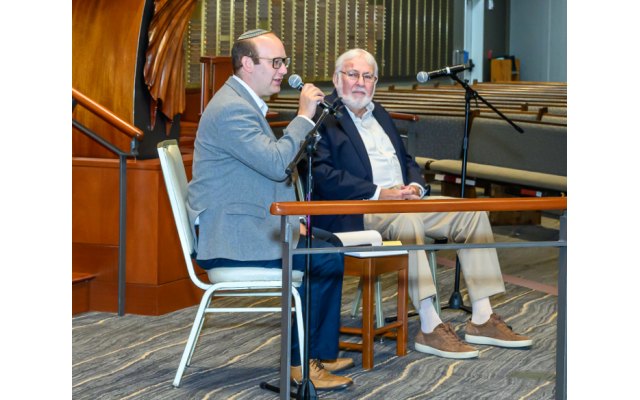
At the outset of his book launch at Congregation Etz Chaim, Rabbi Shalom Lewis used his well-honed sense of humor. Gazing out into the 200 or so casually dressed congregants who had filled the sanctuary on a stiflingly hot Sunday afternoon, the more formally attired rabbi felt overdressed. So many of those in attendance he observed were wearing comfortable clothing that, next time, he, too, would pull out a pair of shorts.

It was a lighthearted touch for the event, this reference to accommodation and acceptance, that seems to fill the rabbi’s new book, entitled, “Faith without The Leap.” It may be stretching a point but this 373-page compilation of his writings over the past 50 years is a thoughtful argument for the importance of coming to terms with the realities of our spiritual beliefs.
As he told his audience that afternoon, the title of his book implies that faith is not derived from a leap that forces you, blindly, to do one thing or another; faith has to come from a deeper place. Which is perhaps a challenge that perhaps many examine during this holiday season, which stresses the importance of taking responsibility for how we come to terms with the life of the spirit.
For Rabbi Lewis that insight into faith and belief came early. As he recalls it, he was walking with his father, who was also a distinguished rabbi, to the Kol Nidre service on Yom Kippur at Temple Beth Shalom near their home in Haddon Heights, N.J. He noticed, as they walked, that his father was silent and deep in thought. When he questioned his father about what he was thinking, the elder Rabbi Lewis said that he believed the Master of the Universe, as he put it, was deciding on his destiny as well as millions of others, who would live and who would die.
His son, a teenager at the time, said he wasn’t worried, he didn’t believe G-d was determining his fate, and he advised his father that what he should really worry about was whether the congregation liked his holiday sermon.
It’s a theme that he has held through his long life and during the 40 years he served as Congregation Etz Chaim’s senior rabbi. It is clearly articulated in the new book where he describes himself as a proud deist. He says he believes in G-d, his omnipotence and his omnipresence but he sees G-d as an observer, not an intruder in our life. And he believes that the world has been created despite what some believe as G-d’s guiding hand.

Even the sacred Torah scroll that we unroll so reverently on these High Holidays was written, he believes, by the hands of men. G-d may have given us the inspiration, he concedes, or the values that are taught but as he put it, “he doesn’t poof appear in front of us and cause all these miraculous events to occur.” What is more likely, he believes, is those who wrote the Torah reach up; as it were G-d reached down on a metaphoric Mount Sinai and we have a work of literature that is transcendent and has influenced us for thousands of years.
He admits that we also have a world that was built by the great minds of humanity, who were grounded by their belief in a logical, reasonable world that doesn’t demand that we take a leap of faith to transform society.
In support of this view, he didn’t mince words during the Sunday afternoon book launch. He said he knows many people who are bright, who are scientists or doctors, well educated and well read who, when they “walk into certain shuls, they lock up their brains in the cloakroom and when they finish davening, they pick up their brains and go home.”
But this book is not just a personal statement of belief, it is a work filled with the rich insights and thoughts fathered from a lifetime of reflection and practice. Like his father, who spent his life in a single congregation and rose to the presidency of Conservative Judaism’s Rabbinical Assembly, Shalom Lewis in his decades as the Senior Rabbi of his synagogue in East Cobb and now in retirement has been a strong and outspoken advocate for all that is meaningful in Judaism and in the Jewish world.
His book as he points out is to provide an answer for so many who want to believe and do believe but want to believe in something that makes sense.
comments