



‘The Odyssey’ is About Our Future
Christopher Nolan’s epic retelling of Homer’s “The Odyssey” has more to tell us about the world today and what is coming fast than how we existed over 2,500 years ago.
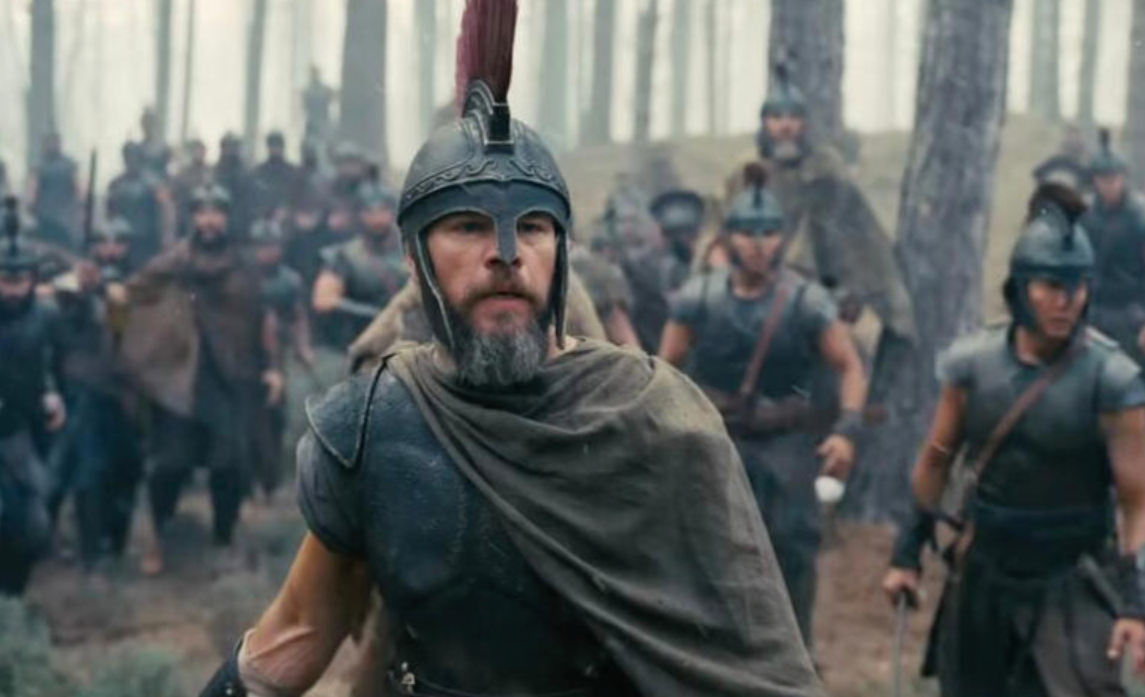
This summer, if you wanted to see “The Odyssey” locally in all its full screen IMAX glory, you probably had to make a reservation well in advance, pay nearly $40 for ticket and trek up I-85 to the Regal Theater at The Mall of Georgia.

What greeted you was a film that for sheer picture and sound quality has few equals in the hundred-year history of sound film. But, if you were looking for a lesson in the complexities of Greek mythology or of an exploration of Homer’s poetic structure or philosophy, forget it.
For those who came to see it here in one of only 25 theaters across the country, as the director, Christopher Nolan, intended it to be seen, it was a mesmerizing visual work. Sitting only a few rows back from the IMAX screen in Duluth that covers an entire towering wall at the Regal 20, you can feel the distinct sensation that you were about to be swallowed whole by the visual experience.
Forget about Homer’s epic literary tale, this is pictorial extravaganza on a scale rarely equaled and a timely reminder of how contemporary society is shifting from a written to a visual culture.
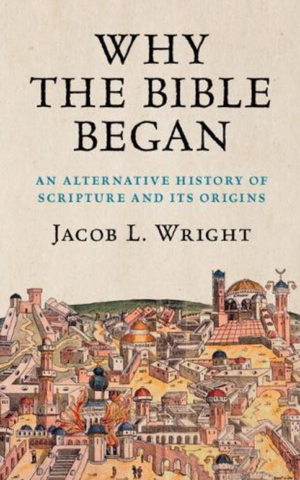
It’s a shift, not unlike the one Jacob Wright recounted three years ago in his best seller, “Why The Bible Began.” For Wright, who is professor of Hebrew Bible at Emory’s Candler School of Theology, and its sole Jewish faculty member, the transformation of a culture in Israel from one grounded in the many strands of an oral tradition to one built on an edited and accepted written text was an immense step forward in the evolution of Jewish thought. Hebrew, as he recounts it, didn’t come into being as a fully written language until the late ninth or early eighth century B.C.E.
There began a shift in both the history of Biblical Israel and how our collective experience as Jews was transmitted from one generation to the next. A text, as Wright describes it, is a written record that demands to be studied and questioned. It’s an active experience of interpretation that’s quite unlike how stories had previously been told and retold over a glass of wine or in the afternoon shade of an olive grove.

At the same time, less than 800 miles away in Athens and the Greek city-states, the age of what were called the rhapsodists, performers of classic Greek poetry, such as Homer’s “The Iliad” and “The Odyssey,” were coming to an end. In its place, as Wright points out, is a text that begs to be studied, broken down, parsed out and questioned, just like The Torah. It’s as different as seeing a performance of Shakespeare and reading that same play in a classroom where you examine each page and look at the notes and commentaries.
Of course, the Hebrew Bible gives only an outline of a story or an encounter with the Divine. Over the centuries, Jews have interpreted the bare words of the text with midrash, giving the written word a change in emphasis and importance when it’s seen in the light of contemporary life.
“The Odyssey” is no less an exciting adventure of homecoming than the story of Abraham in the Book of Genesis. But it’s no matter to those who have crowded into IMAX theaters to be engulfed in the giant screen experience like the one in Duluth where the walls shake with 12 tracks of relentless audio.
Those whose knowledge of film history goes back to the mid-20th century will recognize that we were once enthralled by films that were created in large screen technology that went by various trade names like Cinerama, ToddAO, VistaVision and Cinemascope. What is different today is that the IMAX experience of films like “The Odyssey” has arrived at a time when literacy itself is questioned. Filmgoers in the 1950s had only black and white television as an alternative that flickered to life on 17- and 21-inch screens.
Today, we are consumed by endless loops of visual media that are churned out the help of artificial intelligence, often with just a few keystrokes and a mouse click. And this is only the beginning.
Such vast technological enterprises as Microsoft, Meta, and Oracle have literally staked their existence with immense bets that our future will be determined not by what we read in a book or even on a tightly wound parchment scroll but on a brightly lit electronic screen that prizes images over words.
It’s a shift that Jacob Wright both fears and recognizes. The world he described by a shift in consciousness more than 2,500 years ago is not unlike the explosive changes he recognizes today. The future is now.
comments