



AJFF Returns with Another Strong Lineup
Forty-nine films are scheduled, with four programs of shorts at four theaters around the community.

The Atlanta Jewish Film Festival (AJFF) is back with a full program of film screenings, guest speakers, and virtual showings. There are 49 films in this year’s event, almost evenly divided between narrative feature films and documentaries, plus four programs of short films that will be shown over the two-week run in theaters.

The festival’s gala opening at the Sandy Springs Performing Arts Center on Wednesday evening, Feb. 18, features a French-Canadian film, “Once Upon My Mother,” about a Jewish matriarch of Moroccan heritage who is determined to give her young disabled son the future she passionately knows he deserves.
It’s a highly rated, crowd-pleasing family drama with an abundance of laughs as well as tears. The film is among those from 20 countries that reflect the continuing interest in world cinema, of telling compelling stories with a Jewish focus. Nearly one-third of the films in this year’s AJFF are from Israel. Starting March 6, 20 films and the programs of short films that have been shown in theaters are being streamed online for just over a week.
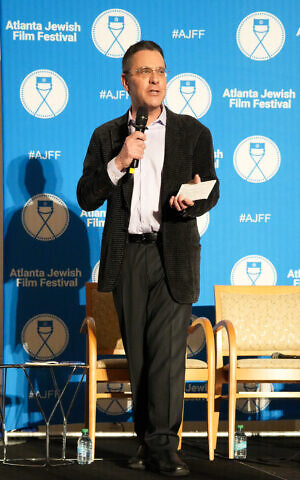
AJFF’s Artistic and Executive Director, Kenny Blank, described this year’s event as “a monumental moment” that not only launches another year of educational programming for the organization, but also begins the festival’s second quarter-century.
At an insider preview held for sponsors, board members, and financial contributors to the festival, Blank acknowledged the contributions of the hundreds of volunteers who have worked behind the scenes to help select the festival’s final schedule.
“Most people have no idea about the incredible process behind the scenes,” Blank said. “We have a committee of over 200 volunteers who, over eight months, prescreen hundreds of entries. Most years, we look at 500 to 600 film entries from around the world to narrow it down to the final selections.”

Over the two-and-a-half decades of the festival’s run, audiences have come to expect not only high artistic standards but a broad representation of topics and points of view. This is particularly true of the 25 narrative films that have been chosen.
They range from such important Israeli award winners as “The Sea,” with its compelling story of a young Palestinian boy’s journey from his home on the West Bank to the shores of the Mediterranean, “Nandauri” a beautifully rendered and acclaimed film about life in the central Asian country of Georgia, and “Malachi” about the power of unconditional love.
There are strong European narrative films with Jewish themes as well; “The Soundman,” “Rosenthal,” and “Nuremberg 45” are stand-outs.
Those festival goers with a taste for true to life stories will find much to admire in the 24 documentaries that have been chosen. A wide range of films depict heroes such as in, “Labor Of Love – The Life and Legacy of Henietta Szold,” to “Raoul Wallenberg – Missing In Action,” and “Sapiro vs. Ford – The Jew Who Sued Henry Ford.”
There are critical examinations of “Abortion In The Holy Land,” about the difficulties that arise in Israel during the medical approval for the procedure in Israel, “UNraveling UNRWA,” which looks at the work of the UN’s relief agency in Gaza, and “Surviving Malka Leifert,” which follows the long court battle in Australia and Israel over allegations of sexual abuse in the Orthodox community. Over the years, according to Blank, the documentary category has firmly established itself in importance.
“Documentaries used to be considered a niche format, now documentaries are mainstream. And, in fact, at the festival, the audience award vote scores documentaries even higher than the narrative films. Several of our documentaries are hard hitting exposes of some really tough subjects. They are really powerful, important stories.”

This is particularly true of documentaries that deal with the events of Oct. 7, when Israel was attacked by Hamas terrorists from Gaza. There are several outstanding examples of how Israelis have coped with the traumatic event and its aftermath.
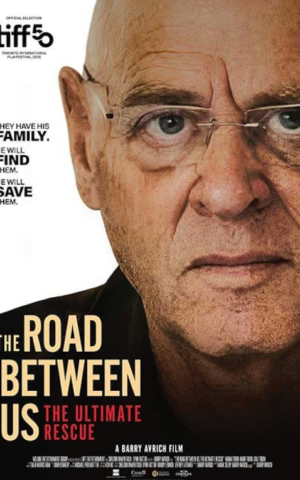
Such films as “A Letter To David,” “The Road Between Us,” and “Holding Liat” are excellent examples of the powerful dramas that have emerged from that terrible day and are being featured this year.
“Films about Oct. 7 are a new, emerging genre of film,” Blank observed, “that I think we’re going to see for decades to come. We have looked at dozens of submissions this year on the topic of Oct. 7 and the aftermath. And this particular collection of films that we have selected, show the whole arc from the horror that the hostages endured, the living hell that they went through with their families, to the aftermath and the difficult conversations that are happening.”
comments