


Anne Frank Exhibition Offers an Immersive Experience
The exhibit will run at The Center for Jewish History in New York through October 2025.
Robyn Spizman Gerson is a New York Times best-selling author of many books, including “When Words Matter Most.” She is also a communications professional and well-known media personality, having appeared often locally on “Atlanta and Company” and nationally on NBC’s “Today” show. For more information go to www.robynspizman.com.
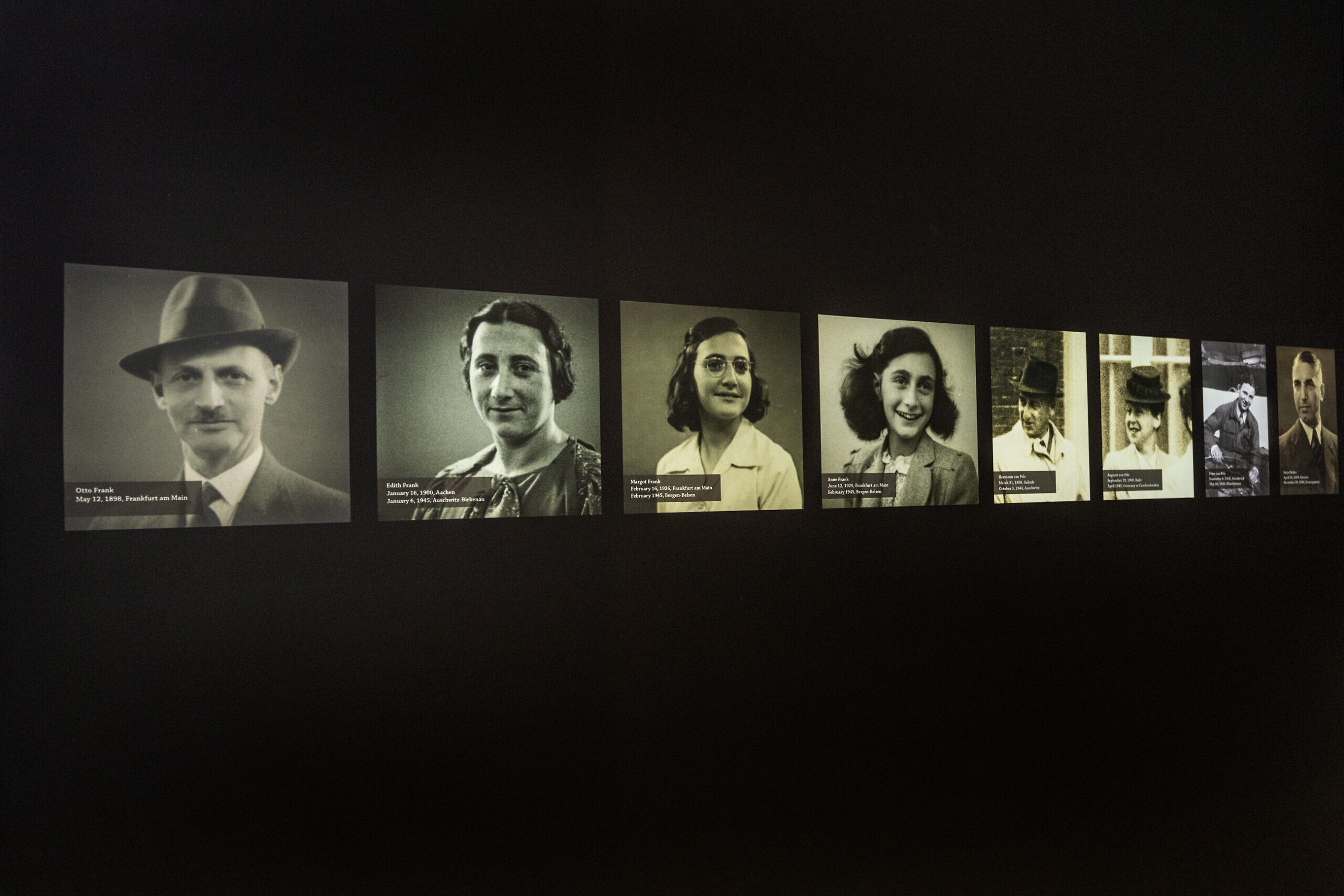
The Anne Frank House, one of the most visited historical sites in Europe, opened its world premiere of “Anne Frank The Exhibition,” in New York City on International Holocaust Remembrance Day. The opening, which was on Jan. 27, 2025, honored International Holocaust Remembrance Day and commemorated the 80th anniversary of the liberation of Auschwitz.

Designed for audiences who may not have the opportunity to visit the Netherlands, the new exhibition in New York City is drawing extraordinary attendance for what is among the most important presentations of Jewish historical content on view in the U.S. and before opening had already sold tens of thousands of tickets for its limited run through Oct. 31, 2025.
According to the team at “Anne Frank The Exhibition,” which is housed at The Center for Jewish History in New York City, it occupies over 7,500 square feet of gallery space in the heart of Union Square. This marks the first time dozens of artifacts can be seen in the United States of which many have never been seen in public. The Center for Jewish History, which opened in 2000, illuminates the Jewish past for audiences today and preserves it for the future. Home to the world’s largest Jewish archive outside Israel, it is a dynamic space for learning and public engagement. This newest exhibition presents a pioneering experience outside of Amsterdam to immerse visitors in a full-scale recreation of the rooms where Anne Frank, her parents and sister, and four other Jews spent two years hiding to evade Nazi capture.”
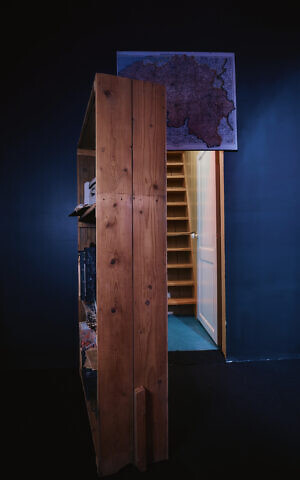
At the exhibition. visitors can walk through a full-scale recreation of the Annex where Anne Frank wrote her famous diary while hiding. As a nonprofit organization helping to shape global understanding of the Holocaust and its contemporary relevance, including lessons on modern-day antisemitism, racism, and discrimination, the Anne Frank House is entrusted with the preservation of the Annex where Anne Frank and her family hid during World War II.
The exhibition is a first-of-its-kind, full-scale recreation of the complete Annex, furnished as it would have been when Anne and her family were forced into hiding. Moving through the exhibition, visitors can immerse themselves in the context that shaped Anne’s life—from her early years in Frankfurt through the rise of the Nazi regime and the family’s phased move to Amsterdam across 1933 and 1934, where Anne lived for 10 years until her 1944 arrest and deportation to Westerbork, a large transit camp in the Netherlands, then to Auschwitz-Birkenau, a concentration camp and killing center in Nazi-occupied Poland, and eventually to her death at Bergen-Belsen concentration camp in Germany when she was 15 years old.
“This exhibition was designed to bring Anne Frank’s story to audiences who may never have the chance to visit the Anne Frank House in Amsterdam. Even for those who can, tickets sell out quickly, and we wanted to create a meaningful way for people to engage with her legacy in New York,” said Ronald Leopold, executive director of the Anne Frank House. “At the heart of the exhibition is a meticulous recreation of Anne’s hiding place, offering visitors a profound way to step into her world. But the exhibition is much more than that – it tells the full arc of her life, beginning with her early years in Frankfurt, Germany, before the family’s forced move to the Netherlands. Visitors will see the world she knew as a child, including a striking classroom photo from 1935, where nearly half of her classmates were Jewish. At the end of the exhibition, that same photo reappears, this time highlighting 10 children – including Anne – who did not survive, murdered simply because they were Jewish. It is a deeply moving tribute not just to Anne Frank, but to the 1.5 million Jewish children whose lives were cut short.”

Leopold added, “Anne Frank’s words resonate and inspire today, a voice we carry to all corners of the world, nearly eight decades later. As a custodian of Anne’s legacy, we have an obligation to help world audiences understand the historical roots and evolution of antisemitism, including how it fueled Nazi ideology that led to the Holocaust. Anne’s legacy is remarkable, as represented in the diary she left us, and as one of the 1.5 million Jewish children who were murdered at the hands of Nazi officials and their collaborators. Through this exhibition, the Anne Frank House offers insights into how this could have happened and what it means for us today.”
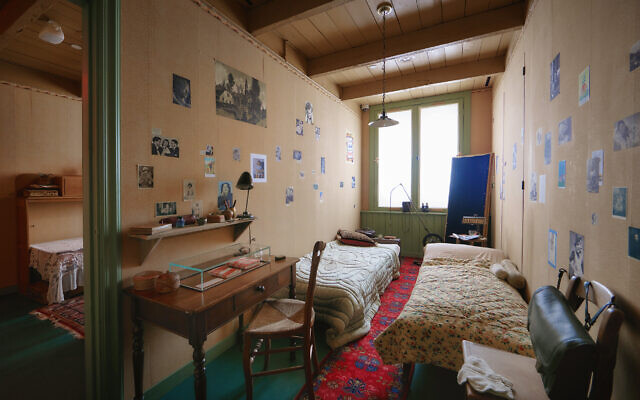
The exhibition galleries immerse visitors in place and history through video, sound, photography, and animation; and more than 100 original collection items from the Anne Frank House in Amsterdam. The exhibition provides an opportunity to learn about Anne Frank not as a victim but through the multifaceted lens of her life—as a girl, a writer, and a symbol of resilience and strength. This is a story inspired by one of the most translated books in the world. Included in the exhibit is Anne Frank’s first photo album (1929-1942); Anne Frank’s typed and handwritten invitation to her friend for a film screening in her home (by 1942, anti-Jewish measures prohibited Jews from attending the cinema); and handwritten verses by Anne Frank in her friends’ poetry albums.
Dr. Gavriel Rosenfeld, president of the Center for Jewish History, said, “We are absolutely thrilled to partner with the Anne Frank House on hosting this landmark exhibition. As we commemorate the 80th anniversary of the liberation of Auschwitz, Anne Frank’s story becomes more urgent than ever. In a time of rising antisemitism, her diary serves as both a warning and a call to action, reminding us of the devastating impact of hatred. This exhibition challenges us to confront these dangers head-on and honor the memory of those lost in the Holocaust.”
With a goal of reaching 250,000 students, the exhibition team is working with educational leaders and hundreds of school districts around the tri-state area to experience “Anne Frank The Exhibition” while it is on view in New York. Educational visits to the exhibition, as well as Individual and family ticket purchases, can be scheduled by visiting AnneFrankExhibit.org. To learn more about the Center and its public programs, please visit cjh.org.
comments