



Atlanta Jewish Day Schools Utilizing New Tech
AJA, Davis, and Weber have all integrated generative AI into their curricula.
At a time when many public schools are struggling to manage the relationship between students and technology, many Jewish private schools are moving cautiously yet confidently towards advancing them in an accessible manner.

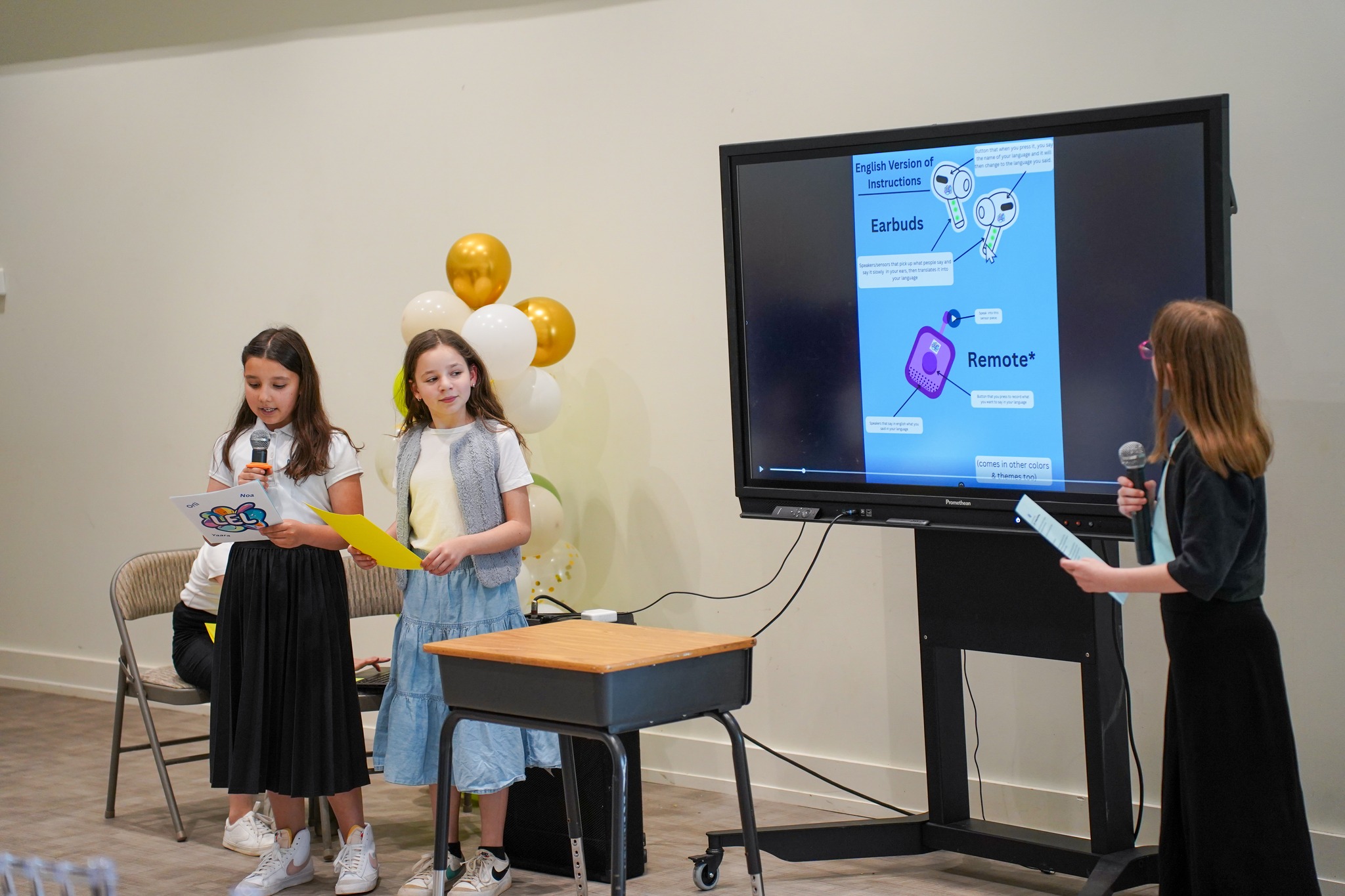
“Each grade focuses on the same weekly computer science concept, but instruction is differentiated to meet the developmental needs of each student,” writes Stacy Brown, director of innovation and professional learning at Davis Academy, in an article in Davis’s The Journey magazine describing their year-long computer science and engineering course. “This ensures that students develop a strong foundation in computational thinking and design-build skills that they can apply to real-world problems.
The class integrates learning about algorithms as early as kindergarten through to having them code their own games using Javascript or Python in the fifth grade.
“Upper elementary students engage in discussions about the subjective biases embedded in AI, using Code.org’s AI programs to demonstrate how human biases influence machine outputs,” writes Brown. “For example, when prompting AI to associate the word ‘delicious’ with a fish, students see how AI reflects the biases of its creators. Students deepen their understanding of both the capabilities and limitations of AI, leading to new insights and discoveries.”
Integrating both the use of and education about generative AI into the curriculum is a significant point of interest at other schools as well.
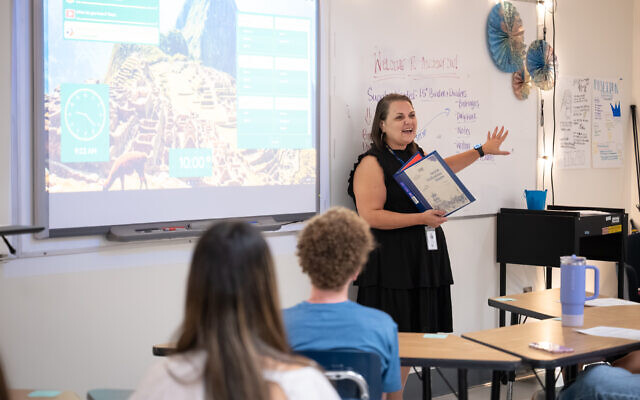
“We started with the goal of AI competency and literacy over AI usage,” says Elizabeth Behar Powell, a social studies teacher at The Weber School who is also the school’s educational technology specialist. “The idea is we want to support kids in understanding how to use AI as a tool, as opposed to using AI to replace their own work.”

Powell, who has held this position at Weber for three years, and an additional two years at her previous school, notes that she really started seeing generative AI like ChatGPT becoming a presence in education in the spring of 2022.
“Internet research has always been a component of our classes. AI has pushed us to make it a more deliberate integration.”
And Jewish schools have certainly been doing so.
A recent project undertaken by middle schoolers at Atlanta Jewish Academy examined whether AI could analyze and teach Gemara, comparing the results of different models. They came to a series of conclusions – some noting the models’ inconsistencies, others noting the importance of the user’s knowledge base on fact-checking results, still others noting the range and level of details across models.
Meanwhile, AJA high schoolers interviewed AI models “channeling” figures from the Jewish enlightenment and critically analyzed their conversations with them.
“The biggest hurdle with AI is the changing landscape of it. It is changing, and improving, and there are issues with it that are coming almost hourly at this point,” said Powell, commenting on AI’s use in research and the classroom setting. “I’ve told our teachers – history teachers, anyone teaching research had to adapt when Wikipedia became a thing. Math teachers had to adapt when Mathlab and those types of applications became a thing. So, this is just another level of teachers learning how to adapt and help our students in the best ways possible.”
As for whether it makes sense to limit students’ access to technology, Powell notes that, while Weber is not a cell phone ban school, they do ask students to turn in their phones at the beginning of each block.
“They have been doing that for years, [ever] since I’ve been here,” said Powell. She notes it gives them a sense of autonomy, but also acknowledges the benefits of shared technology, such as a shared notes document for all the students in a class.
Meanwhile, AJA is moving towards increasing cell phone restrictions, asking parents to refrain from giving their kids smartphones until eighth grade. For higher grades, they are still trying to keep students involved in the conversation and have implemented a multi-student committee interface with them on the subject.
“There has been talk in AJA about how the administrators and teachers are becoming more stringent,” read an article written by Leora Sokol for AJA’s student-run magazine, Palette, “but the phone committee acts as a way to prove to the students that the administrators are listening to advice.”
Across the board, it seems equipping students with the skills to navigate changing technology, and putting them at the forefront, isn’t just a helpful educational strategy, but an absolutely necessary one.
“I’ve been teaching – this is my 13th or 14th year teaching – and I tell my kids the first school where I taught, we did not have wi-fi,” said Powell. “So, adapting with the changing world, with accessibility to technology, that’s something that they will have to do at a much more rapid, much faster rate than you and I had to do.”
comments