



Atlanta Sports Books for Father’s Day
Is dad a sports lover? Consider gifting him one of the books for Father’s Day.

Is dad or grandpa a sports nut?

The AJT sportswriter offers a pair of books that would make great gifts for Father’s Day.
A Dynasty Interrupted: The Rise and Fall of the 1980s Atlanta Braves
By Patrick Montgomery
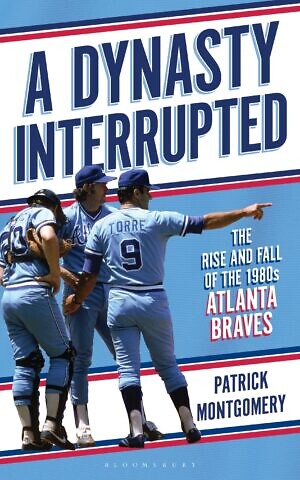
Within the rich and bountiful baseball literary canon, Atlanta Braves history is primarily chronicled through the prism of Hank Aaron’s Hall of Fame career and the franchise’s dynastic run in the 1990s. Indeed, there has been hardly any literature penned about the Dale Murphy-led and Joe Torre-managed teams of the early-to-mid 1908s, an oft-overlooked era during which Atlanta had a couple contending seasons, such as 1982 when they were three wins from their first World Series appearance since the Milwaukee years.
In his latest work, “A Dynasty Interrupted: The Rise and Fall of the 1980s Atlanta Braves,” baseball author Patrick Montgomery fills the void by providing a succinct overview of the prelude to the franchise’s glory years under recently deceased manager Bobby Cox.
Drawing on personal interviews with Torre, Murphy, and All-Star corner infielder Bob Horner among others, Montgomery, a longtime member of the Society for American Baseball Research (SABR), explores how the 1980s began so promisingly after the franchise struggled immensely following Aaron’s departure to Milwaukee. But Atlanta’s mini-resurgence proved to be ephemeral: After getting broomed by the St. Louis Cardinals in the 1982 NLCS (Atlanta would get revenge on the Cards in the 1996 NLCS en route to its second consecutive NL flag) and finishing in second in the NL West standings the following year, the Braves didn’t return to the postseason under Torre, who was dismissed by then-Braves owner Ted Turner upon the conclusion of the 1984 campaign.

Nevertheless, for much of the early Reagan administration, baseball was once again relevant in the Deep South as the 1980s Braves, while never once eclipsing 90 wins in any given season, flashed a little star power. With Montgomery’s look-back, fans of a certain age may enjoy reliving the exploits of Chris Chambliss, Glenn Hubbard, Brett Butler, Rick Mahler, and Bob Walk (as well as seeing images of their old-timey baseball cards laced in the middle of the book), and of course, the late Hall of Famer Phil Niekro. Meanwhile, for members of Braves Nation who grew up with posters of Chipper Jones and Greg Maddux adorning their bedroom walls, “A Dynasty Interrupted” could stand as a helpful resource for buffing up their institutional knowledge of the local ballclub that’s currently enjoying a banner season.
Return of the King: The Rebirth of Muhammad Ali and the Rise of Atlanta
By Thomas Aiello
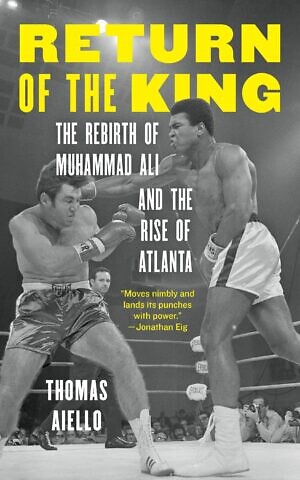
For a biographer, it can be a daunting task to chronicle the life and times of titanic sports figures such as Babe Ruth, Michael Jordan, or Muhammad Ali. They have been the subject of myriad books, making it ever-so challenging to unearth new information that will resonate with one’s readership. Yet, in his latest book, “Return of the King: The Rebirth of Muhammad Ali and the Rise of Atlanta,” Valdosta State University history and Africana studies professor Thomas Aiello does so masterfully.
Rather than tracing the arc of Ali’s entire life in and out of the boxing ring, Aiello explores one momentous juncture of The Greatest’s career — when he returned to boxing on the evening of October 26, 1970, following a three-year suspension in the wake of his refusal to serve in the Vietnam War. It just so happened that the backdrop to Ali’s hotly anticipated return to the ring was Atlanta’s Municipal Auditorium.
Referring to “Return of the King” as merely a sports book wouldn’t do justice to Aiello’s tome as it’s not just a comprehensive and riveting account of one of Ali’s most pivotal (and overlooked) bouts that altered the path of his unparalleled career, but also a deep dive into Atlanta’s complicated 20th-century history of race relations. As Aiello details in the early chapters, racism was still imbued in the ecosystem of Atlanta — even though Mayor William B. Hartsfield once coined Atlanta as “the city too busy to hate” — but not nearly to the degree that it was in neighboring cities in the Deep South.
Meanwhile, if Ali serves as the book’s chief protagonist, Leroy Johnson, Georgia’s first Black state senator since the days of Reconstruction, has to be the most important secondary character. It was Johnson, more so than anyone else, who deftly maneuvered around thorny political issues to facilitate Ali’s return match taking place in Atlanta — just as the city was becoming a hotbed of major professional sports.
While Aiello maintains a keen focus on Ali’s duel with Jerry Quarry, an elite heavyweight fighter who was outspoken against his opponent’s anti-war stance, he still provides a holistic portrait of his subject — the champ as a Black Muslim, as a civil rights activist, and as a draft dodger — so that readers understand why Cassius Clay, the son of a sign painter and a domestic worker from Louisville, became one of the most compelling figures in the history of North American sports.
As Aiello notes at the very end of his book, “So much of Ali’s career was and is enmeshed in both apocrypha and symbol. His image served as an empty vessel for so many different actors to fill with their own political interests that the meaning of his life had become, by the 1996 Olympics, inevitably malleable. But on a cool October night in 1970, less than two miles away from where the opening Olympic ceremonies would be held, his symbolism was perhaps most acute.”
- Sports
- Books
- David Ostrowsky
- A Dynasty Interrupted: The Rise and Fall of the 1980s Atlanta Braves
- Patrick Montgomery
- Atlanta Braves
- Hank Aaron
- Dale Murphy
- Joe Torre
- Society for American Baseball Research
- Return of the King: The Rebirth of Muhammad Ali and the Rise of Atlanta
- Thomas Aiello
- Babe Ruth
- Michael Jordan
- William B. Hartsfield
- Leroy Johnson
- Jerry Quarry
comments