



Bernstein Screens His Favorite Films at Emory
Fourteen films are being shown at Emory’s Cinematheque.

When Matthew H. Bernstein first arrived at Emory University in 1989, Hollywood was preparing to launch one of its top grossing films and an Academy Award winner that year, “Driving Miss Daisy,” that was set in Atlanta.

Like most people, he saw it for the first time in a local theater. It would be nearly a year before it was released as a video tape recording and it would be another eight years before a DVD would appear. Eventually, the streaming of films on a computer screen in our homes would be commonplace. But for Bernstein, who is retiring in June after 37 years of teaching, the lure of watching films in a theater remains strong.
“After all these years, I’ve come to appreciate… the communal experience of watching films. One of the real pleasures I have is watching films with an audience and hearing their reactions to them.”
So, before he bids farewell to Emory in June, he has lined up 14 of his all-time favorites, a distillation of the best that he has seen in his long career watching what one critic called “the daylight dream unspool before our eyes.” All of that has left him with a profound respect for what more than a century of filmmaking has accomplished.

“More and more, I’ve been able to look at films as a constructed object. I’ve come to recognize that this is the result of an incredible amount of labor that results in what might be called, in spiritual terms, a miracle. I still believe that the cinema is this supreme combination of all the other arts. It puts everything together.”
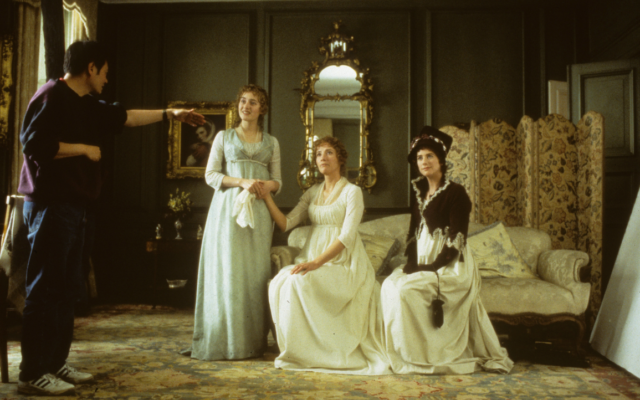
Bernstein’s selections are pristine prints screened each Wednesday evening in what is called The Emory Cinematheque. They range from a newly restored version of Charlie Chaplin’s 1925 masterpiece, “The Gold Rush,” through the succeeding decades to what the film scholars consider a near perfect film, like “The Third Man” from 1949 to Ang Lee’s 1995 version of Jane Austen’s, “Sense and Sensibility,” as seen through Asian eyes. All are free and open to the public.

A number of the films that have been programmed have been chosen from Bernstein’s scholarly analysis of the moving image. His choice of the 1937 Warner Bros. film, “They Won’t Forget,” is a thinly fictionalized version of the tragic case of Leo Frank, the Jewish Atlanta businessman who was hanged by vigilantes outside Marietta in 1915. The 1930s film played an important role in Bernstein’s pioneering work “Screening A Lynching,” which analyzed how TV and Hollywood reacted to Frank’s murder.
The popular 1956 classic, “Invasion of the Body Snatchers,” produced by Walter Wanger, was discussed in Bernstein’s book about the longtime Hollywood executive. A fascinating look at life in communist East Germany, “The Lives of Others,” which he wrote about in 2007, was another important choice. And finally, the 1964 independently produced release “Nothing But A Man,” about racial discrimination in a small Alabama town in the 1960s was chosen because of the work he did with the late Dana F. White about the history of segregated cinema in Atlanta.
During his long career at Emory, he has been the Goodrich C. White Professor of Film and Media and the chair of his department for 15 years. He stepped down as chair in 2021, but he worked over the years to expand the program. Today, 16 faculty members work in the department and he has been instrumental in developing a film and media management program with Emory’s Goizueta Business School.
He has also played an important role in expanding the department’s involvement with media production. Earlier this year, a new teaching facility and production soundstage were dedicated there.
Apart from his responsibilities at Emory, he has been a prominent board member at the Atlanta Jewish Film Festival for the past 20 years. And he has been the executive producer of a pair of notable documentaries, “Fiddler’s Journey To The Big Screen,” about the 1971 film version of “Fiddler On The Roof,” and “The Ozu Diaries,” which was released last year, about the famous Japanese filmmaker, Yosujiro Ozu.
Although his series of Wednesday programs is in some ways a reflection on the film experience over the past century, Bernstein’s view of the important role that motion pictures play in our lives remains largely unchanged.
“Film has the power to engage us and compel us to see ourselves and others in significant ways across various borders and boundaries,” he says. “Films held this power as the pre-eminent artistic form for much of the 20th century. Today, they retain that ability to help us understand the world and our place in it.”
More information about Bernstein’s favorites is at https://filmandmedia.emory.edu/news/cinematheque/2026-spring-cinematheque.html
- Bob Bahr
- Arts and Culture
- Matthew H. Bernstein
- Emory University
- driving miss daisy
- The Emory Cinematheque
- Charlie Chaplin
- “The Gold Rush"
- “The Third Man”
- Ang Lee
- Jane Austen
- “Sense and Sensibility”
- Warner Bros.
- “They Won’t Forget”
- Leo Frank
- marietta
- “Screening A Lynching”
- “Invasion of the Body Snatchers”
- William Wanger
- East Germany
- “The Lives of Others”
- “Nothing But A Man”
- Dana F. White
- Goodrich C. White Professor of Film and Media
- Emory’s Goizueta Business School
- Atlanta Jewish Film Festival
- Fiddler’s Journey to The Big Screen
- Fiddler on the Roof
- “The Ozu Diaries”
- Yosujiro Ozu
comments