


Blank Foundation Donates $25M for Mental Health
The new grants are aimed at boosting mental health awareness and education and support programs for parents and children.

The Arthur Blank Foundation has announced a $25 million series of grants to support mental health and well-being for young people. The grants, which were made to several national organizations, are designed to boost mental health from infancy through adolescence.

The foundation’s staffer who is responsible for the new national initiative, Beth Brown, described the grants as helping support young people at important moments in the human developmental process.
“Our strategy is ambitious and hopeful, focused on prevention. We’re pleased to invest in solutions that support the vision that every baby born today will have a stronger path toward flourishing mental well-being than any generation that came before.”
To support young mothers, The Together Project, which was recently founded by former U.S. Surgeon General Dr. Vivek Murthy, will receive $3 million. The project aims to mobilize coordinated efforts that advance social connection particularly among women for individual and collective well-being. The foundation has provided an additional $2.5 million to The Together Project through Arthur Blank’s founder initiative portfolio.
In recent years, the American Academy of Pediatrics, along with the American Academy of Child and Adolescent Psychiatry and the Children’s Hospital Association, have declared a national emergency in child and adolescent mental health.
The two organizations called for increased funding for mental health resources, as well as other actions, including more integration of mental health care into schools and primary care, more community-based systems to connect people to mental health programs, strategies to increase the number of mental health providers, and ensuring that there is insurance coverage of mental health care.

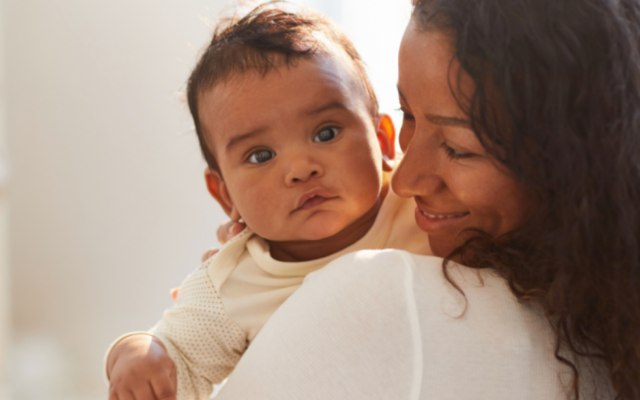
A recent survey in the Annals of Family Medicine found that 85 percent of primary care physicians had difficulty getting mental health care for their young patients.
In announcing the new round of grants, the foundation pointed out that they will support initiatives at all stages of critical development in the young. Nearly half of mental conditions, they pointed out, can be prevented by providing support and resources to encourage positive parenting skills and strong maternal mental health.
Over the next 10 years, the foundation’s grant making will be aimed at three main areas: creating stronger emotional bond between parent and infants, encouraging resilience and a sense of belonging in children, and helping teens maintain healthy relationships with digital technology.
To help launch a national public education campaign on maternal and infant mental health, the Foundation is making a $2.4 million grant to the Ad Council. This campaign will raise awareness of symptoms, reduce stigma, connect mothers to trusted resources, and promote early relational health during the prenatal and perinatal periods.
As children age, formal education can play a vital role in the well-being of young people. Schools are where trained psychologists, social workers, and nursing staff can deliver mental health support and help to develop social and emotional skills.
Last year, Illinois became the nation’s first state to require schools to conduct universal mental health screenings.
A $3 million grant is being made to the Sandy Hook Promise Project, which is aimed at reducing social isolation by peer support programs in grades K-12 that create a stronger culture of belonging in schools nationwide. The foundation’s grant will support the expansion of student-led programs, such as No One Eats Alone, that combats loneliness in middle school lunchrooms.
The Blank Foundation is providing financial support for two types of programs that support elementary and middle school students. The two programs address mindfulness in young people and support for programs that strengthen a sense of belonging.
To support healthy relationships among teenagers, the Foundation is supporting programs that build digital literacy and artificial intelligence (AI) skills and increase opportunities for healthy online connection.
Common Sense Media has received a $3 million grant to promote more public awareness of how technology impacts youth mental health. Through the organizations Healthy Tech, Healthy Minds initiative, and its Digital Literacy & Well-Being Curriculum, the group aims to deepen provide guidance that helps schools navigate issues like how AI and cellphones are used by young people.
Young Futures will receive $1 million. This organization works at the intersection of technology and youth mental health. The foundation’s investment will support two innovation challenges, including its latest “Oops! … AI Did It Again,” to develop promising solutions that help young people navigate AI, and build healthy relationships with technology,
To encourage increased giving in the field, the foundation is providing $2.7 million to Mindful Philanthropy to help this organization provide guidance to the philanthropic sector with the intent to increase the quantity and quality of philanthropic investment in mental health and well-being.
Altogether, the Blank Family Foundation has provided more that $31 million since 2022 to support mental health among the young.
- Bob Bahr
- Health and Wellness
- Arthur Blank Foundation
- Beth Brown
- The Together Project
- U.S. Surgeon General Dr. Vivek Murthy
- The American Academy of Pediatrics
- the American Academy of Child and Adolescent Psychiatry
- the Children’s Hospital Association
- the Annals of Family Medicine
- Sandy Hook Promise Project
- No One Eats Alone
- Common Sense Media
- Healthy Tech
- Healthy Minds initiative
- Digital Literacy & Well-Being Curriculum
- Young Futures
- Mindful Philanthropy
comments