



Consumer Investigator Writes Timely Guide
Dale Cardwell’s new book helps consumers avoid scam alerts.
Robyn Spizman Gerson is a New York Times best-selling author of many books, including “When Words Matter Most.” She is also a communications professional and well-known media personality, having appeared often locally on “Atlanta and Company” and nationally on NBC’s “Today” show. For more information go to www.robynspizman.com.
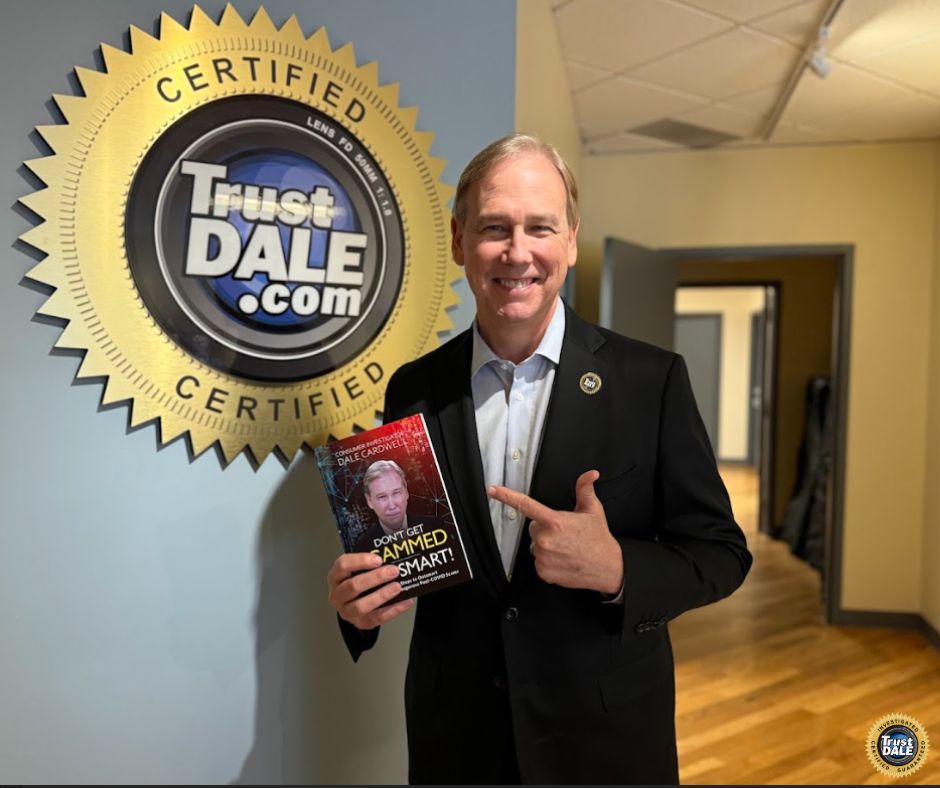
Dale Cardwell is a familiar name to millions of consumers. His mission is devoted to promoting ethical business practices to empower consumers and expose scammers. As a consumer investigator, Cardwell earned significant recognition as a six-time Emmy Award-winning journalist, TV and radio host based in Atlanta and his career included working with the nation’s leading consumer advocate extraordinaire, Clark Howard.

Cardwell shared, “In 1996, I joined Clark Howard and together we formed one of the nation’s most successful consumer reporting teams. We won numerous awards for our business reporting, and, under Clark’s tutelage, I became experienced as an expert recognizing financial scams and determining the components that separate sound financial investments, as well as products and services, from those that are ‘too good to be true.’”
After 25 years as a television journalist uncovering high-profile corruption, Cardwell realized he could have a significant impact on the lives of the public he had vowed to protect. In 2009, Dale founded his most successful endeavor, TrustDALE, a free online research and referral site for consumers.
Devoted to educating the public, Cardwell also compiled his most important tips in a consumer-oriented handbook. In his updated, newly released best-selling book on Amazon in the consumer category, “Don’t Get Scammed, Get Smart: Seven Steps to Outsmart Today’s Most Dangerous Post-COVID Scams,” he teamed up with Judy Kirkwood to write this timely guide. Cardwell shares his seven-step strategy to become a savvy consumer and avoid the pitfalls of post-COVID scams.
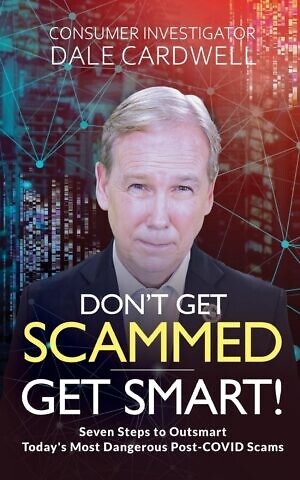
He emphasizes if you learn how to identify a scam before you get swindled — experience won’t have to be your teacher. His investigative standard, vetted across numerous businesses, lays down both offensive and defensive tactics for getting the jump on con artists who are trying to take your hard-earned money.
Cardwell’s early career began at WKAG in Kentucky. His exposure of concerns related to the 1985 crash of a U.S. Army chartered jet that killed 248 Fort Campbell soldiers in Gander, Newfoundland, made international news and propelled Cardwell to a prominent investigative role with the CBS-TV affiliate in Birmingham, Ala. He performed investigative reporting stints in Raleigh and Nashville before serving as an investigative consumer reporter for WSB-TV in Atlanta, the No. 1 station in the nation’s ninth largest television market.

Since launching his company, TrustDALE has recovered more than $1.5 million in goods and services for consumers and helped bring great businesses together with trusting customers every single day. Instead of reporting on someone who had already been exploited, Cardwell felt he could intervene on the victim’s behalf and help them seek restitution. Endeavoring to establish a community of trust, Cardwell developed a system where consumers could get products and services at fair prices, and companies could sell those products and services at a fair profit.
His website certifies companies based on a seven-point investigative standard that Cardwell developed from 30-plus years of analyzing how consumers got burned. He realized that identifying companies who were not engaging in negative practices would protect consumers proactively. When consumers choose companies certified by the TrustDALE team, they are further protected by the TrustDALE $10,000 Make It Right Guarantee and recently added a commercial division as well.
According to Cardwell, “The COVID pandemic unleashed what may be the largest fraud wave in history. LexisNexis estimates COVID aid fraud could reach $1 trillion. The result? We’re now in a marketplace more dangerous than ever — one where old scams thrive online and new ones are born from the digital-first, post-COVID world.”
Cardwell recommended, “To protect you and your loved ones, create a safe word or code for your family and loved ones, and a second code for your trusted business associates. Employ this code when you are challenged by a text, email, voice, or image that is asking you to commit resources to solve ‘their’ problem. If they can’t recite the safe word or code, hang up, and call the person who allegedly contacted you. Chances are, they will know nothing about it.”
He added, “The most effective way to debunk a fake email asking for a response or commitment is to validate the URL, or email address where it originated. If the URL doesn’t match the name of the company or entity it claims to have originated, i.e. Amazon.com, but rather, has odd and unrecognized letters and symbols, or contains obvious misspellings, it is very likely a fraudulent message. If in doubt, don’t click the provided link, but go to the website of the entity that allegedly contacted you. Follow their process to determine if the contact is legitimate or not.
“Scams don’t go away, they morph,” said Cardwell. “COVID provided the perfect opportunity for con artists to use the Internet to do just that. So, instead of teaching you how to memorize dozens if not hundreds of individualized scams, I’ve learned the most effective way to protect you is to teach you to recognize the emotional triggers you’ll undoubtedly feel when being baited into a scam. Use my seven-step acronym F, F, F, and DEAL to protect yourself from 99 percent of the cons.”
Cardwell reminds consumers prior to decision making and said, “When someone offers you what appears to be a ‘deal,’ always consider what I call, ‘the three F’s,’ Fast – Funds – Found. If they want your money on the spot and don’t want to give you the opportunity to think it over or consult a friend to validate the offer, that’s a red flag. If the funds they’re requiring of you seem small compared to the promised payoff, otherwise known as ‘too good to be true,’ it most likely is. Make certain the person making the offer can be found post-transaction, meaning you validate they have a real office or home base, real phone number and operating under a valid business license. Con artists go to great lengths to make certain you can’t find them once they have your money.”
Dale Cardwell is determined to make a difference and ease the lives of consumers. For more information, please visit www.trustdale.com and check out his book at www.amazon.com.
comments