



Klibanoff Digs Up Another Season of ‘Buried Truths’
The distinguished journalist and Emory University professor has another season of podcasts on WABE about the search for justice during the Civil Rights era in the South.
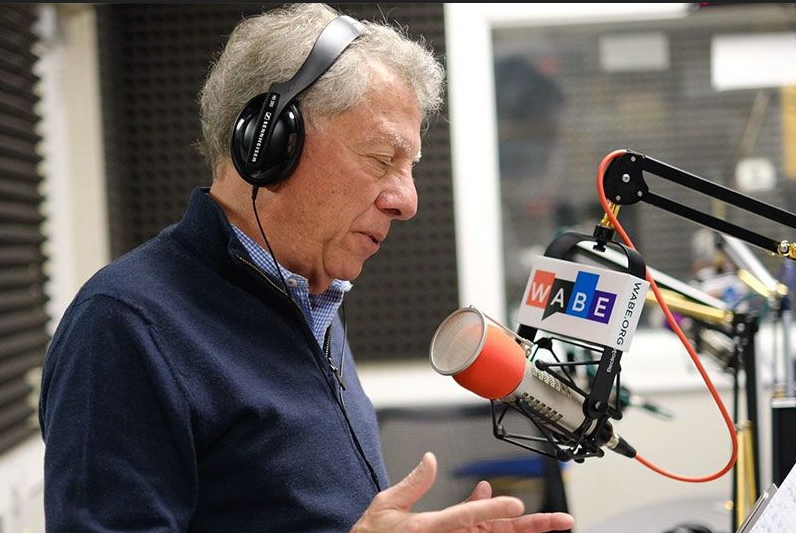
Hank Klibanoff, the Pulitzer Prize-winning author and journalist, has returned with another series of “Buried Truths” podcasts for WABE. It’s been more than two years since Klibanoff was last heard on the local National Public Radio affiliate, but his latest series has lost none of its punch. It’s a fascinating look back in history that uncovers how justice was sometimes meted out in the racially troubled American South during the 1940s and 1950s.

In his latest series, he recounts the story of Clarence Pickett, a one-time well-known preacher whose mental health in middle age was deteriorating. Four days before Christmas in 1957, he set off to pick up his paycheck at The Columbus World, a Black-owned newspaper where he worked selling advertising. He never made it.
Before that December day was over, he would be arrested for causing a public disturbance, jailed in Columbus, Ga., and then, when he continued to be a noisy and disruptive prisoner, he was beaten by a white police officer so badly, he needed medical attention.
Despite a cursory medical exam a day later, he was dead. For Klibanoff. Clarence Pickett’s sudden death 68 years ago and the way the case was handled then offered yet another quest to search for buried truth.
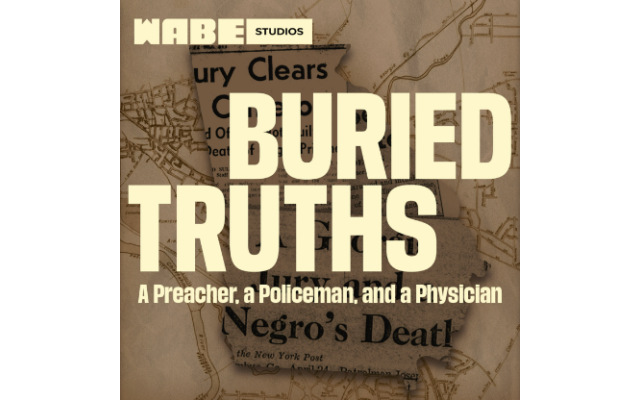
“These podcasts have all been about racially motivated killings or killings by white people who were racially conditioned,” Klibanoff says. “But this goes one step further and discusses medical neglect and the medical racism that ensued after the victim was beaten up.”
The young doctor who saw Pickett at the Columbus Medical Center had only recently completed his medical training at Tulane Medical School. After a cursory exam that didn’t include any of the tests that physicians would have been routinely ordered on a patient who had just been beaten senseless, he wasn’t admitted to the hospital or provided emergency treatment.

The physician concluded, instead, that he thought the patient was “putting on,” perhaps faking his condition. Klibanoff says that the way poor Blacks were often treated by white doctors in areas of the Deep South were not much different than what Clarence Pickett experienced.
“There was a disparity in the way Black patients are treated by white doctors, historically, back in those days,” Klibanoff points out, “and it’s now been well established. And in this podcast, we go into the many mythologies that white doctors had about Black people and their health. This doctor had an opportunity to save and extend the life of Clarence Pickett, and he didn’t do it.”
If that was all you could expect for many white doctors at the time, Klibanoff points out, then you could expect far less from the police. In Columbus, the police headquarters was in a building they shared with the offices of the Ku Klux Klan. State laws in Georgia protected police officers from prosecution and even in the rare case like this one where an officer was prosecuted, they were quickly exonerated by a sympathetic jury. Justice, as “Buried Truths” has concluded in its five seasons of podcasts, has often been blind.
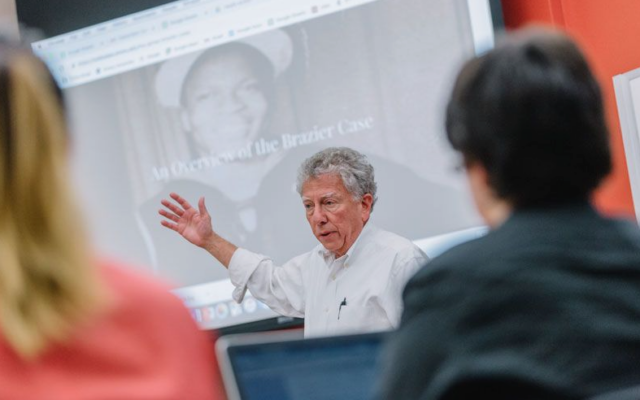
“There will never be justice in the criminal justice system for any of these people, but there is a judgment of history,” Klibanoff concludes. “And I believe very firmly that the last word on many of these cases is that if you examine them now, which we do, they will show that justice was not served. Justice was perverted back in those years.”
The podcasts that Klibanoff has produced over the years are the result of a unique partnership that has been developed between WABE and Emory University, where Klibanoff guides students through the cases he’s selected. In each instance, he gives his students a quick historical overview of the case, outlines some important journalistic principles for them to observe, then lets them loose to develop a new perspective and new leads to solve the cold case.
In recent years, he has worked to involve the federal government in helping to make federal law enforcement records more available. He’s a presidential appointee to the Civil Rights Cold Case Records Review Board, which was established in 2019 by an Act of Congress. It recently made available nearly 6,000 pages on its website of new records collected after the sensational murder of Emmett Till in Mississippi in 1955.
For his work on “Buried Truths,” Klibanoff and his former producer, David Barasoain, who now teaches at the University of Florida, were awarded some of broadcasting’s highest honors. They won a Peabody Award in 2018, a Robert F. Kennedy Award in 2019, an Edward R. Murrow Award in 2021, and an American Bar Association Silver Gavel Award in 2021.
comments