



Marcus Blood Center was Vital After Hamas Attacks
The Marcus Center remained fully operational and completely undamaged during the attacks.
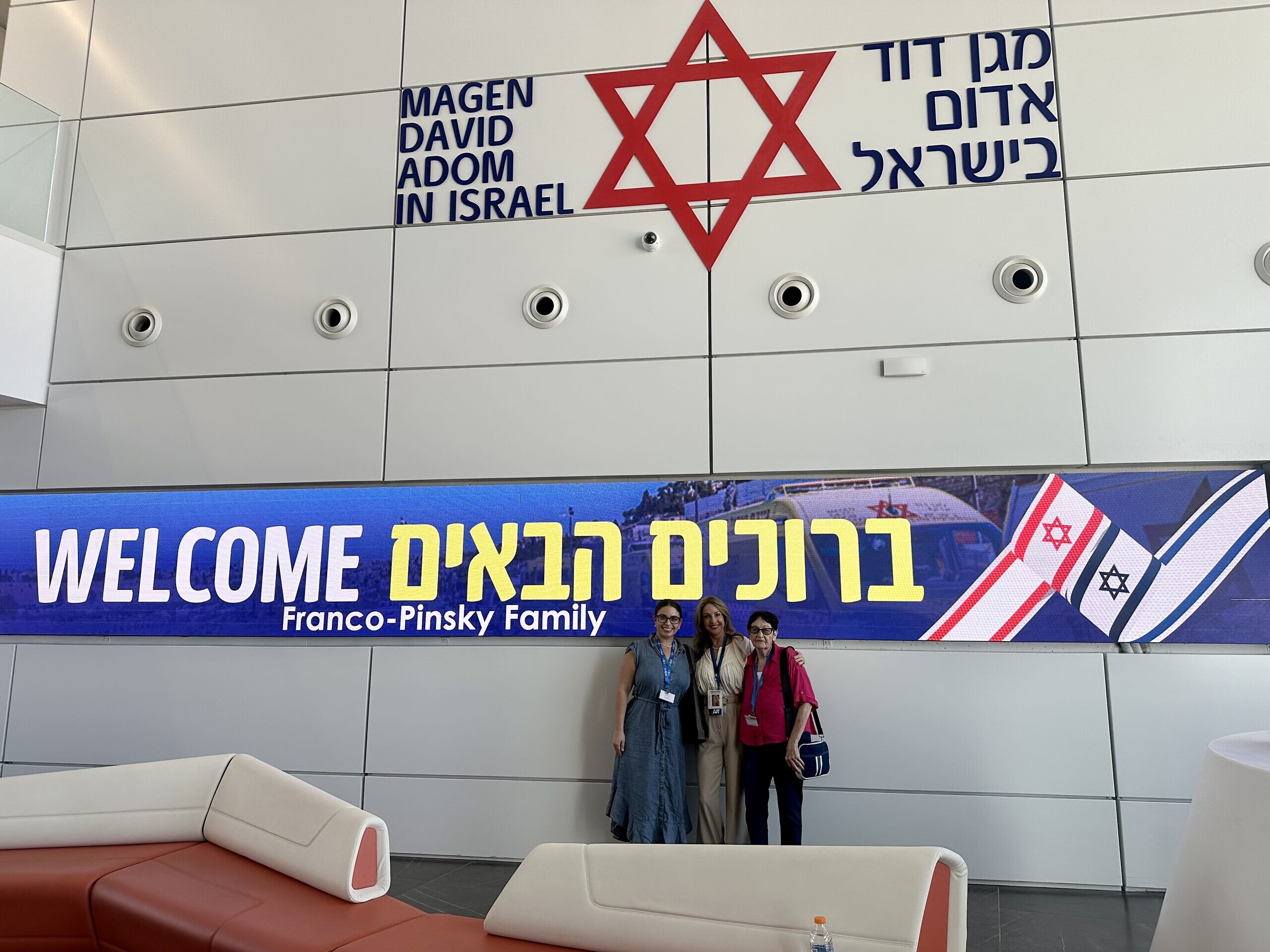
During a recent visit home, this writer had the privilege of touring the Marcus National Blood Services Center in Israel — a facility that stands as a beacon of preparedness, resilience, and hope. Officially inaugurated on May 2, 2022, the center was made possible through the generous donation of Billi and Bernie Marcus. The project took four years to complete, with a total cost exceeding $135 million. Of that, $25 million was donated directly by the Marcus family, and an additional $10 million grant was provided by the Marcus Foundation.

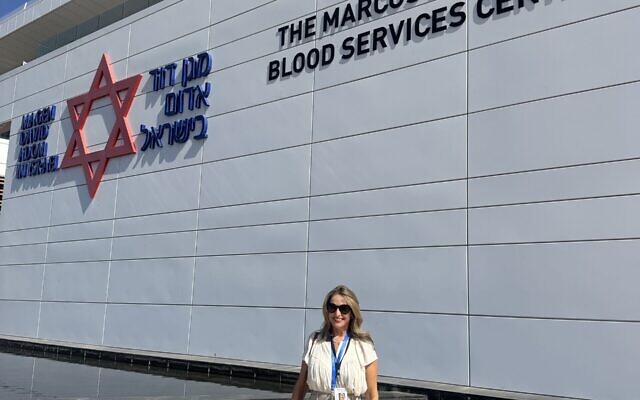
The Marcus Natioinal Blood Services Center is a state-of-the-art facility spanning more than 550,000 square feet. It is the only blood center in the world designed to withstand missiles, chemical, and biological attacks — a truly remarkable and vital achievement.
Long before the tragic events of Oct. 7, 2023, Bernie Marcus foresaw Israel’s need for a secure, resilient blood facility — one capable of operating under any condition, whether war, disaster, or attack. His vision proved predictive: during the Oct. 7 war with the terror group Hamas, and again on June 12, 2025, when Iran launched a large-scale missile assault on Israel, the Marcus Center remained fully operational and completely undamaged.
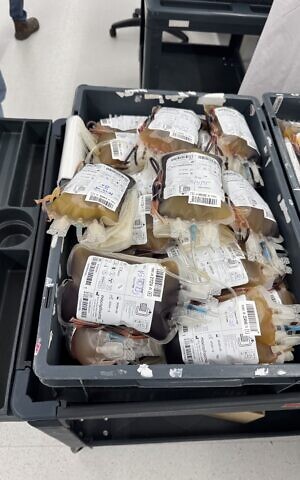
The Blood Center, operated by Magen David Adom (MDA), supplies up to 1,200 units of blood daily. In the aftermath of Oct. 7, these units became a literal lifeline, saving countless lives. During the early weeks of the war, the Israel Defense Forces relied heavily on blood transfusions supplied directly from the MDA and Marcus Center to treat soldiers on the front lines.
At the heart of the facility lies its underground vault — the most secure and sacred part of the complex. Here, blood units are received, tested, processed, and stored. The staff refer to this inventory as “liquid gold.”
During a tour, Moshe Noyovich, a senior MDA representative and project leader, guided this writer’s group deep underground to witness the meticulous preparation, sorting, and distribution of blood units. It was a fascinating and deeply moving experience.

Blood collected at the center is separated into three essential components: red blood cells, stored by type; plasma, the yellow fluid, kept frozen at minus 30 degrees Celsius to preserve its integrity; and platelets, used for clotting and emergency care.
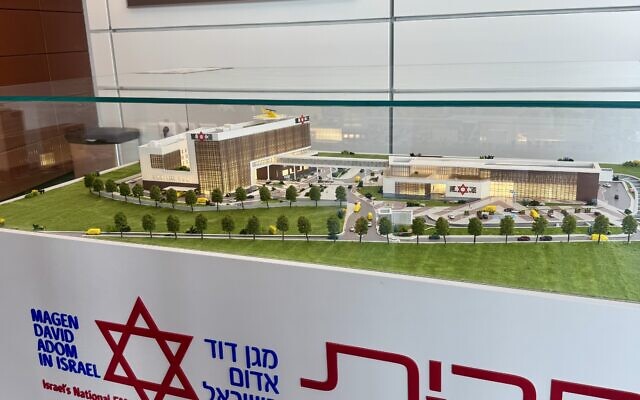
Months before Oct. 7, MDA had already sensed growing tension and increased its fundraising efforts through the Friends of MDA, expanding production capacity and staffing levels. This foresight proved lifesaving. When the war broke out, the center shifted instantly into emergency mode. Its pressure systems were activated, and blood mobiles were deployed across Israel to deliver units to hospitals, IDF field clinics, and emergency stations. Thirty-five MDA ambulance centers were mobilized, ensuring that every wounded soldier and civilian received immediate care. MDA teams set up improvised treatment sites at MDA stations, road junctions, and even in their living rooms. The emergency dispatch center’s staff answered thousands of calls and offered immediate assistance,
Following Oct. 7, an additional wing was rapidly constructed to enhance wartime response capabilities. Hundreds of operators and medical professionals worked around the clock and the facility became a symbol of national endurance during one of the longest wars in Israel’s history.
The building also functions as a massive safe room, or in Hebrew, mamad, providing shelter for staff and civilians during missile alerts. The underground vault is equipped with extra blast protection, capable of withstanding even the most powerful attacks.
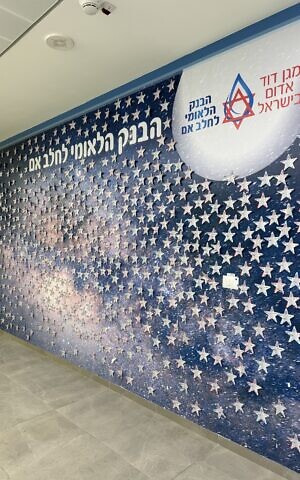
In 2025, the center also opened Israel’s first full-time paramedic training school, complete with modern classrooms, simulation labs, and an auditorium — ensuring that the next generation of emergency responders is well prepared.
Among the center’s many innovations, Mother’s Milk Bank left the deepest impression on this writer. This unit collects and stores donated breast milk for infants whose mothers cannot provide it. During and after Oct. 7, more than 30 babies were left without access to their mothers’ milk — some because their mothers were killed, kidnapped, or called up for IDF reserve duty. In partnership with Israel’s HMOs and hospitals, the Marcus Center provided these infants with life-sustaining nourishment, offering comfort and survival amid chaos.
The Marcus National Blood Services Center continues to expand. Future plans include a central ambulance commander hub, another paramedic training institute, and a new emergency operations wing. The Marcus Center is a living symbol of resilience, generosity, and the unbreakable spirit of the Israeli people.
comments