



Remembering Manny with Music & Community
How one father turned tragedy into action — and why music is now part of the solution.
If you had asked Ben Pargman a year ago to describe his life, he would have told you he was an investor sales broker and a proud father of three healthy, happy, good-looking boys, Syd, Max, and Manny, surrounded by hundreds of friends. His life, he said, was “all about the blessings.” And if someone had invited him to a mental health event back then, he would have politely declined and thought to himself, “Not my problem.”

Today, he knows he was wrong. “Parents have to wake up to the fog of naivety,” Pargman said. “Suicide can happen to anyone.” He compares that instinct to how people react to car accidents. “It’s very natural when you see a car accident to want to understand what caused it so you can say, “that’s why, and that’s different.” Your brain wants to make you feel OK — to protect you from the horrible thought that this could happen to you or your kid.”
After losing his son, Manny, to suicide, Pargman attended parent support groups and learned a painful truth: even when someone has experienced trauma, you never fully know the reason they choose to end their life.
A Concert with a Purpose
On Nov. 26, exactly one year after Manny’s passing, the Atlanta community gathered at the Buckhead Theatre for a night that blended grief, joy, and action. The first-ever Manny’s Band Foundation Concert looked like a rock show but carried a deeper mission: to get people involved in suicide prevention in meaningful, accessible ways.
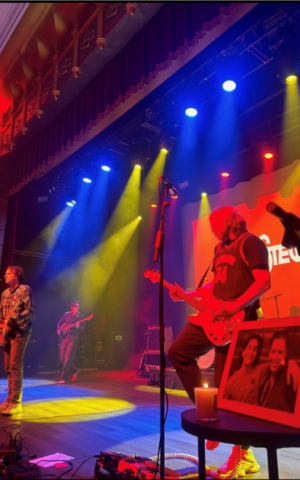
The event’s design made engagement easy. Volunteers held signs with QR codes linking attendees to resources and ways to help. A merch table lined the lobby, with all proceeds benefiting the foundation. A photo booth featuring a drum set and backdrop encouraged supporters to celebrate Manny’s love of music. There were even wristband giveaways that included QR codes that opened doors to further involvement.
As guests exited the theater, volunteers, and even Pargman himself, handed out souvenir guitar picks featuring another QR code for donations. Every detail served a purpose.

According to Pargman, Manny was “a super, super kid,” who was a musician, DJ, and the life of the party. The concert reflected that energy, bringing together family, friends, and community members who simply wanted to support the cause.
Performers included Gus Glasser, The Stews, and Manny’s best friend, Ian Maman. Between sets, Pargman stepped onstage to lay out four ways attendees could turn the night into action: fund the foundation to help support financially; host Manny’s Band practice sessions in their home; bring Manny’s Band to school campuses; and share the foundation’s QR code to spread awareness.
Community Stepping Forward
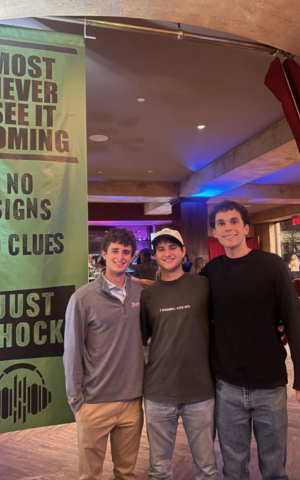
Many volunteers signed up to work the event, including family friend Aaron Gordon, who first learned about the foundation after Manny’s passing and immediately joined the mailing list. Another volunteer, Ari Feingold, said the concert showed “how much Atlanta really loves Manny” and expressed hope that the foundation continues hosting concerts like this.
Friend Jonathan Lalli said the night was about more than music.
“It brings everyone in Atlanta who cared about Manny and who cares about the cause together to remember him and honor his life,” Lalli said. “But not only that. It’s to take action, to ensure you won’t ever have to do something like this again. What Ben and the foundation did was assemble all these amazing resources that will actually have an impact on families and communities.”
Performer Gus Glasser echoed that sentiment. “I’ve never seen someone attack suicide like this,” he said. “I have four people in my life who have died from suicide. This is the first time I saw someone tackle the problem this way, and I am 100 percent on board.”
Turning Awareness into Something Usable
Suicide prevention messaging is everywhere today, including NFL commercials, college posters, social media campaigns, and November’s Men’s Mental Health Month online push. But Pargman believes awareness alone isn’t enough. “The stigma behind suicide not being socially acceptable to talk about in your inner circle is the bigger problem,” he said.
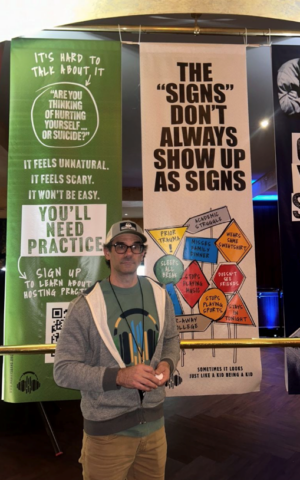
That belief led to the creation of Manny’s Band Practice: the foundation’s core call to action.
The program offers small, in-home QPR suicide prevention training sessions. QPR (Question, Persuade, Refer), founded in 1999, is one of the most widely used and scientifically supported suicide prevention training models. Volunteers host 10 friends in their home, and the foundation sends a certified QPR trainer to lead the session.
Pargman said the impact comes from practicing difficult conversations in a safe environment. “Having difficult and painful conversations with people you love and care about — that’s something entirely different, and it’s hard,” he said. “Because it’s new and hard and scary, you need to practice. That’s what Manny’s Band Practice is all about.”
Pargman said he knows exactly how Manny would react to seeing hundreds of people come together in his honor. Laughing, he said Manny would respond with: “Oooh, alright. I gotchu. Lit. Bet.”
comments