



Remembering Ted Turner and John Sterling
The baseball world lost a pair of legends in less than a week when Turner and Sterling passed.
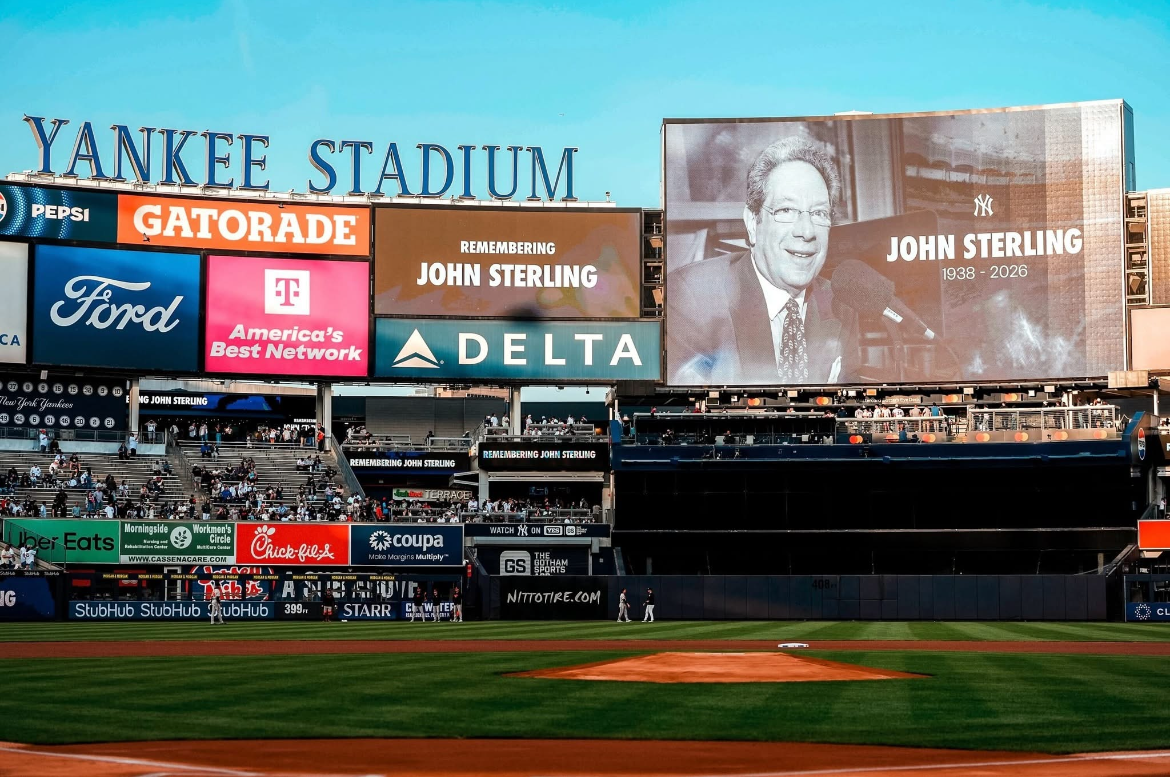
Ted Turner was best known for being a trailblazer of cable TV news who founded CNN. John Sterling was best known for being “The Voice of the Yankees.” But when both gentlemen passed away in the first week of May, the sporting world was reminded of their monumental contributions to Atlanta sports history.
Sterling, who died on May 4 at the age of 87, became a household name throughout the Tri-State Area and beyond by calling games in the Yankee Stadium radio broadcast booth for more than 35 years. His Iron Man streak would put Cal Ripken Jr. to shame: From September 1989 through July 2019, he called 5,060 consecutive regular-season games — plus 211 more in the playoffs, spanning five World Series titles — while his “Yankees win! Theeeeee Yankees win!” and “It is high. It is far. It is gone!” lines became ingrained in baseball lexicon. But before coming over to the Yanks in 1989, Sterling, who came into the world as John Sloss on July 4, 1938, and was raised in a Manhattan Upper East Side Jewish household, called games for the Braves from 1982-87 and for the Hawks from 1981-89.
After broadcasting games for the Baltimore Colts and Bullets, New Jersey Nets, and New York Islanders, Sterling joined TBS and WSB Radio when he settled in Atlanta in 1981. During his run with the Braves, Sterling, with his Upper East Side baritone voice, anchored a broadcast team that rotated between television and radio and had arguably his finest Braves moment when he called pitcher Rick Camp’s home run during a 19-inning game against the New York Mets on July 4, 1985. As for his Hawks legacy, Sterling gave birth to the catchphrase “Dom-in-ique is mag-ni-fique!” when bringing gravity-defying electric dunks by Hall of Fame forward Dominique Wilkins to life.
While he was Jewish (as was his longtime Yankees broadcast partner Suzyn Waldman) Sterling kept his religion very private, with the one notable exception of his singing a few verses of Jerry Bock’s “L’Chaim” from “Fiddler on the Roof” during a guest appearance on a Jewish cable network’s talk show. Along with Sterling’s aforementioned trademark lines following a Yankee victory and home run, the broadcasting legend often infused verses from Broadway musical hits into his play-by-play narrative. With Sterling behind the mic for over 5,000 Yankee games, baseball fans were treated to wildly entertaining descriptions of the action between the lines.
“I’m just going to remember he brought the New York theater to the ballpark,” Yankees superstar Aaron Judge told reporters following the passing of Sterling, who retired in April 2024, but returned to the WFAN booth that autumn for the Yankees’ postseason run. “I think it’s the best way to describe it. He just brought such enthusiasm. He’s almost a kid up there on the broadcast.”
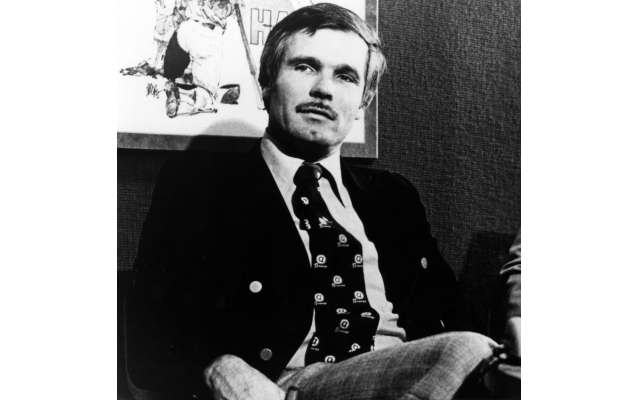
Coincidentally, while Sterling was calling the action in the Braves’ radio broadcast booth in the 1980s, the franchise was under Turner’s stewardship. And just like Sterling, Turner was also notoriously eccentric and colorful. Among his more comical moments, Turner once defeated Philadelphia Phillies relief pitcher Tug McGraw in a race that required the contestants to push an Easter egg down the third-base line with their noses while another time he competed in an ostrich harness race.

For a while, however, Turner’s Braves were also considered a joke by many National League opponents. When Turner assumed control of the Braves in January 1976, he pledged that baseball fans across the Southeast would celebrate a World Series championship within five years. Alas, no such development transpired, as the Braves finished in the cellar in eight of the next 15 seasons — often while sporting one of the most bloated payrolls in baseball — and it wasn’t until the cable television tycoon stopped trying to put his personal touch on the franchise and started delegating responsibility to others that his team’s fortunes improved dramatically.
Even Turner, who was such a hands-on owner that during one evening in 1977, in a vain attempt to halt the Braves’ 17-game skid, he actually managed the club before getting booted out of the dugout by then-Commissioner Bowie Kuhn, would later acknowledge that his best move he ever made as a baseball executive was, quite frankly, to move out of the way.
“For the 10 years I ran it, it was a disaster,” Turner acknowledged in an interview in 1996, shortly after the Braves had secured their second consecutive NL pennant and when he was in the process of selling the franchise to Time Warner as part of a colossal merger. “But buying the Braves was a good move. As I relinquished control of the Braves and gave somebody else the responsibility, they did well.”
In handing over control to front office visionaries Stan Kasten and John Schuerholz and brilliant field manager Bobby Cox, who also died early this month, Turner presided over a franchise that not only stayed in Atlanta — there was serious talk of a relocation to Toronto — but also became the gold standard for consistency, capturing 14 straight division crowns and the 1995 World Series title while morphing into a national brand, largely due to its nearly daily presence on TBS.
In addition to his two-decade-long run as Braves’ principal owner, Turner owned the Hawks from 1977-82. Though his brief tenure as an NBA owner — Sterling was calling games courtside for one season — only saw the Hawks win a single playoff series, Turner’s dedication to keeping NBA basketball in Atlanta, even as he was losing millions every year, was exemplary.
“I was among those personally influenced by Ted. I first met him while working to raise capital to expand Turner Broadcasting during my time at Drexel many years ago. Even then, he was larger than life — boundless in imagination and willing to pursue his dreams on a scale that few could even contemplate,” shared Tony Ressler, Hawks principal owner, upon learning of Turner’s passing.
Added Hawks CEO Steve Koonin, “What set Ted apart was not only his ambition and creativity, but his belief in people and his instinct to empower those around him to think bigger and move faster. We all strived to find our ‘Inner Ted.’ His unconventional leadership and deep commitment to philanthropy will continue to inspire for generations.”
comments