



The Measles is Making a Comeback
More cases have been reported this year than at any time since 2000 when the disease was declared to have been eradicated in the United States.
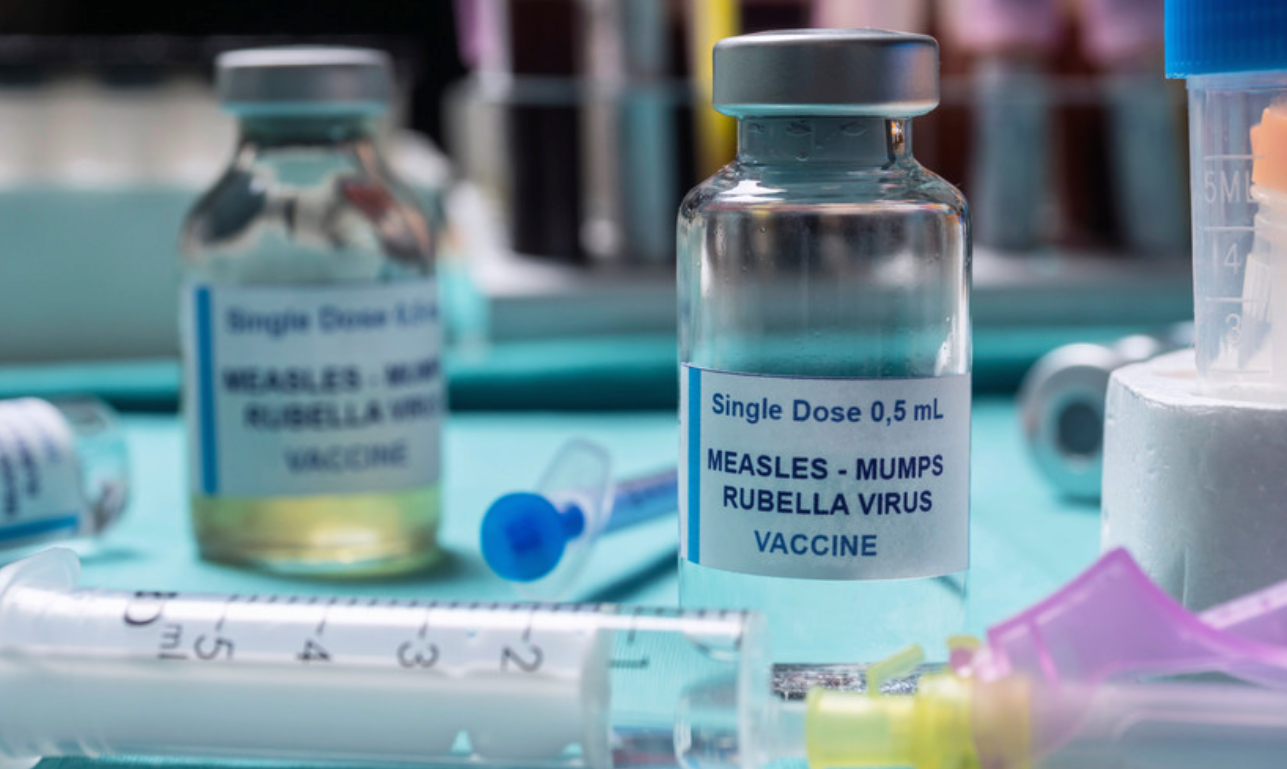
As students return to classrooms this month, a highly contagious disease, once thought to be eliminated in the United States, is again a threat. Measles, which was declared to have been extinguished as a public health menace 25 years ago is once again on the rise in many states, including Georgia.

The Centers for Disease Control and Prevention reported on Aug. 6 that since the beginning of July, there have been a total of 89 confirmed cases. That monthly figure is larger than the total number of measles cases frequently reported for recent entire years.
For the first seven months of this year, 1,288 people have come down with the disease in 38 states. That’s up approximately 180 percent over last year. With five more months before the year ends, that figure has already exceeded any yearly total since 2000, when measles was thought to have been conquered in this country.
In Georgia, six cases have been reported so far this year and, although that number may seem low, it equals the total number of cases in the state in 2024.
One of the reasons for the sharp rise, according to many experts, is the decline in the numbers of individuals, particularly children, who are not being vaccinated. All children six months of age or older can be given the MMR vaccine, which protects against a trio of childhood illnesses — measles, mumps and rubella.
Dr. Carlos Del Rio, professor of infectious diseases at Emory Medical School and frequent commentator on public medical issues, lays an important part of the blame on those who opt out of vaccinations.

“I want to emphasize, the most vulnerable individuals are those that have not been vaccinated. And if you look at the cases that have occurred so far in our country during this outbreak, roughly 80 percent of the cases are under the age of 19, and almost 40 percent of the cases are under the age of 5. And 95 percent of them are unvaccinated.”

Before the vaccine was introduced in 1963, three million to four million people in the U.S. came down with measles each year and 400 to 500 of them died. The measles virus is highly infectious and in areas where there are large numbers who are unvaccinated, as many as 90 percent of those exposed will come down with the disease.
Fourteen states allow for an exemption if it conflicts with any personal belief an individual might have. Many other states, including George, also allow for an exemption when it conflicts with an individual’s religious beliefs.
A serious outbreak of measles that led to 242 infections in 2018 and 2019 started in the Hasidic community of Jews in the Williamsburg and Borough Park neighborhoods of Brooklyn and two upstate New York counties.
A similar outbreak was reported among Hasidim five years before. The cases were blamed on low vaccination rates, based in part on poor medical practice as well as, in some instances, a stubborn resistance to vaccination.
It was thought that a number of those cases were also the result of travel by Hasidim in New York to visit relatives in Israel. In 2018 and 2019, there were more than 4,100 people who came down with the disease in Israel; often they were Hasidic Jews who had not been vaccinated.
Among the most serious outbreaks of the disease earlier this year was among Mennonites in West Texas. They, like Hasidim have a low rate of vaccination and are a closely-knit community where infectious disease can easily spread. Two children and an adult were killed by measles there. All of the fatalities were unvaccinated.
Complicating the national public health response to measles has been the lack of a clear and unequivocal call by federal officials for more vaccinations, particularly the Secretary of Health and Human Services, Robert F. Kennedy, Jr.
The Secretary has spoken about the use of alternative treatments such as Vitamin A or cod liver oil. He has also raised questions about whether vaccines may be responsible for the rise of autism in recent decades.
Dr. Stephen Patrick, chair of the Department of Health Policy and Management at Emory’s School of Public Health and a neonatologist at Children’s Healthcare of Atlanta, disagrees with the Secretary’s beliefs.
“There’s a ton of evidence that the MMR vaccine that protects against measles does not cause autism,” Dr. Patrick points out. “We also see a lot of evidence that not getting the MMR vaccine does cause measles outbreaks.”
His colleague, Dr. Del Rio, past president of the Infectious Diseases Society of America, also passionately defends the safety of the vaccine used to prevent measles.
“I study vaccines. I work in infectious disease. If I thought vaccines weren’t safe, do you think I would be vaccinating my kids or my grandchildren?”
- Health and Wellness
- Community
- Bob Bahr
- Measles
- Centers for Disease Control and Prevention
- Dr. Carlos del Rio
- Emory Medical School
- Secretary of Health and Human Services
- Robert F. Kennedy Jr.
- Dr. Stephen Patrick
- Department of Health Policy and Management at Emory’s School of Public Health
- Children's Healthcare of Atlanta
- Infectious Diseases Society of America
comments